
Anoplotermes fumosus
Anoplotermes fumosus
Description
How to identify
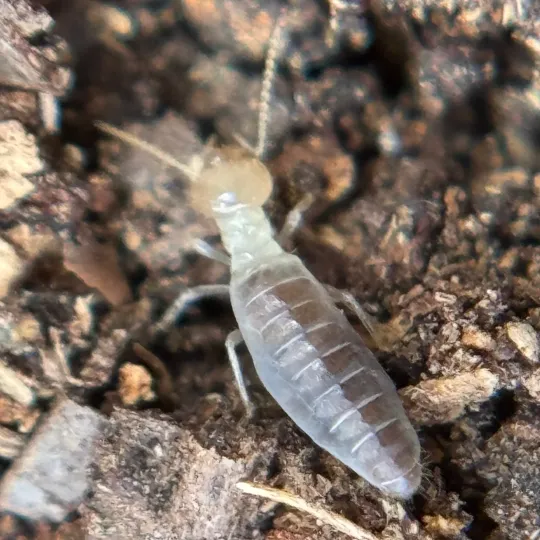
Anoplotermes fumosus is a species of termite belonging to the Termitidae family, often referred to as higher termites. These insects are cryptic, spending almost their entire lifecycle within the soil or inside decaying plant material.
Workers are typically pale and soft-bodied, specifically adapted to navigate narrow subterranean galleries. Unlike some other termites, this species often lacks a distinct soldier caste, or it is significantly reduced, which makes field identification challenging.
They avoid exposure to light and dry air, relying on a complex network of tunnels that connect their nest sites to various food sources in the root zone of plants. Maintaining humidity is essential for their survival.
Identification is usually confirmed by digging up damaged roots and observing the presence of worker termites or their characteristic soil-filled tunnels. They are rarely seen on the soil surface unless the environment is extremely humid.
Their biological success is largely due to their ability to exploit organic matter in the soil, transitioning easily to live roots when natural food sources become scarce or crops are introduced.
What it damages
This termite species is a significant polyphagous pest capable of causing substantial damage to various crops, including cereals, sugarcane, and vegetables. They attack the root systems, causing the plants to lose their stability and nutrient uptake.
Young plants are particularly vulnerable, as their roots are relatively soft and easily penetrated by the termites' mouthparts. Damage at the seedling stage often results in the immediate death of the plant.
For mature crops, feeding damage leads to stunted growth, yellowing of leaves, and decreased yields. In severe infestations, the entire root architecture can be destroyed, leaving the plant prone to lodging.
Secondary damage is often more devastating than the primary feeding. The wounds left by the termites serve as entry points for various soil-borne pathogens, including bacteria and fungi, which cause rapid root rot.
Economic losses are compounded by the need for expensive replanting or intensive chemical treatments to salvage the remaining crop in heavily infested fields.
When it appears
The activity of Anoplotermes fumosus is heavily influenced by soil moisture and temperature. They exhibit peak foraging activity during the rainy season or following significant irrigation events.
During dry and hot weather, the colonies retreat deeper into the soil profile to reach zones where moisture levels are sufficient for their physiological needs, making them less reachable for treatments.
The life cycle and population expansion of this species are tied to the plant growing season. As plants develop extensive root systems, they provide an attractive food source for the foraging workers.
Monitoring should be most intensive during transition periods from dry to wet seasons, as these changes trigger increased movement and foraging behavior within the upper layers of the soil.
Understanding the seasonal behavior is crucial for effective timing of pest management efforts, ensuring that treatments are applied when the insects are most active near the surface.
Signs of infestation
The first indicator of an infestation is often the sudden wilting of plants despite adequate soil moisture. This is a classic symptom of impaired root function due to termite damage.
The presence of fine, soil-based tubes or galleries on the surface of roots or stem bases is a diagnostic feature. These structures are built by termites to protect themselves while moving between feeding sites.
When an affected plant is uprooted, roots may appear hollowed out or covered in granular fecal material. The internal tissue of the root might have been replaced by a spongy mass of soil and termite waste.
Soil micro-mounds or small exit holes on the surface of the ground near the base of affected plants can signal the presence of an active colony below the surface.
Finding workers during the extraction of damaged root systems provides definitive proof of infestation, allowing for quick confirmation and initiation of control measures.
Control measures
Managing Anoplotermes fumosus requires an integrated pest management (IPM) approach, combining physical, biological, and chemical methods to provide long-term protection.
Cultural practices such as deep ploughing help disrupt the termite galleries and expose the colony to environmental stressors. Removing crop residues reduces the availability of secondary food sources.
Soil insecticides, particularly those with systemic properties like neonicotinoids or fipronil, can be applied to create a protective zone around the seeds or roots at the time of planting.
- Application of bait stations containing slow-acting insecticides.
- Use of entomopathogenic fungi (e.g., Metarhizium) for biological control.
- Crop rotation with non-host species to break the life cycle of the termite colony.
Prevention is key; using certified, pest-free planting material and maintaining good soil health can help plants recover faster from minor stress caused by termite activity.
Taxonomy
- Latin name
- Anoplotermes fumosus
- Family
- Termitidae
- EPPO code
- ANOTFU
Discussion
No discussions yet — be the first.