
Mulberry sucker
Anomoneura mori
Description
How to identify
The Mulberry sucker (Anomoneura mori) is a member of the order Hemiptera and the family Psyllidae. These small insects are often referred to as jumping plant lice due to their high mobility and physical resemblance to miniature cicadas.
Adults typically measure 3 to 4 mm in length and possess a light yellow to brownish coloration, providing camouflage against the bark and foliage of the host tree. Their wings are transparent and held in a roof-like position over the body.
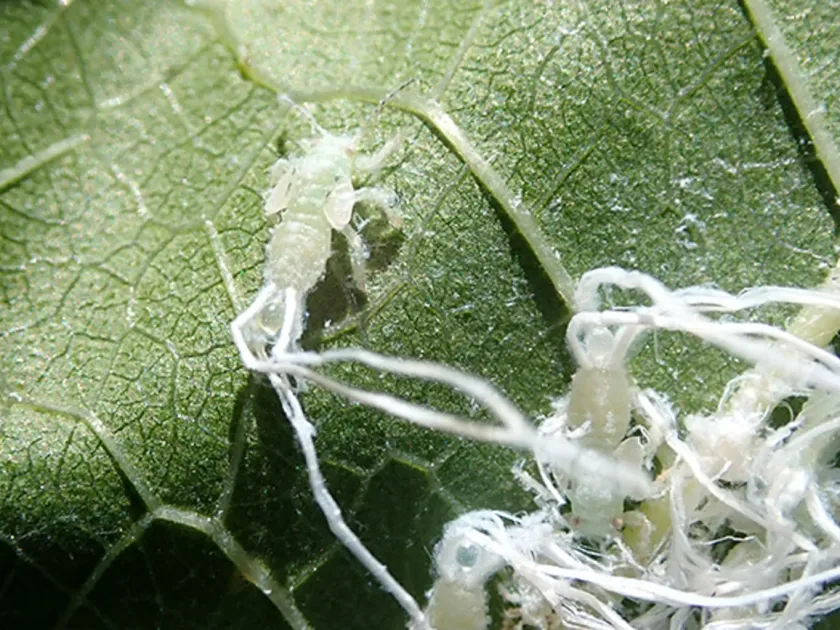
Nymphs are characterized by a sedentary lifestyle, often secreting white, waxy, or fluffy filaments that cover their bodies. These secretions are a diagnostic feature that makes them easy to identify during inspections.
The insect undergoes incomplete metamorphosis, meaning it skips the pupal stage. Both adults and nymphs feed on plant sap using their specialized piercing-sucking mouthparts.
The species is highly dependent on environmental conditions, and in warm climates, it can complete several generations per year, leading to potential population explosions.
What it damages
The primary host for this pest is the mulberry tree (Morus). Damage occurs when both nymphs and adults extract vital sap, which significantly drains the plant's resources.
A major indirect impact of their feeding is the excretion of honeydew. This sticky substance promotes the growth of sooty mold, which coats the leaves and severely restricts the tree's ability to perform photosynthesis.
Infested young shoots and buds often become stunted, curled, or deformed. This not only impairs the overall aesthetic and structural integrity of the tree but also drastically reduces the fruit yield.
In cases of severe infestation, premature defoliation can occur. This weakens the tree, leaving it susceptible to environmental stress, winter damage, or secondary infections by other pests and diseases.
In sericulture, the presence of these insects is particularly detrimental, as infested leaves are of poor quality and can negatively affect the health and development of silkworms feeding on them.
When it appears
Adults overwinter in protected areas, such as bark crevices or beneath debris. As temperatures rise during early spring, they emerge to search for fresh host tissue.
The population begins to increase significantly as soon as the mulberry tree starts budding. This synchrony ensures that the first generation of nymphs has access to the most nutritious plant tissues.
Peak infestation levels are typically observed during late spring and summer months, as these conditions are optimal for rapid growth and reproduction of the species.
During the peak of summer, while high heat may slightly slow down reproduction, the insects remain active on the undersides of the leaves, maintaining their presence in the canopy.
By autumn, the population transitions toward the next wintering phase, with adults seeking shelter to survive the coming cold, marking the end of the active feeding season.
Signs of infestation
The first noticeable sign of an infestation is the presence of sticky honeydew on the leaves, which often turns black over time due to the accumulation of sooty mold.
Inspecting the underside of the leaves usually reveals colonies of nymphs covered in characteristic white, woolly, or waxy secretions that protect them from predators and environmental factors.
Distorted or curled leaves at the tips of branches are a clear indicator of localized damage caused by heavy sap extraction from those areas.
When shaking a branch, if numerous small, jumping insects fly out, it is a definitive sign of an active infestation that warrants immediate attention and management.
General yellowing of the foliage, loss of plant vigor, and noticeably reduced shoot growth during the growing season serve as broader indicators of tree stress from this pest.
Control measures
Cultural control methods involve pruning infested branches and cleaning the bark to remove overwintering sites, which helps keep the pest population at manageable levels.
Chemical control with contact or systemic insecticides is most effective during the early nymphal stages. Treatments should be timed carefully to avoid harming the fruit if it is intended for consumption.
Biological control, including the use of entomopathogenic fungi or encouraging natural predators like ladybugs and lacewings, provides an environmentally friendly alternative to chemical pesticides.
Using yellow sticky traps in the canopy helps in monitoring pest flight and determining the optimal timing for intervention, ensuring that applications are based on actual need.
Maintaining tree health through proper fertilization and irrigation helps the mulberry plant recover from damage and strengthens its natural defenses against future pest outbreaks.
Taxonomy
- Latin name
- Anomoneura mori
- Order
- Hemiptera (bugs, aphids, leafhoppers)
- Family
- Psyllidae
- EPPO code
- ANMOMO
Discussion
No discussions yet — be the first.