
Anoeconeossa bundoorensis
Anoeconeossa bundoorensis
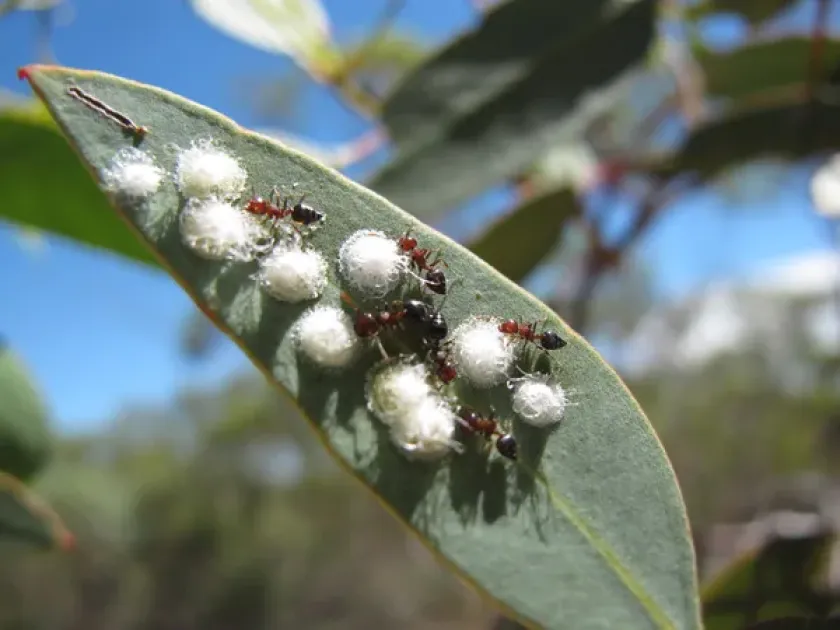
Description
How to identify
Anoeconeossa bundoorensis is a species of psyllid, often referred to as a plant louse, belonging to the family Psyllidae. These insects are highly host-specific, primarily infesting trees of the genus Eucalyptus.
Adult insects are small, winged, and possess powerful hind legs adapted for jumping. Their body coloration is usually cryptic, blending seamlessly with the green or brown foliage of their host trees.
The life cycle consists of egg, five nymphal instars, and the adult stage. The nymphs are sedentary during their early stages and are known for producing waxy secretions to protect themselves.
Originally from Australia, this pest has been introduced to various parts of the world, often through the international trade of nursery stock, where it can become a significant nuisance.
Identification at the species level typically requires expert examination of the male and female terminalia under a microscope, as many psyllids share similar external morphological features.
What it damages
The damage caused by Anoeconeossa bundoorensis primarily affects the foliage of Eucalyptus trees. Both adults and nymphs feed by inserting their stylets into the plant tissues.
By sucking the sap from leaves and young shoots, the insects rob the tree of essential nutrients, leading to physiological stress and reduced growth rates.
The feeding process injects saliva into the plant, which often results in the curling, twisting, and distortion of young leaves, rendering the plant aesthetically unpleasing.
A major indirect impact of this pest is the production of honeydew. This sugary substance accumulates on the leaves and provides a substrate for sooty mold fungi to grow.
The presence of sooty mold creates a dark coating that blocks sunlight, further inhibiting photosynthesis and potentially causing premature leaf drop in heavily infested trees.
Signs of infestation
Visible signs of infestation include severe leaf curling and crinkling, which are clear indicators that the plant is reacting to the feeding pressure of the psyllids.
White, waxy, cotton-like secretions found on the undersides of leaves are diagnostic features of the presence of nymphs, protecting them from environmental factors and predators.
A shiny, sticky appearance on the leaves is a hallmark sign of honeydew accumulation, which often attracts ants and encourages the growth of black sooty mold.
The development of black patches of sooty mold across the canopy indicates a long-term infestation that has been left unmanaged for some time.
Finally, chlorosis (yellowing of the leaves) and stunted development of new growth tips are symptoms of an infestation that is severely compromising the health of the tree.
Control measures
Chemical control using systemic insecticides is highly effective, as these chemicals are absorbed into the plant tissues and kill the sap-sucking insects during feeding.
Contact insecticides can provide temporary relief by killing adult psyllids, though they often need frequent reapplication due to the rapid movement and high reproductive rates of the pest.
Pruning and removal of the most heavily infested shoots can help lower the overall population density of the pest within the tree canopy in nursery settings.
Biological control methods involve releasing natural enemies such as ladybeetles, lacewings, and parasitic wasps, which are known to prey upon or parasitize psyllid nymphs.
Maintaining high plant vigor through proper fertilization and irrigation helps the trees better tolerate infestations and recover more quickly from the damage caused by the insects.
Taxonomy
- Latin name
- Anoeconeossa bundoorensis
- Order
- Hemiptera (bugs, aphids, leafhoppers)
- Family
- Aphalaridae
- EPPO code
- AOECBU
Discussion
No discussions yet — be the first.