
Ancistrotermes latinotus
Ancistrotermes latinotus
Description
How to identify
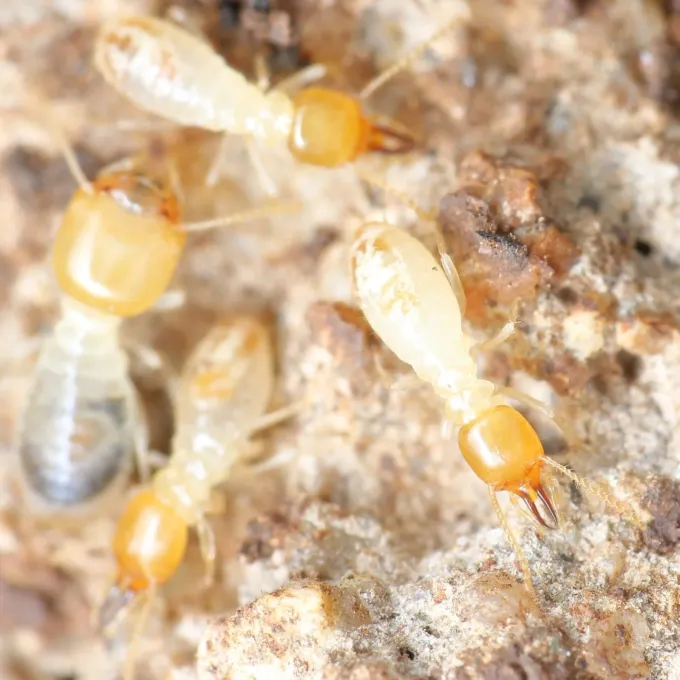
Ancistrotermes latinotus is a termite species belonging to the family Termitidae. As a highly social insect, it functions within complex colonies characterized by specialized castes: workers, soldiers, and reproductives, each performing specific roles for the colony's survival.
The worker caste, which is primarily responsible for foraging and damage, is small, typically 5–7 mm in length. These individuals are blind and lack pigment, spending their entire lifecycle within deep, protected tunnels or the central colony structure.
Soldiers possess enlarged, powerful mandibles and highly sclerotized heads. Their primary function is to defend the colony against predators, particularly ants, by blocking entryways and guarding the foraging trails during the worker activities.
The biological success of this species relies on its symbiosis with fungi. These termites cultivate "fungus gardens" using their fecal matter as a substrate. This fungi acts as a vital food source for the nymphs and maintains a stable interior climate for the colony.
Reproduction follows a dispersal flight of winged adults, known as alates, usually occurring after the first rains. Once these insects shed their wings and pair up, they excavate a new nesting site, beginning the cycle of a new colony expansion.
What it damages
This termite species is a significant threat to various agricultural crops, including maize, sorghum, cotton, peanuts, and various hardwood saplings. They are particularly devastating to young plants that have not yet established a deep root system.
Damage is characterized by the consumption of roots and the base of the stem. By destroying the root network, the termites cut off water and nutrient uptake, causing the plant to wither and eventually collapse entirely.
In addition to direct tissue consumption, termites often invade the stems of standing crops. This tunneling weakens the structural integrity of the plant, making it highly susceptible to lodging during windy conditions or heavy rainstorms.
During the dry season, when alternative cellulose sources are limited, the pressure on living agricultural crops increases significantly. This opportunistic feeding behavior makes Ancistrotermes latinotus a major concern in sub-Saharan African agroecosystems.
Beyond crop loss, the presence of these termites can lead to secondary infections. Damage to the root tissue creates entry points for various soil-borne pathogens, leading to fungal or bacterial rots that further degrade the quality of the field.
Signs of infestation
The most distinctive sign of a termite infestation is the presence of clay-like soil runways or tubes on the surface of stems and plant bases. These structures are built by workers to protect themselves from desiccation and predators while moving above ground.
Sudden wilting of isolated plants or small groups of plants within a field is a key indicator. Upon inspection, the roots of these plants are often found to be completely stripped of their bark or entirely severed just below the soil surface.
The appearance of small earth mounds or hollow soil structures around the base of the crop indicates active colony foraging. If these structures are disturbed, one can often see pale worker termites scurrying back into the subterranean tunnels.
Plants affected by this pest become very brittle at the soil line. In the case of cereal crops, the lower stem may appear hollowed out or filled with fine soil, as the insects prefer to consume the soft pith tissues first.
Infestation patches often follow a circular or expanding pattern in the field, representing the foraging radius of a nearby underground colony. Increased activity of winged alates near the field edges after rain events confirms a local population presence.
Control measures
Integrated pest management begins with cultural practices. Removing crop residues and organic debris from the field reduces the attractiveness of the area to foraging termites, as they prioritize dead plant matter over live crops.
Soil-applied insecticides, specifically those formulated as granules, provide effective protection for crops during the critical establishment phase. Placing these products in the planting furrow creates a chemical barrier that deters termite feeding.
Biological control through the use of entomopathogenic fungi such as Metarhizium anisopliae has shown promise. These fungi can be introduced to termite trails, where they infect the workers, eventually spreading the pathogen throughout the entire nest.
Crop rotation and selecting resistant or tolerant plant varieties are essential for long-term reduction of termite pressure. Ensuring adequate irrigation to maintain soil moisture can also reduce the termites' drive to attack living stems for water.
Targeted baiting systems using slow-acting toxins can eliminate the colony without extensive chemical runoff. Workers carry the poisoned bait back to the nest, where it is shared with the queen and nymphs, leading to the collapse of the entire population.
Taxonomy
- Latin name
- Ancistrotermes latinotus
- Family
- Termitidae
- EPPO code
- ANCILA
Discussion
No discussions yet — be the first.