
Red-spined tree locust
Anacridium rubrispinum
Description
How to identify
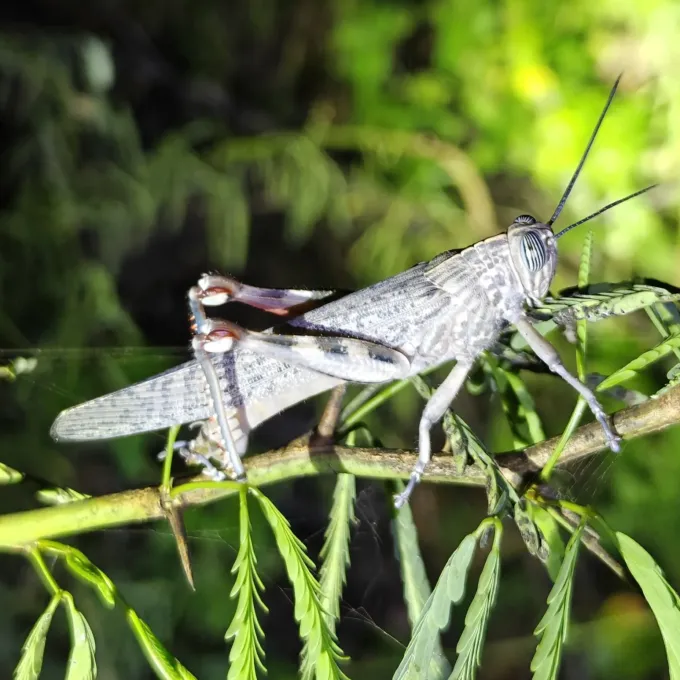
The red-spined tree locust (Anacridium rubrispinum) is a significant pest belonging to the Acrididae family. It is distinguished by its large size and the characteristic red spines located on the underside of its prosternum, which gives the species its common name.
These insects are highly adaptable, possessing strong wings that allow for extensive migration patterns. Their coloration usually ranges from shades of grey to brown, enabling excellent camouflage against tree bark and dry vegetation in arid environments.
The life cycle consists of egg, nymph, and adult stages, with development typically synchronized with the growing season. In favorable weather conditions, particularly dry and hot seasons, population numbers can surge rapidly.
Adults are known for their voracious appetite and active feeding behavior. They prefer woody plants and shrubs, which differentiates them from many other ground-dwelling locust species that primarily target grasses and cereal crops.
Given their biology, these locusts are highly resilient to fluctuations in climate, making them difficult to eradicate once a population has established itself within a plantation or orchard area.
What it damages
Red-spined tree locusts cause substantial damage by feeding on foliage, tender shoots, and young bark. They are generalists that attack various fruit and forest trees, causing severe defoliation of the infested plants.
Orchards including citrus, apricot, peach, and almond trees are particularly vulnerable. When locust density is high, they can strip trees of their leaves in a remarkably short period, leading to a significant loss of leaf area.
Beyond fruit trees, they can invade nearby field crops such as legumes and cereals. This shift in host plant preference occurs when the locusts deplete the resources of their primary woody hosts during severe drought periods.
The impact on plants includes reduced photosynthesis, which inhibits fruit development and tree growth. Severely defoliated trees may show signs of stress, including stunted development and poor harvest quality.
Additionally, the physical damage to bark and shoots opens entry points for various pathogens and secondary infections, further weakening the tree's overall structure and long-term vitality.
Signs of infestation
One of the primary indicators of a red-spined tree locust infestation is the presence of skeletonized leaves. As they feed, they often leave behind only the tougher leaf veins, rendering the foliage ineffective for energy production.
Tree bark may show visible signs of feeding, such as shallow gouges or shredded edges where the locusts have scraped away the outer layer. This damage is often more pronounced on younger, succulent twigs.
Massive swarms often produce a distinct buzzing sound, which serves as an acoustic warning for orchard owners. Additionally, large amounts of fecal pellets accumulating on the ground under trees indicate active, dense colonies.
Abrupt defoliation during the peak summer months is a classic sign of a locust swarm. Observing the locusts themselves is also key; they often sit motionless on branches, camouflaged perfectly until disturbed.
The presence of swarms in the early morning or evening hours is common, as they move from their resting areas to feeding grounds. Rapid changes in the appearance of a canopy, moving from full to bare, occur quickly during peak activity.
Control measures
Effective management requires a proactive approach, primarily focusing on early monitoring and intervention. Scouting for nymphs before they become winged adults is critical to preventing large-scale swarm formation.
Chemical control involving systemic or contact insecticides is often necessary during outbreaks. Application timing is crucial, focusing on areas where nymphs are detected to stop population growth before they spread.
Cultural methods are essential for long-term reduction. Removing weeds, dry grasses, and brush from around orchard peripheries eliminates egg-laying sites and makes the habitat less suitable for the species.
Biological control methods, such as encouraging local predators like birds, reptiles, and small mammals, can help manage minor populations. Using specialized biopesticides based on entomopathogenic fungi is also an option.
- Implement a regular monitoring schedule using pheromone or light traps.
- Target insecticide treatments during the nymphal development stage.
- Clear surrounding areas of debris to discourage egg deposition.
- Maintain tree health to improve resilience against pest damage.
- Coordinate community-wide surveillance and control efforts for better efficiency.
Taxonomy
- Latin name
- Anacridium rubrispinum
- Order
- Orthoptera (locusts)
- Family
- Acrididae
- EPPO code
- ANCRRU
Discussion
No discussions yet — be the first.