
Egyptian grasshopper
Anacridium aegyptium
Description
How to identify
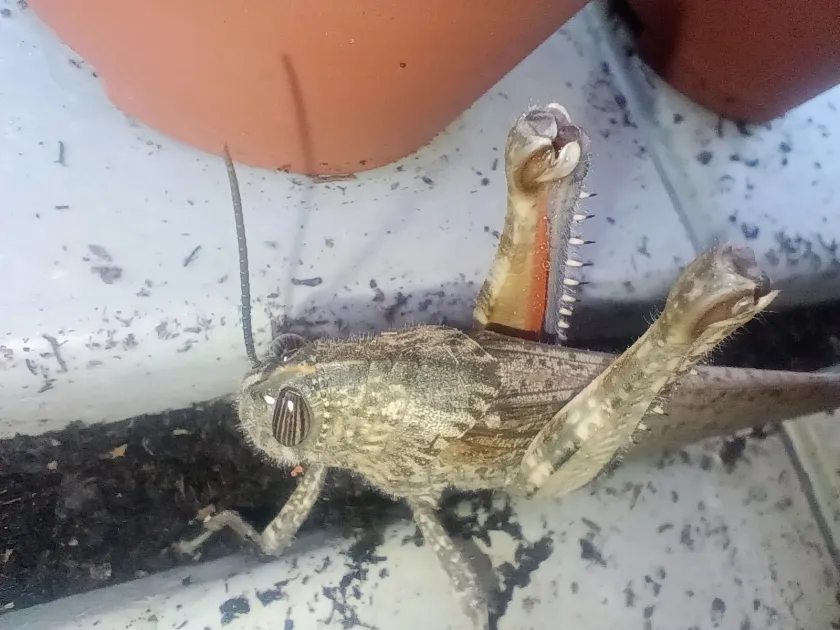
The Egyptian grasshopper (Anacridium aegyptium) is a member of the family Acrididae. It is one of the largest grasshopper species in Europe, with adults reaching a body length of up to 70 mm.
The species exhibits a cryptic, grayish-brown coloration that mimics the bark of trees and dry vegetation, providing excellent camouflage in agricultural environments.
A diagnostic feature of this species is the presence of vertical dark stripes on the compound eyes. Additionally, the hind tibiae are typically bluish in color, which helps distinguish it from other local species.
The pronotum is characterized by a prominent longitudinal keel, and the wings are clear with a distinct network of veins. Both sexes are strong flyers and highly mobile.
Unlike some locusts, this species does not typically form massive swarms but lives solitarily, which can make early detection in orchards and fields challenging.
What it damages
This grasshopper is a significant polyphagous pest, feeding on a wide variety of plants. It causes particular damage to orchards, vineyards, and vegetable crops.
It often feeds on the foliage of citrus trees, apple, pear, and peach trees. In vegetable gardens, it is a common pest of tomatoes, peppers, cabbages, and various legumes.
Besides cultivated plants, it utilizes weeds and wild shrubs as primary food sources, allowing the population to persist throughout the growing season.
Feeding on young shoots, buds, and leaves can lead to stunted plant growth, crown deformation, and reduced photosynthetic capacity.
High infestation levels in nurseries or young orchards can lead to severe defoliation, potentially threatening the survival of young, vulnerable plants.
When it appears
The Egyptian grasshopper follows a univoltine lifecycle, meaning it produces one generation per year. Adults are the only life stage that overwinter, typically hiding in bark cracks or dense vegetation.
Activity resumes in the spring (April-May) as temperatures rise. Mating and oviposition occur over an extended period, leading to staggered emergence of nymphs in the field.
Females deposit their eggs in the soil, usually at a depth of 5–8 cm. Optimal development requires warm, well-drained soil, making open sunny spots preferred sites for egg-laying.
Nymphs develop through five distinct instars, feeding voraciously throughout each stage. Their size increases significantly as they mature.
New adults appear by mid-August, reaching peak activity and causing significant feeding damage as they prepare for the upcoming wintering period.
Signs of infestation
The most evident sign of infestation is ragged, large holes in leaf blades. Unlike caterpillars, these insects consume tissue unevenly, leaving only the primary veins intact.
Small, cylindrical fecal pellets found on the ground or on the surface of leaves beneath feeding sites serve as a clear indicator of the insect's presence.
When disturbed, adults are highly reactive and will immediately jump or fly to nearby cover, making visual detection in trees relatively easy during the day.
Bud damage on fruit trees during the summer months is a strong indicator of grasshopper activity, as they shift their diet according to available vegetation.
The distinct, rhythmic stridulation of males during warm evenings can also serve as an acoustic cue for the presence of the population in an orchard or field.
Control measures
Integrated pest management begins with cultural practices, including the removal of weeds and dense brush that provide food and shelter for the insects.
Deep autumn plowing of suspected egg-laying sites can significantly disrupt the lifecycle and reduce the emergence of the next generation.
- Application of appropriate insecticides (e.g., organophosphates or pyrethroids) specifically targeting the nymphal stages.
- Utilization of biological control agents, such as entomopathogenic fungi, in greenhouse or organic systems.
- Use of light traps for monitoring and reducing adult population density in localized areas.
- Encouraging natural predators, including insectivorous birds and predatory insects, to inhabit the perimeter of the crop.
Chemical applications should be timed during the early morning hours when the insects are less mobile and more likely to be exposed to the contact insecticide.
Always adhere to local agricultural regulations and pre-harvest intervals to ensure safety and prevent chemical residue issues in the final product.
Taxonomy
- Latin name
- Anacridium aegyptium
- Order
- Orthoptera (locusts)
- Family
- Acrididae
- EPPO code
- ANCRAE
Discussion
No discussions yet — be the first.