
Amyotea
Amyotea
Description
How to identify
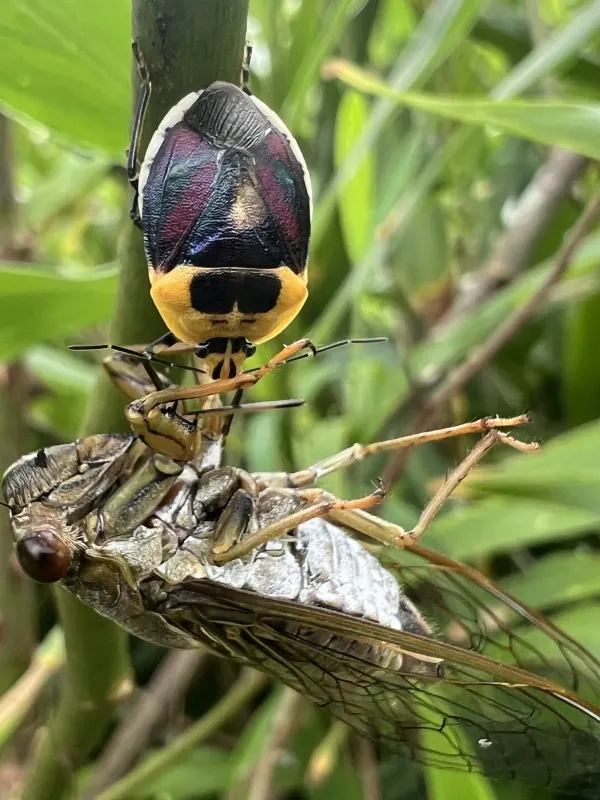
Amyotea is a genus of insects belonging to the order Hemiptera and the family Pentatomidae, commonly known as shield bugs. These insects have a characteristic shield-shaped body, and their coloration can vary significantly depending on the specific species.
Adult specimens possess fully developed wings, enabling active flight between host plants for feeding and breeding. The head is equipped with a piercing-sucking mouthpart designed to penetrate plant tissues and extract vital sap.
Nymphal stages resemble adults but lack functional wings and are generally smaller in size. Their coloration is often brighter, which acts as a defense mechanism while they develop on the host plants.
Identification can be challenging, as many species within the genus share a morphology similar to beneficial predatory shield bugs. Proper identification requires close inspection of the pronotum shape and specific patterns on the scutellum.
Specialists often use microscopic analysis of genital structures for precise species identification. In the field, it is crucial to distinguish these pests from beneficial predatory insects that help manage other plant pests.
What it damages
Amyotea primarily damages a wide range of vegetables, fruit crops, and ornamental plants. It is particularly known to affect families such as Solanaceae, Fabaceae, and various woody plants in orchards.
The primary damage is caused by the intensive extraction of cell sap from young shoots, leaves, and developing fruits. This weakens the plant significantly and disrupts vital photosynthetic processes.
Necrotic spots form at the puncture sites, which can eventually merge. Affected organs become deformed, leading to stunted growth and reduced fruit yield, which diminishes the market value of the produce.
Beyond direct mechanical injury, these insects can act as vectors for various plant viral diseases. The saliva injected during feeding contains toxic enzymes that may cause premature fruit drop and flower abortion.
High population densities can lead to the wilting of branches or even the death of young seedlings. The insect's aggressiveness often increases during drought periods when plants are most vulnerable to water loss.
When it appears
The life cycle of Amyotea is closely linked to the temperature of the growing season. Overwintering adults emerge in early spring once average daily temperatures consistently exceed 10–12 degrees Celsius.
Peak activity occurs during the summer months, coinciding with the flowering and fruiting phases of many crops. During this time, the insects reproduce rapidly and migrate across fields and orchards.
The number of generations per year depends on local climatic conditions and typically ranges from one to three. Egg and nymphal development is most efficient in moderately warm and humid weather.
In autumn, as temperatures drop and days shorten, the bugs enter diapause. They seek sheltered overwintering sites, such as plant debris, leaf litter, or crevices in tree bark.
Monitoring should begin immediately after bud break. Regular field scouting helps identify localized infestations before they develop into widespread outbreaks across the entire area.
Signs of infestation
The first sign of infestation is the appearance of small, light-colored spots on leaves, which gradually turn yellow and necrotic. The margins of leaf blades may curl and dry out without any apparent mechanical cause.
Upon fruit inspection, one may notice depressed spots and deformities, indicating a loss of tissue integrity. These affected areas often serve as entry points for secondary infections, such as rot or fungal diseases.
A specific, unpleasant odor characteristic of shield bugs is often a strong indicator of their presence. Females frequently deposit eggs in compact, geometrically patterned clusters on the underside of leaves.
- Presence of bugs in various developmental stages on plants.
- Characteristic puncture marks on young shoots and buds.
- Yellowing or wilting of shoot tips.
- Presence of distinct geometric egg clusters on foliage.
To confirm an infestation, visual inspection or the beat-sheet method (shaking branches over a white cloth) during the early morning hours is highly recommended, as the insects are less mobile then.
Control measures
Cultural control methods include deep plowing of the soil and the removal of weed hosts that provide a reservoir for the pest. Timely cleaning and disposal of crop residues are essential for breaking the life cycle.
Biological control involves the use of natural enemies, such as egg parasitoids like Trichogramma. Encouraging these beneficial organisms in the field helps significantly suppress population growth without chemical intervention.
Chemical control measures are justified when the economic injury level is exceeded. Systemic or contact insecticides approved for specific crops can be applied to manage high populations.
Applications should be made during early morning or evening hours to avoid drift onto flowering plants and to protect essential pollinators like bees. Rotating chemical classes is vital to prevent pesticide resistance.
Consistent monitoring combined with integrated pest management (IPM) practices is the most effective approach for long-term control of Amyotea populations, ensuring both crop health and sustainability.
Taxonomy
- Latin name
- Amyotea
- Order
- Hemiptera (bugs, aphids, leafhoppers)
- Family
- Pentatomidae
- EPPO code
- AMYESP
Discussion
No discussions yet — be the first.