
Amblyseius swirskii
Amblyseius swirskii
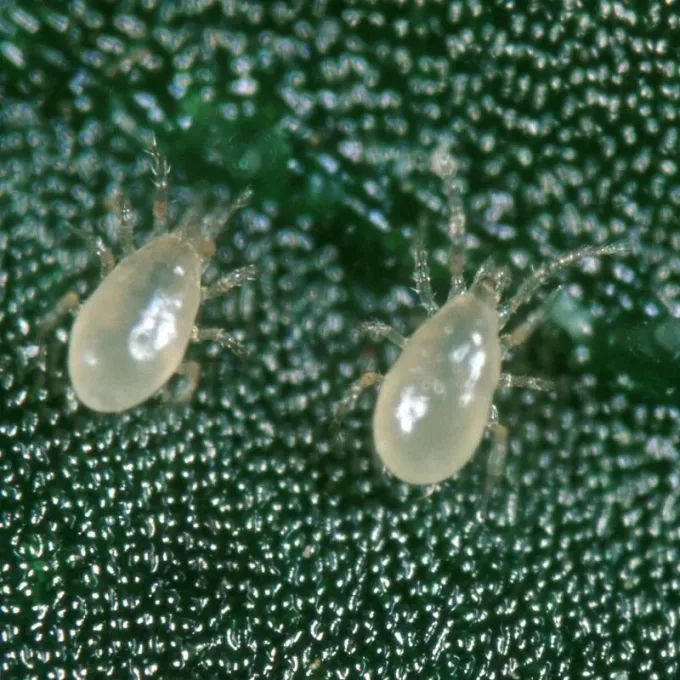
Description
How to identify
Amblyseius swirskii is a predatory mite of the family Phytoseiidae, order Mesostigmata. It is widely recognized as a highly effective biological control agent used in greenhouse horticulture.
The adult mites are microscopic, typically measuring 0.4–0.5 mm in length. Their appearance varies from pale cream to light brown, depending on their recent prey intake.
These mites thrive in warm climates, showing peak activity between 20°C and 32°C. They require relative humidity levels above 60% to ensure optimal development and reproductive success.
The life cycle progresses through the stages of egg, larva, protonymph, deutonymph, and adult. Under ideal temperature conditions, the entire life cycle can be completed in just 5–7 days.
A key biological advantage is that these mites are omnivorous; when prey populations are low, they can survive by feeding on pollen and plant exudates, allowing them to remain in the crop.
What it damages
Amblyseius swirskii is not a plant pest; it is a beneficial predator that protects various agricultural crops from infestation by harmful insects and mites.
It is particularly effective at suppressing populations of Western flower thrips and tobacco thrips. The mites consume eggs and early larval stages, keeping infestations under control.
This predator is also a powerful tool against whiteflies, including the greenhouse whitefly and tobacco whitefly. It actively hunts larvae and eggs, reducing the spread of the pest.
Furthermore, it helps control spider mites and broad mites, providing multi-species protection for vegetable and ornamental crops such as cucumbers, tomatoes, and peppers.
By integrating this predator into crop management, growers can significantly reduce their reliance on synthetic chemical pesticides, promoting sustainable agriculture.
Control measures
The application of Amblyseius swirskii is usually done through prophylactic release or focused introduction into pest hotspots within the greenhouse environment.
Commercial formulations often utilize slow-release sachets hung on plant stems or loose material spread directly onto the leaves to establish a stable mite population.
Integrated Pest Management (IPM) guidelines strictly suggest avoiding broad-spectrum insecticides that may be toxic to the predator population to ensure its persistence.
Regular monitoring is essential to evaluate the efficacy of the releases. This involves careful scouting of leaves for both the presence of prey and the predatory mites.
Effective management requires coordination with other biological control agents and ensuring that environmental conditions in the greenhouse remain supportive of the mite's activity.
Taxonomy
- Latin name
- Amblyseius swirskii
- Order
- Mites
- Family
- Phytoseiidae
- EPPO code
- AMBSSW
Discussion
No discussions yet — be the first.