
Amblyseius herbicolus
Amblyseius herbicolus
Description
How to identify
Amblyseius herbicolus is a mite belonging to the family Phytoseiidae and the order Mesostigmata. While primarily known as a predatory mite used in biocontrol, it exhibits generalist feeding habits.
Adult mites are pear-shaped, measuring approximately 0.3–0.4 mm in length, with a translucent to yellowish-brown body coloration.
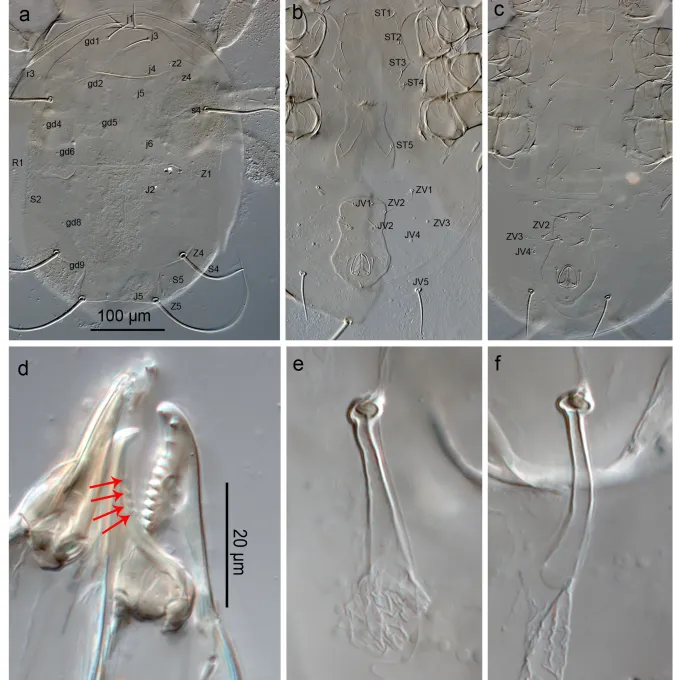
Positive identification requires laboratory analysis to examine the dorsal shield setae patterns, as it is difficult to distinguish from other phytoseiid species in the field.
The life cycle progresses through egg, larva, protonymph, and deutonymph stages, typically completing development within 7 to 10 days under warm conditions.
Development is most rapid at temperatures between +20°C and +30°C, provided there is adequate humidity to support the mite's survival and egg-laying capacity.
What it damages
The mite is known to inhabit a wide range of host plants, including greenhouse vegetables, ornamental flowers, and various fruit trees such as citrus.
While it feeds on spider mites and thrips, it is also capable of consuming plant tissues, including sap and pollen, during periods when primary prey is scarce.
Feeding on plant sap results in localized necrosis, leaf chlorosis, and a general reduction in the photosynthetic capacity of the affected leaves.
High population densities lead to the curling of leaf margins, severe stunting of plant growth, and physical damage to sensitive floral tissues.
Weakened plants become susceptible to secondary infections, which can result in significant yield losses in commercial agricultural settings.
Signs of infestation
The primary symptom of infestation is the appearance of chlorotic spotting on the underside of leaves, often near the main veins.
Evidence of mite activity includes the presence of tiny, dark fecal spots and cast-off exoskeletons on the leaf surface, indicating a established colony.
Twisting and crinkling of newly emerged leaves in the apical region are common indicators of persistent mite feeding on growing tissues.
In ornamental plants, the abortion of flower buds and the premature drop of petals are clear indicators of a mite infestation that requires immediate attention.
- Chlorotic spots on leaves.
- Curling of young apical leaves.
- Small dark fecal specks.
- Flower bud abortion.
Control measures
Management focuses on an integrated pest management (IPM) approach that prioritizes the maintenance of a stable ecosystem within the greenhouse.
Environmental control, specifically maintaining relative humidity levels around 75%, effectively discourages the rapid reproduction of the mite population.
Strict sanitation practices, including the removal of weeds and debris from the greenhouse, are essential to eliminate potential reservoirs for the pest.
Avoid the prophylactic use of broad-spectrum insecticides that disrupt the population of beneficial insects and mites, as this can trigger secondary outbreaks.
Selective acaricides with minimal residual activity should be used only as a last resort when the population exceeds economic injury thresholds.
Taxonomy
- Latin name
- Amblyseius herbicolus
- Order
- Mites
- Family
- Phytoseiidae
- EPPO code
- AMBSDL
Discussion
No discussions yet — be the first.