

Pest · Coleoptera (beetles) · affects Cereals, Maize, Winter wheat
Lesser mealworm
Alphitobius laevigatus
Description
How to identify
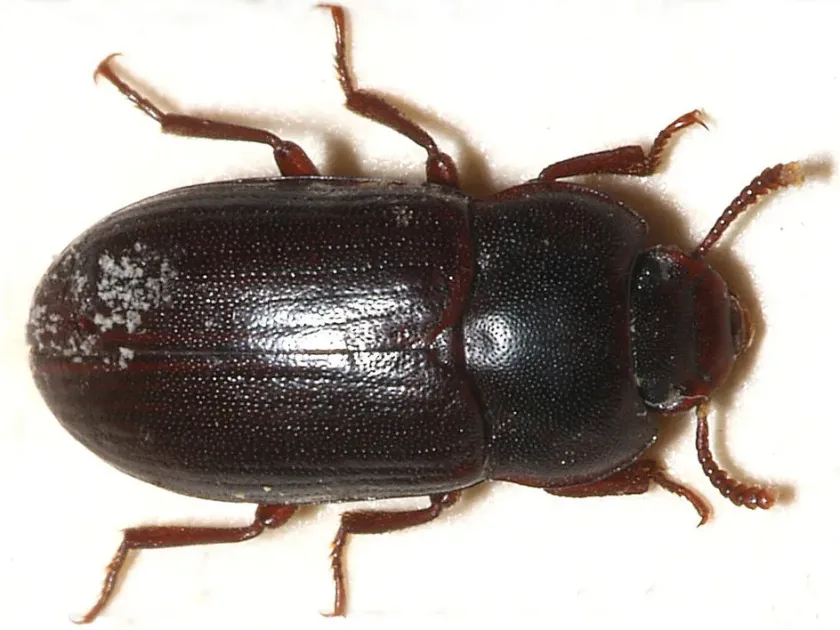
The lesser mealworm (Alphitobius laevigatus) belongs to the order Coleoptera and the family Tenebrionidae. The adult is a small, oval-shaped beetle, typically 5–6 mm long, with a shiny dark brown or black appearance.
These insects are highly mobile and capable of flight, allowing them to rapidly colonize various locations, including grain warehouses, mills, and poultry facilities.
The larvae, often referred to as 'litter beetles' in poultry settings, are about 10 mm long, cylindrical, and brownish-yellow. They are very active and thrive in high-density environments like piles of grain or animal waste.
The life cycle is highly temperature-dependent. Under optimal conditions (around 30°C), the insect can complete its development from egg to adult in less than two months, facilitating multiple generations per year.
Eggs are typically deposited in dark, sheltered areas, such as cracks in warehouse floors or within the grain mass itself, making them difficult to detect during standard inspections.
What it damages
Lesser mealworms infest a wide range of products, including wheat, corn, rice, flour, bran, and various animal feeds. They often follow other primary pests that have already damaged the grain kernels.
In addition to grain storage, they are significant pests in the poultry industry. They damage insulation and structural components by boring into them, and they act as vectors for various diseases, including Salmonella.
In stored grain, larvae consume the germ part of the seed, which significantly reduces the seed's viability and makes it unsuitable for sowing purposes.
Their feeding activity results in the accumulation of frass (excrement) and larval skins, which increases moisture levels in the grain mass and promotes the development of harmful mold and bacteria.
Economic losses arise from both the direct destruction of nutritional components and the reduction in the market quality of the grain due to contamination and off-odors.
Signs of infestation
A common sign of infestation is the presence of fine, dust-like material on the surface of grain piles or beneath storage bags, indicating that the population is feeding within the mass.
Adult beetles can often be spotted near sources of food or in dark crevices within the warehouse. They tend to be more active and noticeable if the grain pile is disturbed.
Localized heating of grain is a critical indicator of high pest density. When an infestation occurs, the metabolic heat generated by the insects can lead to spontaneous heating of the entire grain batch.
Routine inspections of processing equipment like grain augers and sifters often reveal the presence of larvae, which accumulate in stagnant areas where cleaning is infrequent.
The detection of a distinct, musty, or "pharmaceutical-like" odor in the warehouse is often a sign of deep-seated contamination that requires immediate intervention.
Control measures
Strict warehouse sanitation is the primary line of defense. Regular removal of grain dust, debris, and spills is essential to eliminate breeding grounds for the lesser mealworm.
Prophylactic treatment of empty bins and storage areas with approved residual insecticides is highly recommended before the introduction of new harvests.
If an infestation is already present, fumigation with registered phosphine-based products is the standard procedure to achieve total mortality of both larvae and adults within enclosed structures.
Managing the storage environment by keeping grain moisture below 14% and utilizing aeration systems to lower grain temperature can significantly inhibit the development of these pests.
- Regular monitoring using pheromone traps.
- Sealing cracks and crevices in storage facilities.
- Implementing strict inventory rotation (FIFO).
- Professional pest control inspection programs.
Content graph
Connections · Lesser mealworm
Most often together:
Marketplace
Products · 25


Dzhin
«Юнісіті Ентерпрайсіс Л.П.», Единбург, Великобританія
Rodenticides
0
0
·
62
1 offer
14.15 €per 1 kg
Buy


Biology
Taxonomy
- Latin name
- Alphitobius laevigatus
- Order
- Coleoptera (beetles)
- Family
- Tenebrionidae
- EPPO code
- ALPHLA
Community
Discussion
No discussions yet — be the first.