
Allotruxalis strigata
Allotruxalis strigata
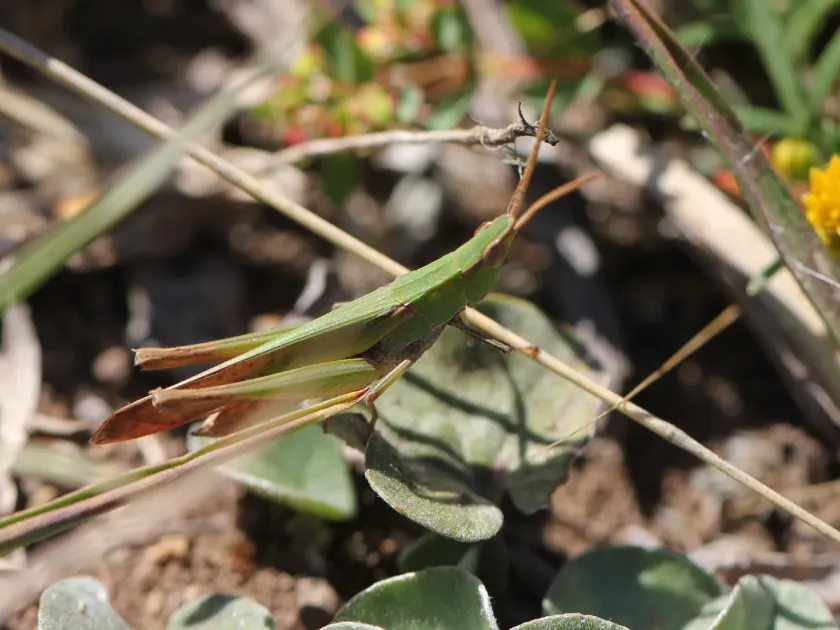
Description
How to identify
Allotruxalis strigata is a species of grasshopper belonging to the order Orthoptera and the family Acrididae. This insect features an elongated body structure that provides excellent camouflage within the stalks of wild and cultivated grasses.
The coloration of the adult grasshopper ranges from light green to brownish hues, allowing it to blend seamlessly into its environment. It has a distinctive elongated head equipped with robust chewing mouthparts designed for processing tough plant tissues.
Adults possess well-developed wings, enabling them to fly actively in search of food sources across large areas. Their hind legs are powerful and specialized for jumping, which is a characteristic movement pattern used to navigate dense vegetation.
Nymphs resemble smaller versions of the adults but lack fully formed wings. Throughout their development, they pass through several instar stages, progressively increasing in size and transitioning toward their sexually mature adult form.
Identifying this species requires careful observation of pronotal morphology and wing venation. However, for practical agronomic purposes, identifying it as an Acrididae member is sufficient to initiate monitoring and mitigation steps.
What it damages
Both nymphs and adults cause significant damage to crops, as they are polyphagous, with a clear preference for cereal crops like wheat, barley, rye, and oats. They also commonly inhabit and feed upon various wild grasses.
Under conditions of high population density, these grasshoppers may migrate to maize fields and perennial grasslands, causing a decline in overall crop productivity. Feeding primarily occurs during daylight hours.
The damage is characterized by the consumption of the leaf blades. Grasshoppers typically start by gnawing at the edges or creating holes in the center of the leaves. Severe infestations can result in the total defoliation of the plant, leaving only the structural veins behind.
Young seedlings are particularly vulnerable to these pests, as significant leaf tissue loss inhibits growth and may lead to thin, unproductive stands. In mature plants, damage to the flag leaf and developing ears significantly impacts grain yield.
The economic impact of this pest is twofold: direct loss of biomass and a reduction in grain quality. Furthermore, damaged tissues are highly susceptible to secondary fungal and bacterial infections.
When it appears
The life cycle of Allotruxalis strigata is closely linked to seasonal temperature variations. Nymphs emerge from overwintering eggs laid in the soil as soon as temperatures remain consistently high in the spring.
The peak feeding period for nymphs typically spans late spring to early summer. During this time, the insects consume vast amounts of green matter to fuel their rapid growth and eventual metamorphosis into adults.
Adults appear in mid-summer with fully developed wings. This stage is marked by peak mobility, allowing the population to expand into new fields and colonize surrounding agricultural areas efficiently.
Reproduction occurs in late summer and early autumn. Females deposit eggs into the soil, encasing them in a protective secretion that shields the future generation from harsh winter conditions and soil moisture extremes.
Typically, there is one generation per year. However, exceptionally warm autumns can accelerate breeding cycles and increase the population pressure on winter cereal crops planted later in the season.
Signs of infestation
Initial signs of infestation appear as irregular, jagged damage along the leaf edges of cereal crops. These "bitten" leaves are a primary indicator of the presence of grasshoppers in the field.
Visual observation during the day is highly effective; one can easily see adult grasshoppers jumping or flying short distances when disturbed in the vegetation. Their movement is a reliable indicator of population presence.
The presence of insect frass (droppings) on the leaves and soil surface near feeding sites is another clear sign of activity. In localized areas, groups of insects may be found feeding together on the same plant.
As feeding continues, affected leaves begin to yellow and eventually desiccate. In cases of massive infestations, patches of the field may look "thinned out," revealing substantial loss of foliage.
Monitoring with an entomological net provides an accurate assessment of population density. Detecting these signs early is crucial for applying control measures before the population reaches an economic damage threshold.
Control measures
Agricultural management practices such as deep tillage or discing are highly effective at disrupting egg beds in the soil, significantly reducing the survival rate of the next generation.
Maintaining clean field borders and eliminating weeds on adjacent non-crop land is essential. Removing these alternative habitats deprives the grasshoppers of breeding sites and early-season food sources.
Chemical control should be implemented only when population densities exceed economic thresholds. Systemic or contact insecticides approved for use on cereal crops should be applied according to regulatory guidelines.
Applications are most effective during the early morning or late evening when the insects are less mobile and positioned on the upper parts of the plants. Always consider the safety of non-target beneficial insects.
Biological control alternatives, including the use of entomopathogenic fungi or specific bacterial agents, are becoming viable components of integrated pest management strategies, offering sustainable options for long-term control.
Taxonomy
- Latin name
- Allotruxalis strigata
- Order
- Orthoptera (locusts)
- Family
- Acrididae
- EPPO code
- ALLXST
Discussion
No discussions yet — be the first.