
Allotruxalis
Allotruxalis
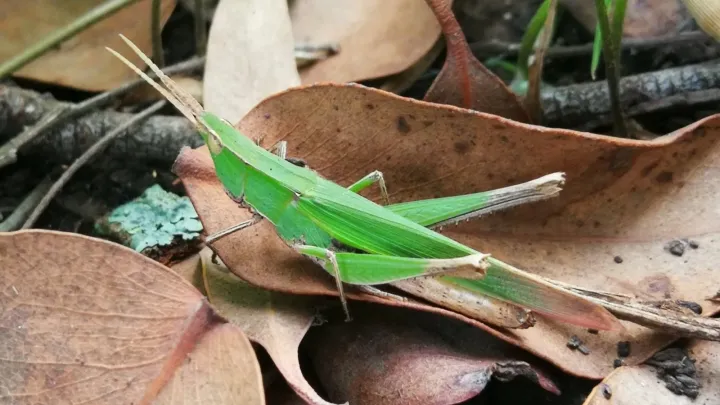
Description
How to identify
Allotruxalis belongs to the Acrididae family within the order Orthoptera, characterized by an elongated body structure and an extended head shape.
These insects are well-adapted to life in grassland habitats, utilizing their green or brownish coloration as camouflage against stems and leaves.
Adults possess developed wings, enabling them to migrate over significant distances in search of optimal food sources and mating grounds.
Nymphs share the general morphology of adults but are smaller in size and lack functional wings until they reach the final stages of development.
Their anatomy, including strong hind legs and robust mandibles, is specifically designed for survival and efficient feeding on plant tissues.
What it damages
Allotruxalis primarily consumes plants from the Poaceae (grass) family, making it a potential threat to cereal crops and wild grasses alike.
The damage is most pronounced on wheat, barley, and millet, where insects chew through leaf blades and occasionally target developing inflorescences.
Feeding patterns typically involve irregular holes or jagged edges along the margins of the leaves, weakening the plant's photosynthetic capacity.
In cases of high population density, these insects can cause widespread defoliation, leading to stunted plant growth and significant yield losses.
Pastures and grazing lands may also suffer from reduced biomass and degradation of forage quality due to the intense feeding habits of these pests.
When it appears
The life cycle and peak activity of Allotruxalis are deeply influenced by seasonal temperature patterns and moisture availability during the spring and summer.
Eggs typically hatch in late spring or early summer, synchronized with the warming of the topsoil and the emergence of fresh vegetation.
Adults are most active throughout mid-to-late summer, when they actively feed on crops and complete their reproductive cycles.
The timing of the infestation is directly related to the phenological stages of the host crops, coinciding with periods of high metabolic growth.
As temperatures decline in autumn, adults prioritize laying eggs in the soil, which serve as the overwintering stage for the population.
Signs of infestation
Initial signs of infestation often include the appearance of notched or shredded leaf margins, a clear indicator of chewing insect activity.
Observing the presence of the insects themselves is the most reliable way to confirm an infestation, particularly during cooler morning hours.
Accumulation of excrement (frass) at the base of plants or on the leaf surfaces indicates active feeding by a high number of individuals.
Patches of sparse or damaged vegetation along field edges often serve as the primary focus points for monitoring the pest's migration.
- Jagged edges on cereal leaves.
- Reduced plant height and overall green coverage.
- Presence of grasshoppers on plant stems or in the field foliage.
Control measures
Management of Allotruxalis centers on integrated pest management (IPM) practices to minimize reliance on synthetic chemical interventions.
Cultural control measures, such as deep plowing in autumn, are highly effective as they disrupt egg pods buried in the soil and expose them to harsh winter conditions.
Managing weed density along field borders helps eliminate secondary hosts, reducing the pest's ability to establish large populations near crops.
In instances where economic damage is imminent, the application of targeted insecticides is performed to control nymphs before they reach the adult stage.
Biological control alternatives, including the use of entomopathogenic fungi, are being explored to provide sustainable long-term population management.
Taxonomy
- Latin name
- Allotruxalis
- Order
- Orthoptera (locusts)
- Family
- Acrididae
- EPPO code
- ALLXSP
Discussion
No discussions yet — be the first.