
Noise grasshopper
Aiolopus strepens
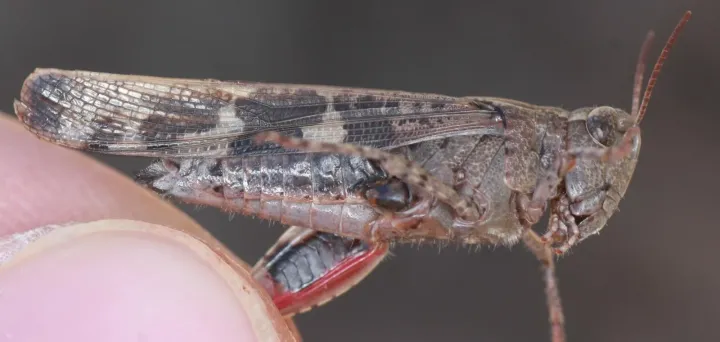
Description
How to identify
The Noise grasshopper, scientifically known as Aiolopus strepens, belongs to the order Orthoptera and the family Acrididae. It is a medium-sized insect known for its robust build and the distinct sound produced during flight.
The coloration of these insects typically ranges from greyish-brown to olive, providing excellent camouflage against dry soil and vegetation, which makes them hard to detect in field environments.
They possess leathery forewings and transparent hindwings, often with a subtle colorful tint at the base, which are adapted for sudden, agile jumps and short flights across fields.
Unlike gregarious locust species, this grasshopper often leads a solitary life, yet it remains a significant threat to various agricultural crops when its population reaches high densities.
The insect is characterized by strong mandibles and antennae of moderate length, which allow it to thrive in arid climates and quickly adapt to changing environmental conditions.
What it damages
The Noise grasshopper is a polyphagous pest that feeds on a wide range of vegetation. In agricultural landscapes, it primarily damages cereal crops such as wheat, barley, and rye.
The pest also targets maize, sorghum, and millet, consuming leaf blades and damaging the reproductive organs of plants, which stunts growth and reduces overall harvest quality.
Technical crops like sunflowers are also susceptible, as grasshoppers chew the edges of the leaves, significantly reducing the plant's photosynthetic capacity and vitality.
During periods of mass proliferation, these insects can devastate forage crops and pastures, which leads to critical losses in feed availability for livestock operations.
Most damage is typically concentrated along the edges of fields adjacent to uncultivated lands, wastelands, or permanent pastures where the insects prefer to lay their eggs.
When it appears
The life cycle of the species involves one generation per year. Winter is spent in the egg stage, with eggs deposited in the soil within protective pods known as egg cases.
Larvae typically emerge in the spring once soil temperatures reach a threshold that triggers development, initiating the active growth phase of the pest population.
Adult grasshoppers, or imagoes, usually appear during the summer months, with the peak of activity and feeding intensity occurring throughout June and July in most regions.
After the mating season in late summer, females lay eggs in compacted soil to overwinter, completing the annual life cycle before the onset of colder weather conditions.
Favorable weather patterns, characterized by a moderate spring followed by a hot, dry summer, significantly increase the survival rate of larvae and overall population size.
Signs of infestation
Early signs of infestation include irregular, jagged feeding patterns on leaves, which clearly indicate the presence of insects equipped with powerful chewing mouthparts.
The presence of the pest is easily confirmed during field inspections, as grasshoppers will jump or take short, noisy flights when disturbed by movement or sound.
Accumulation of frass (droppings) on leaves or on the soil surface beneath the plants serves as a key indicator of high population density and active feeding activity.
Severely infested plants may show signs of yellowing or wilting due to the loss of leaf tissue, which disrupts normal water and nutrient transportation within the plant.
Patches of sparse or damaged vegetation along the field periphery are clear markers that indicate areas where the grasshopper population has established its feeding activity.
Control measures
Effective management starts with timely insecticide application on field borders and adjacent uncultivated strips to target larvae during their early developmental stages.
Deep autumn plowing is a recommended agricultural practice, as it disrupts the soil, exposing egg pods to harsh temperatures and predators, thereby reducing future populations.
Maintaining cleanliness in and around field boundaries is essential, as removing weeds and cleaning up wasteland helps eliminate oviposition sites and alternative food sources.
- Use of entomopathogenic fungi for biological control.
- Application of contact-stomach insecticides during peak larval activity.
- Regular field monitoring to track population dynamics throughout the season.
Encouraging the presence of natural predators, such as birds and various parasitic insects, provides an important layer of integrated pest management to keep populations in check.
Taxonomy
- Latin name
- Aiolopus strepens
- Order
- Orthoptera (locusts)
- Family
- Acrididae
- EPPO code
- AIOLST
Discussion
No discussions yet — be the first.