
Aiolopus
Aiolopus
Description
How to identify
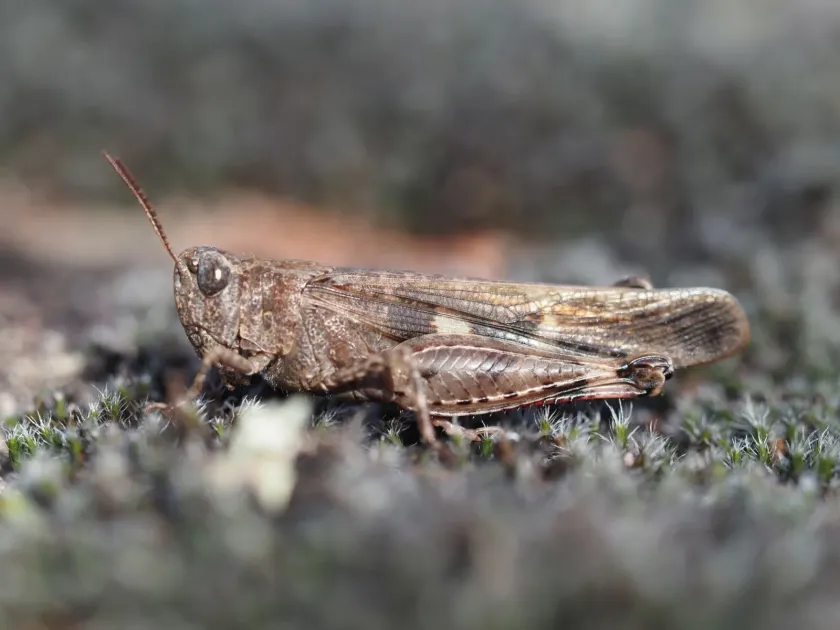
Aiolopus is a genus of grasshoppers belonging to the family Acrididae within the order Orthoptera. These insects are typical short-horned grasshoppers with robust bodies adapted for jumping and flying.
Their coloration is usually earthy, ranging from grayish-brown to green, which provides excellent camouflage among grasses and crops. They possess thickened hind femora and well-developed wings for migration.
Identification is based on the morphological characteristics of the pronotum and the specific patterns on the hind legs. Females are generally larger than males and are specialized in laying large clutches of eggs.
This genus is known for its high ecological plasticity, allowing it to colonize diverse environments. Nymphs closely resemble adults but lack functional wings, which develop gradually through several molts.
They possess strong, chewing mouthparts designed to process tough plant tissues, making them efficient feeders on a wide variety of botanical species.
What it damages
Aiolopus can cause significant economic losses, especially in arid and semi-arid agricultural regions. They are polyphagous, feeding on a wide range of grasses and crops.
Cereal crops like wheat, barley, and oats are primary targets. The pests consume leaves, stems, and may even damage the heads of plants during the grain-filling stage.
Pastures and forage crops, including alfalfa and clover, are highly susceptible to mass infestations. The destruction of grazing lands significantly reduces the available biomass for livestock.
Technical and vegetable crops can also be severely damaged if the fields are adjacent to the insect's breeding sites. In dry years, as natural forage dries up, the pressure on cultivated crops intensifies.
By consuming foliage and damaging stems, these grasshoppers not only reduce plant yield but also open entry points for secondary pathogens like fungi and bacteria.
When it appears
The life cycle typically spans one generation per year. Winter is passed in the egg stage, with eggs deposited in the soil by females in late summer or early autumn.
Nymphs hatch in the spring as soil temperatures rise. They undergo five instar stages, during which their appetite increases proportionally with their body size.
Transformation into adults occurs by mid-summer. Once fully developed, they become highly mobile and capable of flying long distances to locate new food sources.
The adults are active throughout the late summer and early autumn, continuing to feed and breed until the onset of lower temperatures.
The overlapping timing of crop growth and the peak activity of the grasshoppers often results in synchronization that increases the risk of heavy infestations.
Signs of infestation
The most evident sign of damage is the presence of irregular, jagged edges on leaves. In severe cases, the insects may perform skeletonization, leaving only the primary veins of the leaves.
The presence of large numbers of jumping insects within the field is a clear indicator of a pest outbreak. A characteristic rattling or rustling sound is often heard during mass movements.
Early-stage nymphs congregate in groups, creating distinct patches of destroyed vegetation throughout the field, which can be easily spotted during routine crop scouting.
Fecal deposits on the foliage and the rapid wilting of damaged plants are strong secondary indicators. Plants may collapse as their structural integrity is compromised by extensive chewing.
A color change in the field, moving from healthy green to a yellowed or brown appearance, typically signals a widespread infestation that requires immediate attention.
Control measures
Management is centered on cultural and chemical interventions. Deep autumn plowing is the most effective cultural method to destroy egg clutches buried in the soil.
Keeping field borders and surrounding areas free from weeds reduces potential breeding grounds and prevents the build-up of the population near crops.
Chemical control involves the application of appropriate insecticides when nymphs are in the early stages of development and are most vulnerable.
Scouting and monitoring are essential to identify hotspots. Applying treatments only to infested patches minimizes the environmental impact and cost of operations.
- Regular disking of post-harvest fields to disrupt life cycles.
- Promotion of natural predators such as birds and parasitic wasps.
- Crop rotation to discourage persistent colonization of the area.
Taxonomy
- Latin name
- Aiolopus
- Order
- Orthoptera (locusts)
- Family
- Acrididae
- EPPO code
- AIOLSP
Discussion
No discussions yet — be the first.