
Agonoscelis
Agonoscelis
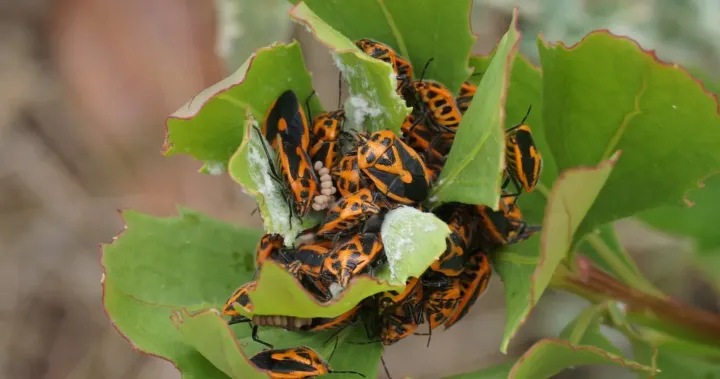
Description
How to identify
The genus Agonoscelis belongs to the family Pentatomidae, commonly known as shield bugs or stink bugs. These insects are easily recognized by their distinct shield-shaped body structure, which is a hallmark of the order Hemiptera.
Adult insects typically feature a robust, convex body ranging from 8 to 12 mm in length. Their coloration often spans from ochre-yellow to reddish-brown, usually marked with a unique reticulated or spotted pattern on the elytra (wing covers).
They possess a small, triangular head equipped with a specialized piercing-sucking mouthpart known as a rostrum. A key diagnostic feature of this family is the five-segmented antenna, which differentiates them from several other insect groups.
Nymphs resemble the adults in general shape but are smaller and lack fully developed wings. Their coloration frequently undergoes changes throughout their development, transitioning from lighter shades in early instars to darker tones in older nymphs.
The eggs are barrel-shaped and are usually deposited by females in neat, compact clusters on the underside of leaves. These egg batches are protected by a resilient chorion, allowing them to withstand various environmental stresses.
What it damages
Agonoscelis is a polyphagous pest, meaning it feeds on a wide array of host plants, causing significant economic damage to agricultural systems. Cereal crops, particularly wheat and barley, are among the most susceptible targets.
Beyond cereals, these bugs frequently attack oilseed crops like rapeseed and sunflowers. They have also been observed causing damage to various vegetable crops and forage grasses grown on a commercial scale.
The insects are most active during the generative stages of plant growth. By piercing stems, leaves, and developing seeds to extract sap, they inject specific salivary enzymes that disrupt the plant's metabolic processes.
Feeding on seeds often results in shriveling, reduced grain weight, and diminished seed viability. In cereals, this feeding behavior can also degrade the quality of gluten, which is detrimental to the milling and baking industry.
On vegetable crops, heavy infestation can lead to leaf deformation, premature wilting, and the shedding of flower buds or young fruit. In high-density populations, these pests can cause substantial yield losses for farmers.
When it appears
The life cycle of Agonoscelis is closely synchronized with regional climatic conditions. In most habitats, these insects produce one or two generations per year, depending on the length of the warm growing season.
Adults overwinter in a state of diapause, seeking refuge in protected environments. Common overwintering sites include crop residues, leaf litter, forest debris, or crevices under tree bark, where moisture levels remain relatively stable.
In spring, as temperatures rise, the bugs emerge and migrate to wild grasses to feed before moving onto cultivated fields. Mating and oviposition occur shortly thereafter, with eggs being laid directly onto the host plants.
Population peaks often coincide with the stem elongation and flowering phases of crops. During this time, the bugs are highly active and feed aggressively, as they require significant energy for reproduction and survival.
The development of the summer generation, from egg to adult, typically takes between 30 and 45 days. As autumn approaches, shorter days and falling temperatures trigger the bugs to migrate back into dense vegetation to prepare for winter hibernation.
Signs of infestation
The primary visual indication of an Agonoscelis infestation is the appearance of tiny punctures on leaves and stems, which eventually turn into light-colored necrotic spots. Damaged grains often show dark spots at the point of the puncture.
During field inspections, adults can be found perched on the tips of wheat ears or hiding on the underside of leaves. During the heat of the day, these bugs often retreat deeper into the canopy, making them harder to spot.
The presence of egg clusters on leaf surfaces is a clear sign that a new population is developing. These eggs are usually laid in very orderly rows and exhibit a light yellowish tint, making them detectable through careful phytosanitary monitoring.
Infected cereal heads may appear bleached or may dry out prematurely, standing out against healthy green plants. This "white-head" effect is a classic symptom of heavy feeding by sucking pests.
Indirectly, damage is identified after harvest through reduced crop quality. Grain infested by these bugs often loses its commercial value, shows poor storage stability, and has lower nutritional quality due to the enzymatic breakdown of proteins.
Control measures
Effective management requires regular field monitoring using sweep nets to assess the population density of the bugs. If numbers exceed the economic injury threshold, systematic chemical control measures should be implemented.
Robust agricultural practices, such as thorough post-harvest plowing and the timely removal of weeds, are essential. These actions help destroy the natural refuges where the bugs overwinter and congregate early in the season.
Crop rotation is a vital strategy for reducing the risk of pest accumulation in specific fields. By avoiding continuous planting of the same host crop, farmers can significantly limit the food supply available for Agonoscelis.
When necessary, insecticides with systemic or contact-stomach action that are approved for use on specific crops can be applied. It is crucial to rotate chemical classes to prevent the development of resistance in the pest population.
Biological control, including the conservation of native egg parasitoids, plays a significant role in managing stink bug populations. Utilizing biological products based on fungal or bacterial pathogens can also serve as a sustainable addition to integrated pest management programs.
Taxonomy
- Latin name
- Agonoscelis
- Order
- Hemiptera (bugs, aphids, leafhoppers)
- Family
- Pentatomidae
- EPPO code
- AGOSSP
Discussion
No discussions yet — be the first.