
Siberian Aelia
Aelia sibirica
Description
How to identify
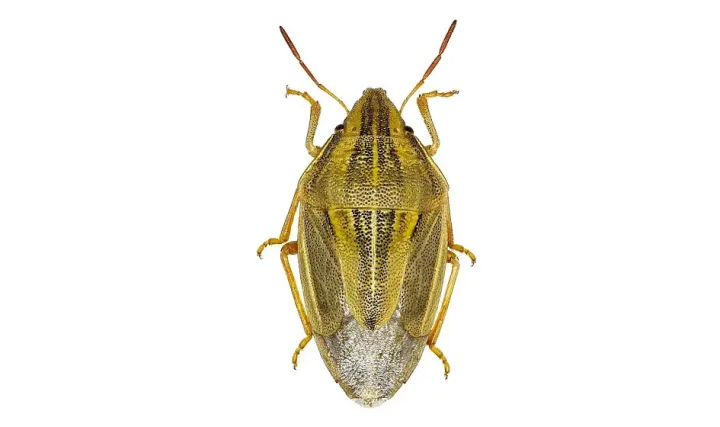
The Siberian Aelia (Aelia sibirica) is a species of shield bug in the Pentatomidae family, recognized as a significant pest of various cereal crops. Adults typically measure between 9 and 12 mm in length, featuring an elongated body shape.
Their coloration is generally a mix of grayish-yellow or brownish tones, often decorated with distinct longitudinal stripes running along the head and thorax. The scutellum is highly developed, covering almost the entire abdomen.
Nymphs resemble smaller, wingless versions of the adults, often showing variable coloration as they progress through different developmental stages. They have a piercing-sucking mouthpart designed specifically for extracting plant fluids.
These bugs thrive in open, sunny agricultural landscapes where cereal crops provide an abundant food source. Adults are known to hibernate during winter, sheltering in plant debris, under fallen leaves, or in the top layer of soil.
The life cycle consists of a single generation per year. After emerging in the spring, the bugs feed on wild grasses before migrating to cultivated cereal fields as they begin to develop, coinciding with the early stages of grain formation.
What it damages
The Siberian Aelia primarily damages small grain cereals, including wheat, barley, rye, and oats. The most critical period of damage occurs during the milk and dough stages of grain development when the bugs feed actively.
By injecting salivary enzymes into the grain, the bugs disrupt the internal structure of the kernel. These enzymes degrade gluten proteins, rendering the grain unsuitable for high-quality baking and flour production.
The affected kernels become shriveled, lose significant weight, and suffer from reduced germination viability. Such damage leads to lower overall crop yields and degraded market quality of the harvested grain.
Heavy infestations on young plants can cause damage to stems, leading to stunted growth or the withering of the entire ear. This results in patches of sparse crops and uneven maturation, which complicates the harvesting process.
Secondary damage can occur due to the physical punctures providing pathways for fungal pathogens to enter the plant tissues. This further weakens the crop, increasing the risk of lodging and overall loss of biomass.
Signs of infestation
Visual identification of an infestation includes small, white, or discolored spots on the grain kernels. A tiny, dark puncture point is usually visible in the center of these spots, marking where the bug's proboscis entered.
Plants infested by these bugs often exhibit signs of stress, such as yellowing or premature wilting of leaves. During peak feeding times, such as the early morning or evening, the bugs are often visible resting on the stems or ears.
Extensive damage to the stems can result in "white ears," where the entire ear loses color and fails to develop properly. This is a severe symptom often seen in fields with high population densities.
Searching at the base of the plants or within thick weed cover near field edges often reveals the presence of adult bugs preparing for winter or feeding in the early season. Their movement is relatively slow, but they tend to drop to the soil when disturbed.
- Visible puncture marks on the grain kernels.
- Premature whitening or browning of cereal ears.
- Reduced grain weight and development in affected field areas.
Control measures
Effective management begins with proper crop rotation and the maintenance of clean field borders. Eliminating wild grasses and weeds surrounding the fields is crucial, as these areas serve as primary overwintering and early feeding sites.
Deep autumn plowing of harvested fields helps bury and destroy a large portion of the overwintering population. This practice significantly reduces the initial pest pressure for the following growing season.
Chemical control with systemic or contact insecticides is recommended when population levels exceed economic thresholds. Timing the application to coincide with the hatching of nymphs is key for maximum efficiency.
Selecting cereal varieties with shorter maturation periods can help minimize the exposure time of the grain to bug feeding. Integrated pest management (IPM) strategies, which include monitoring and biological control, are highly recommended.
Biological control agents, such as egg parasitoids like Telenomus species, can help naturally regulate the bug's population. Maintaining ecological balance on the farm is an important component of a sustainable protection program.
Taxonomy
- Latin name
- Aelia sibirica
- Order
- Hemiptera (bugs, aphids, leafhoppers)
- Family
- Pentatomidae
- EPPO code
- AELISI
Discussion
No discussions yet — be the first.