
Acrotylus patruelis
Acrotylus patruelis
Description
How to identify
Acrotylus patruelis, commonly known as the spotted-wing grasshopper, belongs to the family Acrididae. These insects are small to medium-sized, typically measuring between 15 and 25 mm in length, and are known for their exceptional camouflage abilities.
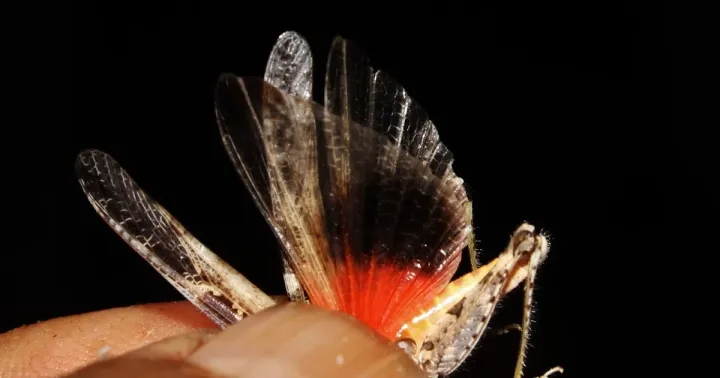
The most distinctive feature of this species is the presence of bright, contrasting spots on its hind wings. These markings are usually hidden when the insect is at rest but become clearly visible during flight, acting as a crucial identifier for field scouts.
The body is covered in a brownish-grey texture that mimics the appearance of dry soil and debris. This cryptic coloration makes them very difficult to detect when they are perched on the ground, providing an effective defense against avian predators.
Morphologically, adults have powerful hind legs designed for jumping, a standard feature for the order Orthoptera. Their antennae are of medium length and thread-like, which helps in distinguishing them from other grasshopper species found in the same habitat.
Nymphs, or juvenile stages, appear similar to adults but lack fully developed wings. They undergo several molting stages, gradually increasing in size and developing the characteristics necessary for adult behavior as they mature throughout the season.
What it damages
Acrotylus patruelis is a polyphagous pest, meaning it feeds on a wide range of plant species. While it often thrives on wild grasses, it can become highly destructive when its population migrates into agricultural fields.
The primary crops affected by this pest include major cereals such as wheat, barley, maize, and millet. In addition to cereals, it can cause significant damage to forage crops and perennial grasses, threatening both grain yield and livestock feed supplies.
The damage is caused by the insects consuming leaf tissue, which drastically reduces the plant's photosynthetic capacity. As a result, affected plants show stunted growth, delayed development, and reduced overall biomass production.
Severe infestations on young seedlings can lead to total crop loss, often necessitating replanting efforts. The feeding habits of this pest also leave plants weakened and more susceptible to secondary pathogens, including various fungal and bacterial infections.
In addition to direct tissue loss, the presence of large populations can cause significant stress to the entire crop stand. This stress often manifests during dry periods, when the impact of the pest is amplified by limited water availability for the plants.
When it appears
The life cycle of Acrotylus patruelis is closely linked to the local climate and temperature trends. The species survives the winter exclusively in the egg stage, with eggs buried in protective pods within the soil.
As temperatures rise in the spring, the eggs hatch into nymphs. These juvenile stages immediately begin feeding, starting with available weed cover before moving onto emerging or established crops as they grow stronger.
The development cycle is accelerated by warm and dry conditions, which are typical in the regions where this grasshopper is most prevalent. Multiple stages occur throughout the summer, with population peaks often coinciding with the mid-summer heat.
Adults remain active from mid-summer until late autumn. During this time, they engage in mating and egg-laying, ensuring the continuation of the species by placing eggs into the soil, where they will remain dormant until the following season.
The grasshopper's survival strategy relies on the resilience of these dormant eggs. This makes the population quite stable even in environments with unpredictable weather, as the egg pods are shielded from moderate surface-level fluctuations.
Signs of infestation
The initial signs of an infestation include ragged or notched edges on the leaves of cereal crops. These early feeding marks are often overlooked but serve as the first warning of an emerging problem.
When walking through a field, scouts can easily identify the presence of this pest when the grasshoppers jump or fly away upon disturbance. The characteristic flash of their spotted wings in flight is a hallmark of the species.
The accumulation of frass (excrement) on the soil surface under the crop canopy is another strong indicator of a significant infestation. This suggests that the population density is high enough to warrant immediate monitoring or intervention.
In advanced stages of infestation, the damage becomes widespread, with large patches of the field showing severe defoliation. In extreme cases, plants may be reduced to their main stems, significantly impacting the grain-filling process.
Fall or spring soil surveys can help identify areas where egg pods are concentrated. By locating these reservoirs early, farmers can take preventative action before the next generation of nymphs emerges and begins damaging the crop.
Control measures
Effective management of Acrotylus patruelis involves an integrated approach combining agronomic practices with chemical control. The focus is primarily on preventing the buildup of population density in non-crop areas.
Deep tillage is the most effective mechanical method for controlling this pest. By disturbing the soil after harvest or in early spring, farmers can destroy egg pods or expose them to environmental stress and predators, significantly reducing the hatching rate.
Managing weed density along field edges and borders is critical, as these areas serve as primary nurseries for the grasshoppers. Keeping these zones clean of wild grasses minimizes the risk of migration into the primary crop field.
When population levels exceed established economic thresholds, the application of insecticides becomes necessary. Treatment is most effective when targeted at early-stage nymphs, which are more vulnerable to chemical exposure.
Key recommended control measures:
- Perform deep autumn plowing to eliminate egg reservoirs.
- Use sweep nets for regular population monitoring during spring and summer.
- Apply contact or systemic insecticides during the nymphal stages.
- Create insecticide-treated barrier strips around field perimeters to block migration.
Taxonomy
- Latin name
- Acrotylus patruelis
- Order
- Orthoptera (locusts)
- Family
- Acrididae
- EPPO code
- ACOTPT
Discussion
No discussions yet — be the first.