
Acrotylus insubricus
Acrotylus insubricus
Description
How to identify
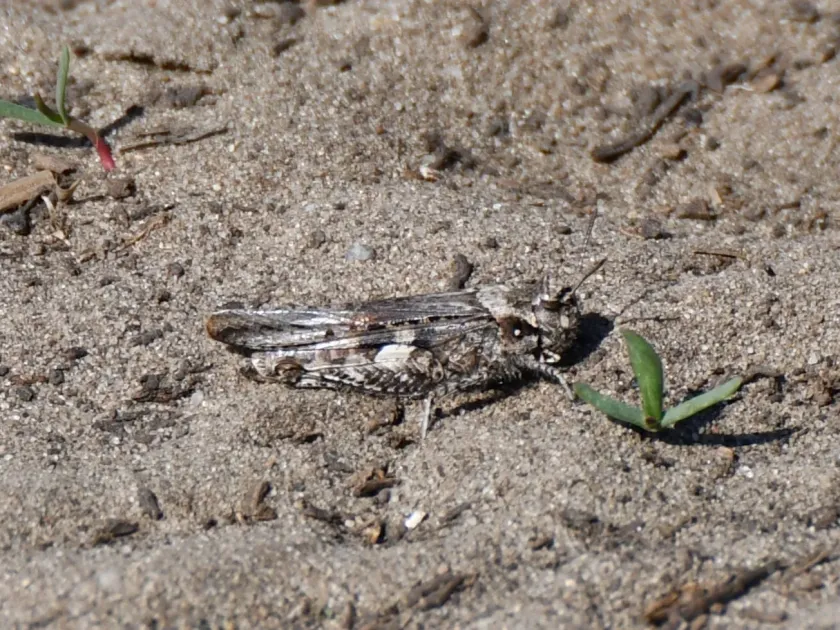
Acrotylus insubricus, commonly known as a type of band-winged grasshopper, belongs to the family Acrididae. These insects are well-adapted to arid environments, possessing a cryptic coloration that blends perfectly with dry, sandy, or rocky soil surfaces.
The most distinctive feature of this species is the vivid, brightly colored hind wings that are only revealed during flight, contrasting sharply with their otherwise dull, camouflaged body. Their physical build is robust, typical of species adapted to ground-dwelling and frequent jumping.
The grasshopper has a strong chewing mouthpart, designed for consuming a wide variety of plant tissues. Their compound eyes provide an exceptionally wide field of vision, allowing them to detect predators or human disturbance from a considerable distance.
The life cycle involves egg-laying in the soil, where the female deposits eggs within a hardened pod-like structure called an ootheca. This structure provides vital protection against environmental fluctuations and soil-dwelling predators.
Nymphs, or immature stages, mirror the adult form but lack fully developed wings. They undergo several molts before reaching maturity, spending their entire early life cycle feeding on the vegetation surrounding the egg-laying sites.
What it damages
Acrotylus insubricus is a generalist herbivore (polyphagous), capable of consuming a wide array of plant species. In agricultural settings, it frequently targets cereal crops, such as wheat, barley, and millet.
During years of population outbreaks, these grasshoppers can cause significant damage to vegetable crops, forage plants like alfalfa, and industrial crops, particularly when migration occurs from adjacent fallow lands.
Damage is characterized by irregular chewing of leaf margins and blades. In severe cases, the grasshoppers can consume the entire leaf surface, leaving only the tougher veins, which severely impairs the plant's photosynthesis and overall growth.
The most critical stage for damage is the early vegetative growth phase of crops. Extensive feeding by high numbers of nymphs can result in thin, patchy crop stands, which may eventually lead to yield losses if the damage is widespread.
Secondary damage often occurs when the wounds created by the grasshoppers facilitate the entry of pathogenic fungi or bacteria, further stressing the already weakened plants.
When it appears
The species survives the winter primarily in the egg stage, safely tucked away in the soil. These eggs serve as the reservoir for the population, remaining dormant until the return of warmer spring weather.
Nymphs emerge in the late spring or early summer, a timing that often coincides with the germination and early growth of many crops. This alignment ensures that fresh food is readily available for the developing insects.
By mid-summer, most individuals reach the adult stage. The adult phase is marked by increased mobility and the potential for long-distance flights, facilitating the colonization of new fields and further expansion of the infestation area.
The duration of their activity is heavily dependent on regional climate. In warmer southern zones, the activity season is prolonged, often lasting until the first frosts of autumn.
The life cycle is usually completed in one generation per year, though temperature fluctuations and moisture levels can influence the rate of development of the nymphal stages.
Signs of infestation
The primary sign of infestation is the appearance of jagged, tattered leaf edges on cereal and vegetable crops. Unlike some other pests that create circular holes, grasshoppers typically graze from the edge of the leaf inwards.
The sudden, jerky movement of jumping insects when walking through a field is a tell-tale sign of a high population density. The flash of their colorful hind wings during flight is another diagnostic feature.
Small, cylindrical fecal pellets found on the soil surface near the base of damaged plants are clear indicators of recent and intense feeding activity by the grasshopper colony.
Stunted plant growth and discoloration in localized "hotspots" of the field suggest high feeding pressure on specific clusters of crops, often originating from field borders or nearby waste ground.
The presence of empty egg pods in the soil, particularly in drier or compacted soil areas around the field, confirms the location of breeding grounds and identifies potential sources of future infestations.
Control measures
Effective management of Acrotylus insubricus focuses on proactive measures, particularly targeting field margins and non-crop areas where the pests breed and accumulate before invading cultivated land.
Deep plowing during the autumn (tillage) is highly recommended, as it disrupts the integrity of the oothecae, exposing the eggs to surface-level desiccation and predation by birds or soil organisms.
Chemical control should be implemented judiciously, specifically targeting early-instar nymphs. Border treatments can often suffice, preventing the pests from moving into the heart of the crop field.
Cultural practices, including the regular removal of weeds from field edges and maintenance of field hygiene, drastically reduce the carrying capacity of the local landscape for this pest.
- Regular field scouting to monitor population density and age distribution.
- Utilization of botanical or microbial insecticides in integrated pest management programs.
- Maintenance of a balanced predator community in neighboring non-crop areas.
- Selecting early-maturing crop varieties to reduce the window of vulnerability.
Taxonomy
- Latin name
- Acrotylus insubricus
- Order
- Orthoptera (locusts)
- Family
- Acrididae
- EPPO code
- ACOTIN
Discussion
No discussions yet — be the first.