
Acridoderes
Acridoderes
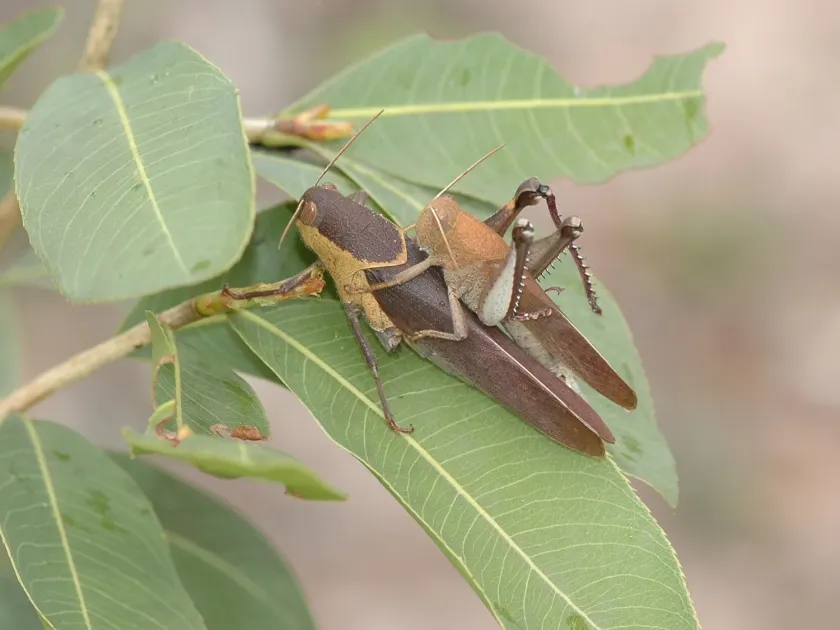
Description
How to identify
Acridoderes is a genus of insects belonging to the family Acrididae (short-horned grasshoppers). These insects are characterized by a robust body, powerful hind legs adapted for jumping, and functional wings that enable migration over long distances.
The external appearance of Acridoderes is often cryptic, featuring colors that match the local vegetation. This camouflage makes it difficult to detect them in natural habitats during their early stages of development.
The life cycle involves three stages: egg, nymph, and adult. Females deposit eggs in the soil within specialized protective cases known as egg pods, which safeguard the embryos from environmental stress.
As hemimetabolous insects, they undergo incomplete metamorphosis. Nymphs look like miniature versions of the adults, gradually growing and developing wings through several molts.
Adults are highly mobile and exhibit gregarious behavior during population surges, making them significant threats to agricultural productivity in affected regions.
What it damages
Acridoderes species are polyphagous, meaning they feed on a wide variety of plants, including cereals, legumes, and various wild grasses, which makes them highly destructive to diverse agricultural systems.
The primary economic damage occurs during mass outbreaks, where localized populations can consume vast areas of crops in a very short period of time.
They damage crops by feeding on leaves, stems, and reproductive parts, leading to significant yield loss and degradation of crop quality.
In cases of high infestation, total defoliation can occur, followed by damage to stalks, resulting in severe stunted growth or complete crop failure.
Beyond direct feeding, the tissue damage inflicted by these insects creates entry points for various phytopathogens, further weakening the plant's defense system.
Signs of infestation
A key indicator of an Acridoderes presence is irregular, ragged feeding patterns on the margins of leaves, which is a typical sign of large orthopteran pest activity.
Observations of fecal pellets on foliage or the sound of insects moving in the field during the day are clear signs that a population is present.
The sight of adult insects congregating on the field edges or migrating across paths is a critical threshold indicator that requires immediate management attention.
Stems of cereals may appear chewed or broken in areas where the pest is highly active, often resulting in significant thinning of the plant stand.
Drier conditions often favor the activity and rapid development of these grasshoppers, making vigilance essential during periods of low precipitation.
Control measures
Effective management begins with routine field scouting to identify egg-laying sites and early nymphal outbreaks before they reach uncontrollable levels.
When the economic injury level is reached, the application of registered chemical insecticides, such as pyrethroids or organophosphates, is the standard control approach.
Agronomic practices, including deep tillage after harvest, are highly effective in destroying egg pods buried in the soil, preventing the next generation from emerging.
Managing weeds on field borders and non-cropped areas reduces the available food source, limiting the pest's ability to establish large colonies.
- Regular monitoring using light traps or sweep nets.
- Implementation of biological control agents where applicable.
- Timely chemical sprays targeting younger nymphal stages for maximum efficacy.
Taxonomy
- Latin name
- Acridoderes
- Order
- Orthoptera (locusts)
- Family
- Acrididae
- EPPO code
- ACDOSP
Discussion
No discussions yet — be the first.