
Acrida turrita
Acrida turrita
Description
How to identify
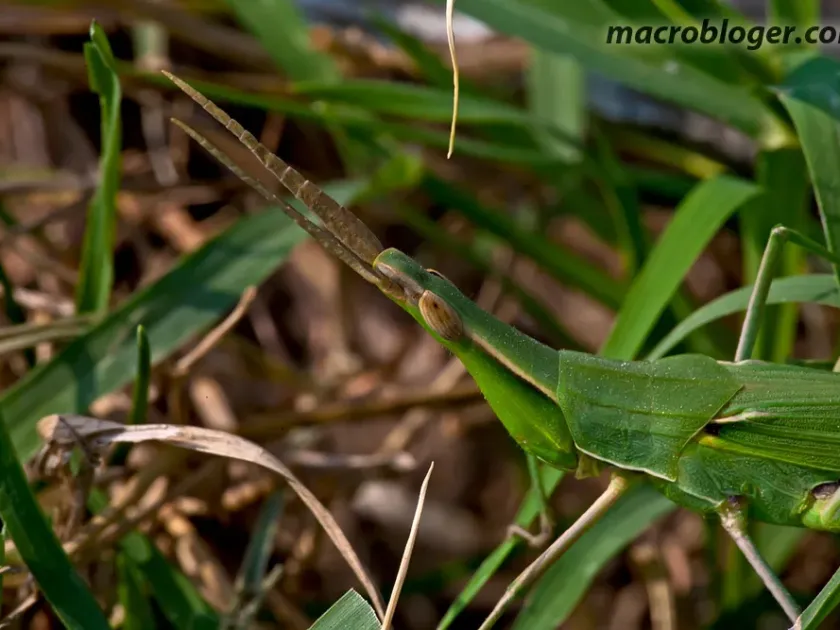
Acrida turrita, commonly known as the slant-faced grasshopper, belongs to the Acrididae family within the order Orthoptera. It is easily recognized by its elongated, conical head and slender body that can reach 80 mm in length.
The insect displays camouflage coloration ranging from green to brown, allowing it to blend perfectly into the surrounding vegetation. Its powerful hind legs are specialized for sudden, explosive jumps when threatened.
Well-developed wings provide this species with significant mobility. Unlike many swarming locusts, Acrida turrita is often solitary, preferring to stay hidden within tall grasses or thick crop stands.
Sexual dimorphism is prominent, with females being significantly larger and more robust than males. They deposit their eggs in the soil inside specialized pods, which protect the offspring from harsh environmental conditions.
The life cycle involves incomplete metamorphosis. Nymphs closely resemble the adults in appearance but are smaller and lack fully formed wings, growing through several molting stages.
What it damages
Acrida turrita is a polyphagous pest, feeding on a wide variety of plants. It causes significant damage to cereals such as wheat, corn, millet, and rice, as well as various wild grasses in pastures.
Equipped with strong mandibles, the pest consumes leaves, stems, and tender shoots. Under conditions of high population density, these grasshoppers can strip a plant bare, leading to massive yield losses.
The damage is not limited to direct leaf consumption; the resulting plant stress makes the crops highly susceptible to secondary infections and fungal diseases that further reduce plant vitality.
In pastures, Acrida turrita competes directly with livestock for food, reducing the quantity and quality of available forage. This can be particularly problematic during dry seasons when natural vegetation is scarce.
When natural food sources become depleted, these insects often migrate from wild grasslands to irrigated agricultural fields, potentially damaging technical crops and vegetable plantings.
When it appears
The life cycle of this species is highly dependent on temperature. The insect overwinters in the egg stage, with the pods buried in the soil, safe from freezing winter temperatures.
Egg hatching typically occurs in the spring, usually between late April and May, as soil temperatures rise. This timing often aligns with the active growth phase of cereal crops.
Nymphal development takes about 40 to 60 days, depending on climatic conditions. During this period, the nymphs undergo multiple molts, increasing in size and feeding voraciously on fresh vegetation.
Adult insects emerge in the summer and remain active throughout the autumn. This is the period of peak feeding and reproductive activity before the cycle concludes for the year.
The adults lay eggs in the autumn to ensure the next generation survives the winter. Once the eggs are safely deposited in the soil, the adult population perishes as temperatures drop.
Signs of infestation
The primary sign of an Acrida turrita infestation is the presence of ragged, irregularly chewed leaf edges. In severe cases, the entire leaf blade is consumed, leaving only the central midrib.
Field scouting often reveals the insects jumping suddenly as you move through the crop. Their rapid movement and flight are indicative of a grasshopper presence in the area.
High population densities leave behind traces of excrement. You may find small, dark, hard pellets on the surface of leaves or around the base of the plants, confirming feeding activity.
The insects are masters of stillness. If you inspect the stems carefully, you might spot individuals frozen in place, camouflaged against the plant, waiting for potential threats to pass.
- Ragged and torn leaf margins
- Defoliated stalks with only hard veins remaining
- Sudden jumping activity when entering fields
- Presence of dark fecal pellets on plant parts
Control measures
Effective management begins with agrotechnical practices. Deep autumn plowing is a highly recommended method, as it exposes and destroys egg pods, preventing the next generation from emerging.
Maintaining clean field borders and managing weeds in irrigation ditches is crucial. These areas serve as primary reservoirs and breeding grounds for the grasshoppers.
When the economic injury level is exceeded, chemical control with insecticides, such as pyrethroids or organophosphates, should be applied. Treatments are most effective when targeting younger nymph stages.
Biological control methods focus on preserving natural predators, including birds, predatory insects, and parasitic wasps, which help maintain a natural balance in the field ecosystem.
Consistent monitoring and early detection of local hotspots are vital. This approach enables targeted, localized insecticide applications, significantly reducing the environmental impact.
Taxonomy
- Latin name
- Acrida turrita
- Order
- Orthoptera (locusts)
- Family
- Acrididae
- EPPO code
- ACRITU
Discussion
No discussions yet — be the first.