
Acrida lata
Acrida lata
Description
How to identify
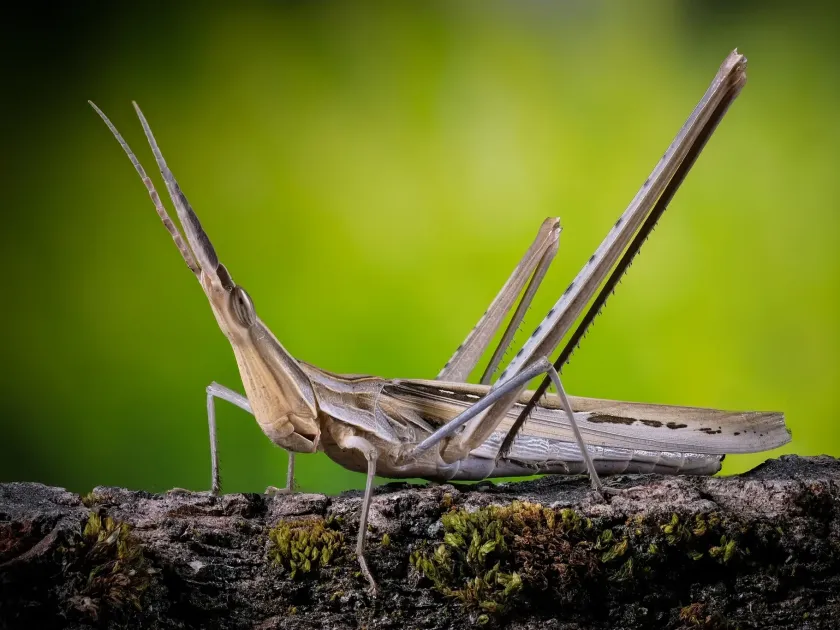
Acrida lata, commonly known as a type of long-headed grasshopper, is a significant pest within the Acrididae family. It is easily recognized by its elongated body, conical head, and slender, long hind legs, which enable it to jump considerable distances.
Adults typically measure between 40 and 70 mm in length. Their coloration ranges from bright green to brownish-yellow, providing effective camouflage among tall grasses and cereal stalks, which makes them difficult to spot during initial field inspections.
The species possesses well-developed wings, allowing adults to migrate between agricultural areas in search of food. Their antennae are short and sword-shaped, serving as a reliable diagnostic feature for entomologists and agronomists identifying the species in the field.
Nymphs resemble smaller, wingless versions of the adults. Throughout their development, they go through several instars, gradually increasing in size and developing wings, which allows them to transition from crawling to flying as they mature.
Acrida lata prefers open habitats, including dry grasslands, field borders, and fallow lands. These environments provide the necessary temperature conditions and vegetation cover essential for the survival and successful reproduction of the population.
What it damages
Acrida lata is a polyphagous pest capable of causing significant damage to a wide range of agricultural crops. Cereal crops, including wheat, barley, oats, and rye, are among its primary food sources, making it a threat to food security in affected regions.
Beyond cereal crops, this grasshopper feeds on corn, rice, millet, and sorghum. If population levels are high, they may also migrate to vegetable gardens or forage crops, expanding the scope of their destructive impact on local farming.
Both adults and nymphs feed on leaves and stems, grazing along the edges of the foliage. Under conditions of high population density, they can defoliate plants almost entirely, leaving only the central midribs, which halts plant growth.
The damage caused by this pest leads to reduced photosynthetic capacity, stunted growth, and a significant drop in grain yield. Furthermore, the physical trauma to the plants makes them more susceptible to secondary fungal infections and pathogens.
- Widespread defoliation of cereal leaves.
- Damage to reproductive plant organs, including spikes.
- Stunted plant development and reduced biomass.
- Diminished quality and weight of harvested grains.
When it appears
The life cycle of Acrida lata is strictly synchronized with seasonal shifts. The winter is passed in the egg stage, with eggs deposited in the soil within protective pods, known as egg masses, which are resistant to cold and environmental stress.
Nymphs emerge in the spring once the soil temperature is sufficient to trigger development. This timing often aligns with the early stages of cereal growth, providing the developing nymphs with an immediate and abundant food source.
The nymphal stage lasts for several weeks, during which the insects undergo multiple molts. During this phase, they are most active in feeding and remain relatively localized, making this the best window for targeted agricultural interventions.
By late summer, adults reach maturity. They are highly mobile, often flying to new, lush fields to feed and complete their reproductive cycle. This dispersal makes management more challenging as they spread throughout larger cultivated areas.
After mating, the females deposit their eggs in the soil, ensuring the next generation is secured before the onset of winter. Once the life cycle is complete, the adults perish, leaving the eggs to endure the dormant period until the next spring.
Control measures
Managing Acrida lata requires a strategy that integrates cultural practices, chemical control, and consistent field monitoring. Early detection is crucial to prevent the population from reaching outbreak levels that threaten harvest volume.
Cultural control relies heavily on deep plowing after the harvest. By turning the soil, egg pods are brought to the surface, where they are exposed to harsh weather conditions and natural predators like birds, significantly reducing the hatching population.
Chemical control involves the application of insecticides during the early nymphal stages. Targeting younger nymphs is more effective because they are less mobile and more vulnerable to insecticides, which prevents widespread damage later in the season.
It is essential to clear weeds and maintain clean borders around fields. These areas often serve as initial breeding grounds and reservoirs for the pest, allowing them to migrate into the crops once the resources in the margins are depleted.
Biological control, such as the use of entomopathogenic fungi or encouraging natural predator populations, can be integrated into broader pest management plans, especially in organic or sustainable farming systems where synthetic chemical use is strictly minimized.
Taxonomy
- Latin name
- Acrida lata
- Order
- Orthoptera (locusts)
- Family
- Acrididae
- EPPO code
- ACRILA
Discussion
No discussions yet — be the first.