
Acrida gigantea
Acrida gigantea
Description
How to identify
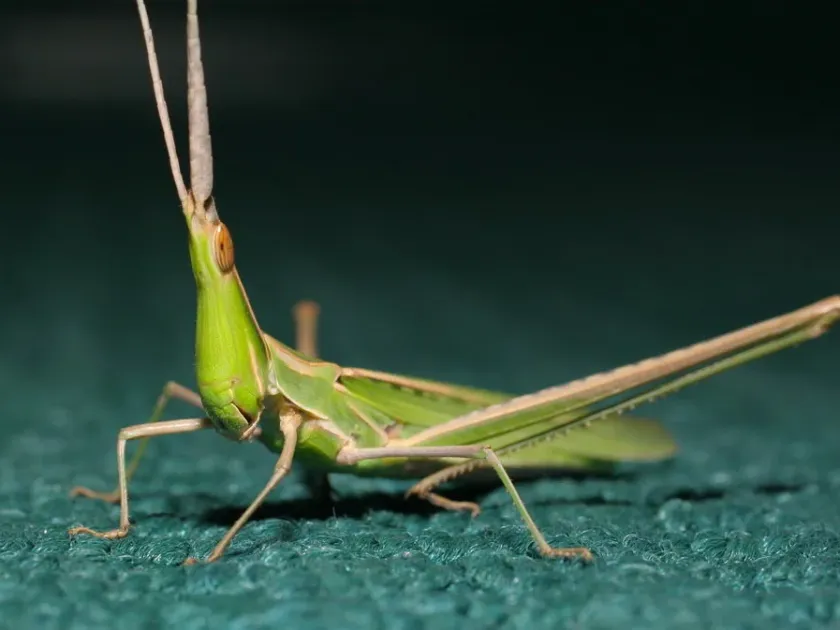
Acrida gigantea is a member of the Acrididae family within the order Orthoptera. This insect is easily recognized by its elongated body shape, with females often reaching lengths of 70 to 90 mm, making them significantly larger than males.
The head of this species is distinctly conical and elongated, which is the primary morphological feature of the Acrida genus. Their coloration ranges from bright green to brownish-yellow, providing excellent camouflage in grassy habitats.
The hind legs are highly developed, allowing for powerful jumps, while their long, narrow wings enable them to travel significant distances. They are generally solitary but can congregate in localized areas if food availability is high.
Their lifecycle consists of eggs, nymphs, and adults. Females deposit eggs in the soil within specialized protective cases, or egg pods, which allow the next generation to survive winter conditions effectively.
Understanding these morphological characteristics is essential for accurate identification in the field, as they differ from smaller, more common grasshopper species found in temperate agricultural regions.
What it damages
This species is a polyphagous pest, capable of consuming a wide variety of plants. It poses a significant threat to cereal crops, including wheat, barley, and oats, by feeding on leaves and stems.
Beyond cereal crops, this grasshopper frequently infests pastures and meadows, significantly reducing biomass available for livestock and thereby impacting agricultural productivity in grazing regions.
The primary damage is caused by the consumption of foliage, which reduces the photosynthetic capacity of the plants. In cases of severe infestation, insects may also target the reproductive parts of the plant, such as developing grain heads.
Young nymphs cause less individual damage but, when present in high densities, can cause rapid defoliation of seedlings, leading to reduced plant stand and potential crop loss during the early growth stages.
The intensity of the damage increases during hot, dry periods when natural forage sources dry out, forcing the insects to move from wild grasses into well-irrigated commercial field crops.
When it appears
Nymph hatching occurs in the spring as soil temperatures rise. This phase is critical for management, as early-stage nymphs are the most susceptible to control measures and are confined to smaller areas.
Adult activity peaks during the summer months, specifically from June through August, when they are most mobile and voracious. This is when the most significant damage to maturing crops typically occurs.
Climate variables play a major role in population dynamics. Warm, dry weather is ideal for their development, whereas prolonged cold and wet springs can significantly reduce the success of hatching and early nymph survival.
There is typically one generation per year. As autumn approaches, adult insects focus on mating and oviposition, laying their eggs in the soil to ensure the species survives through the winter months.
Field monitoring should be prioritized throughout the active growing season, with special attention paid to field margins and fallow strips where the population can build up before spreading into the crop.
Signs of infestation
The most common sign of infestation is ragged or notched leaf edges. Unlike caterpillars, which may consume entire leaves, grasshoppers often leave the central leaf midrib intact while eating the surrounding tissue.
The presence of adults can be confirmed by observing them jumping in the field. When walking through a crop, one will often notice sudden movement as the insects attempt to escape the disturbance.
Small, pellet-like frass (excrement) found on the soil surface or stuck to leaves is a clear indicator that the population is actively feeding in the area and has been established for some time.
Visible thinning of the crop stand or bare patches in the field can indicate severe infestations. If left unmanaged, these localized areas of damage can quickly expand to cover larger sections of the field.
An increase in the number of insectivorous birds foraging in a particular part of the field can sometimes signal a localized outbreak, as birds often congregate to feed on high concentrations of grasshoppers.
Control measures
The foundation of effective control is regular field monitoring using sweep nets to estimate population density. Focusing on field perimeters and surrounding non-crop vegetation helps detect outbreaks early.
Cultural control methods, such as deep autumn plowing, are highly effective as they disturb the soil and expose the egg pods to freezing temperatures and natural predators, preventing egg survival.
When the population threshold for economic damage is reached, insecticides are necessary. Contact and stomach-acting insecticides are generally effective, provided they are applied while nymphs are in their early stages.
Biological control, including the protection of natural predators like spiders and parasitic wasps, can help keep populations below the economic injury level if pesticide usage is minimized or targeted.
Integrated pest management strategies should emphasize using spot treatments for localized infestations to minimize the impact on beneficial insects and reduce overall chemical inputs on the farm.
Taxonomy
- Latin name
- Acrida gigantea
- Order
- Orthoptera (locusts)
- Family
- Acrididae
- EPPO code
- ACRIGI
Discussion
No discussions yet — be the first.