
Acrida conica
Acrida conica
Description
How to identify
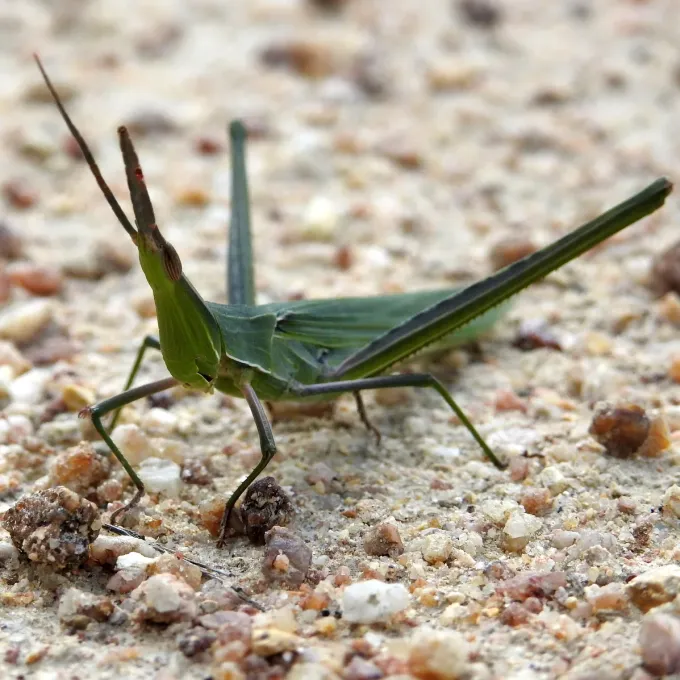
Acrida conica, commonly known as the giant green slantface, is a distinctive member of the Acrididae family within the order Orthoptera.
The insect is easily recognized by its elongated, conical head and slender, streamlined body shape, which helps it camouflage perfectly in tall grasses.
The coloration ranges from bright green to brown, allowing the insect to blend into various vegetative environments throughout its growth stages.
Adult females are significantly larger than males, often measuring several centimeters, and possess long, well-developed jumping legs characteristic of the species.
They have narrow, elongated wings that enable them to fly over short distances when disturbed or when seeking new sources of food and shelter.
What it damages
As a polyphagous insect, Acrida conica feeds on a wide variety of plants, showing a strong preference for members of the grass family.
In agricultural settings, these grasshoppers can cause significant damage to grain crops by consuming foliage and stems during their active growth period.
Beyond cereals, they may also attack pasture grasses, various vegetables, and occasionally the tender shoots of young orchards, especially in dry conditions.
Heavy infestations can lead to substantial leaf defoliation, which severely hampers the plant's photosynthetic ability and reduces overall crop yields.
The damage is often localized but can spread rapidly across a field if the population density reaches high levels, requiring swift intervention.
When it appears
The life cycle of this species is heavily influenced by seasonal temperature patterns, with peak activity occurring during the warm, summer months.
Nymphs typically emerge from overwintering eggs in the soil during late spring or early summer, depending on soil temperature and humidity levels.
They progress through several molting stages, spending the majority of their time feeding on succulent vegetation to fuel their rapid growth.
Adult grasshoppers become most visible during mid-to-late summer, when they are highly active, mating, and laying eggs for the next generation.
As autumn approaches and temperatures drop, the adult population gradually declines, and the eggs remain in the soil as the primary overwintering stage.
Signs of infestation
Early signs of an infestation include irregularly shaped notches or holes on the edges of leaves, caused by the insects' intensive feeding patterns.
Presence of the pest can be confirmed by observing the insects themselves, which are known for their sudden, powerful jumps when approached.
Accumulation of grasshopper frass on the soil surface or the leaves themselves is a strong indicator of a high population density in the area.
Wilting of leaves and thinning of plant stands in specific patches of the field are clear symptoms of severe herbivory caused by this species.
Significant reductions in green biomass and visible damage to leaf margins are common indicators that the pest is actively consuming the crop.
Control measures
Effective management begins with mechanical soil cultivation, such as plowing, which destroys egg pods overwintering in the upper soil layers.
Managing and reducing weed growth along field borders is crucial, as these areas often serve as initial breeding grounds and reservoirs for the pest.
When populations exceed economic threshold levels, the application of targeted insecticides is recommended to prevent widespread crop damage.
Biological control methods, such as encouraging natural predators or using pathogen-based treatments, are sustainable strategies for long-term population control.
Regular scouting of fields during the early summer months allows for the early detection of nymphs, facilitating timely interventions before damage escalates.
Taxonomy
- Latin name
- Acrida conica
- Order
- Orthoptera (locusts)
- Family
- Acrididae
- EPPO code
- ACRICO
Discussion
No discussions yet — be the first.