

Flour mite
Acarus farris
Description
How to identify
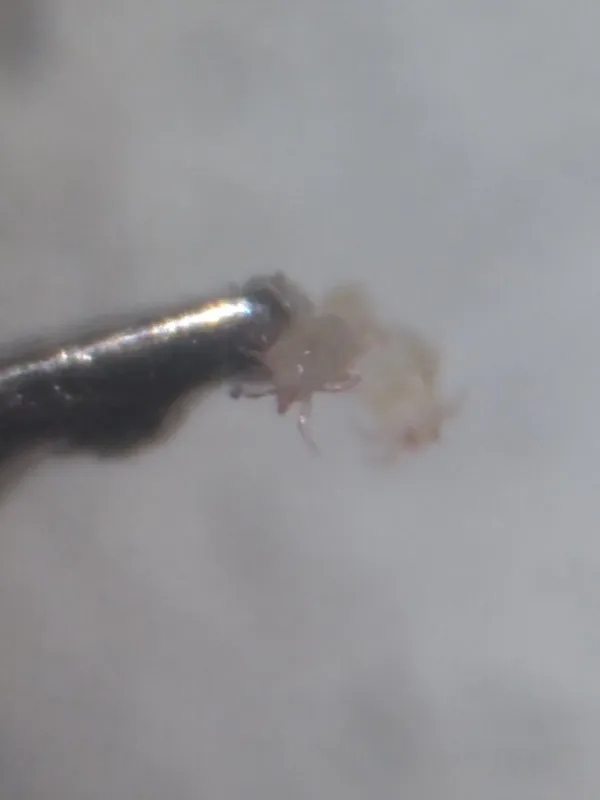
The flour mite (Acarus farris) is a microscopic arachnid, measuring approximately 0.3–0.5 mm in length. Its body is whitish or pale yellow in color, characterized by a smooth cuticle and long, distinct bristles used for movement.
Taxonomically, it belongs to the order Acariformes and the family Acaridae. The life cycle comprises eggs, larvae, nymphs, and adults. Under stressful conditions, the mite can enter a specialized stage known as a hypopus, which is highly resistant to environmental changes and chemicals.
The optimal development conditions for this species are high grain moisture content (above 14%) and temperatures ranging from +18°C to +25°C. When grain moisture drops below 12%, the population growth rate decreases significantly.
Females are highly prolific, capable of laying up to 100 eggs during their lifespan. Given favorable conditions, the population can reach massive levels quickly, enabling rapid colonization of large volumes of grain and flour products.
Due to their tiny size, these mites are difficult to detect visually without the use of magnifying lenses or microscopy, meaning they often go unnoticed until a large colony is already established.
What it damages
The flour mite infests a wide range of stored agricultural products, including wheat, rye, barley, oats, maize, and processed items like flour, bran, and various oilseeds.
These pests feed primarily on the germ of the grain. This feeding behavior destroys the embryo, which drastically reduces the germination energy and viability of the grain when used as seed stock.
The accumulation of mite feces, cast skins, and secretions leads to grain clumping and a characteristic unpleasant, musty odor. This significantly degrades the commercial and food quality of the product.
Mite activity induces localized heating within the grain mass. This self-heating process creates a micro-environment that encourages the growth of molds and fungi, further spoiling the stored commodities.
Consumption of heavily infested grain by humans or animals can cause significant health issues, including gastrointestinal distress and severe allergic reactions due to the toxic metabolites left behind by the mites.
Signs of infestation
The primary indicator of a flour mite infestation is a distinct, sweetish, honey-like smell emanating from the grain pile, often accompanied by a general musty odor.
A fine, dusty coating, often referred to as "living dust," may appear on the surface of the grain. This layer is composed of active mites, their shed skins, and excrement.
Localized hot spots within the grain mass indicate that a colony is active. Monitoring tools like temperature probes can reveal these areas of elevated temperature before major damage occurs.
Changes in grain texture are common; as the mites infest the mass, the grain may lose its flowability and become clumped, making it difficult to unload or transport through conveyors.
Microscopic examination of grain samples is the standard diagnostic procedure to confirm the presence of Acarus farris, as the physical symptoms can sometimes mimic those of other storage pests.
Control measures
The most effective strategy for managing flour mites is rigorous humidity control. Keeping grain moisture below 13% creates an environment where these mites cannot thrive or reproduce.
Before storing new grain, empty silos and warehouse structures should undergo thorough mechanical cleaning and professional fumigation to eliminate any remaining populations from crevices and equipment.
Active aeration and cooling of the grain mass during the fall and winter months help maintain low temperatures, which suppresses the biological activity of the mite population.
If an infestation is detected, fumigation with phosphine-based products is the standard industry practice to ensure that the pest is neutralized across all stages, including eggs and hypopi.
Consistent monitoring of stored stocks, including regular visual inspections and chemical quality checks, is essential to detect early infestations and mitigate potential losses in a timely manner.
Reference
Connections · Flour mite
Most often together:
Marketplace
Products · 8

Biology
Taxonomy
- Latin name
- Acarus farris
- Order
- Mites
- Family
- Acaridae
- EPPO code
- ACARFA
Community
Discussion
No discussions yet — be the first.