
Flour mite
Acarus siro
Description
How to identify
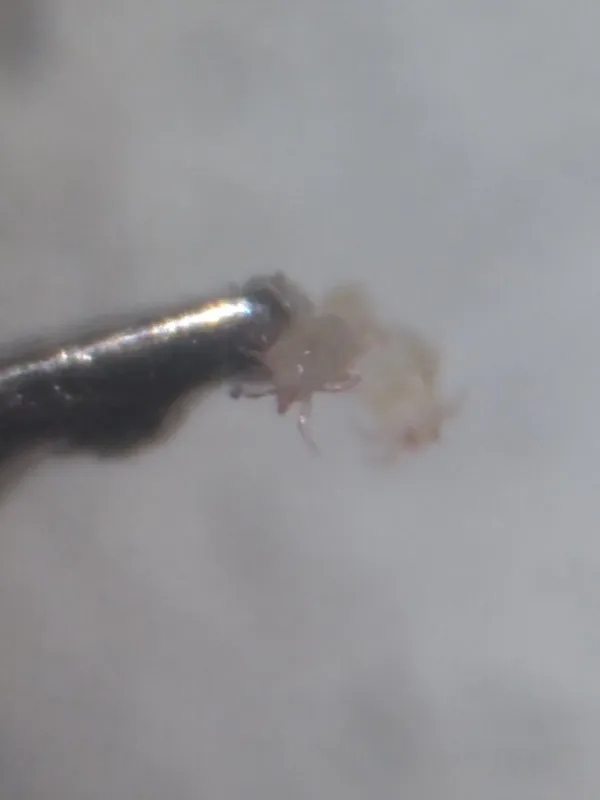
The flour mite (Acarus siro) belongs to the family Acaridae, order Acariformes. It is a microscopic arachnid that poses a significant threat to stored products.
Adult mites are tiny, measuring between 0.3 and 0.5 mm in length. Their bodies are typically oval, translucent, and creamy-white, featuring brown legs and mouthparts.
The lifecycle consists of several stages: egg, larva, protonymph, deutonymph (hypopus), and adult. The hypopus stage is particularly resistant to environmental stressors.
Under optimal conditions, such as temperatures of +22°C to +25°C and moisture levels above 14%, these mites can complete their life cycle in just 10 to 15 days.
They are capable of rapid population growth, with females laying dozens of eggs, leading to massive infestations in short periods if storage conditions remain unstable.
What it damages
Flour mites primarily infest cereal grains, including wheat, barley, and oats, as well as processed food products such as flour, bran, and various dry animal feeds.
They are also known to damage pulses, oilseeds, dried fruits, and even cheese, significantly reducing the commercial value and nutritional quality of these goods.
The mites feed by devouring the germ of the grain, which completely destroys its viability and prevents it from being used for seed or high-quality food production.
Infestation leads to secondary damage as the mites produce moisture, which encourages the growth of mold and bacteria, further degrading the stored grain quality.
Products contaminated by flour mites are generally deemed unfit for human consumption due to the presence of allergens and potential toxins excreted by the mites.
Signs of infestation
One of the earliest signs of a flour mite outbreak is a distinct, sweetish, honey-like odor emanating from the grain storage bins or containers of flour.
An infested mass of grain may appear to move or ripple on the surface; this is caused by the activity of millions of tiny mites migrating through the product.
Localized heating within the grain bulk is a major indicator of infestation, which can be monitored using temperature probes placed throughout the storage facility.
Sifting grain samples often reveals a fine, powdery residue consisting of mite excrement, molted skins, and deceased individuals, which indicates a high-level infestation.
The appearance of a dusty, grayish crust on the surface of stored flour or milled grains is a classic visual sign that a colony has established itself.
Control measures
Maintaining grain moisture content below 13% is the most effective preventative measure, as it creates an environment that suppresses the development of the mite.
Implementing rigorous sanitation practices, such as cleaning all grain residue from storage bins and conveying equipment, prevents the carry-over of mites between seasons.
Proper aeration and temperature control in silos help to keep the grain cool and dry, which significantly slows down or stops the reproduction cycles of the flour mite.
Chemical control involving phosphine-based fumigation is the standard industry practice for eliminating infestations in large-scale storage facilities and ship cargoes.
Surface treatments using approved contact insecticides in empty storage spaces are recommended to prevent re-infestation and ensure the protection of new batches of grain.
Taxonomy
- Latin name
- Acarus siro
- Order
- Mites
- Family
- Acaridae
- EPPO code
- ACARSI
Discussion
No discussions yet — be the first.