
Sunflower downy mildew
Sunflower mild
Description
How to identify
The causative agent of this disease is the oomycete Plasmopara halstedii. Taxonomically, it belongs to the Kingdom Chromista and acts as an obligate biotroph, requiring living host tissue to complete its life cycle.
The pathogen reproduces both sexually and asexually. Sexual reproduction results in the formation of oospores, which are thick-walled resting structures capable of surviving in the soil for up to a decade, serving as the primary source of infection.
Asexual reproduction occurs via sporangia and zoospores. These mobile spores are produced in abundance on the underside of infected leaves and are dispersed by wind and splashing rain, allowing the disease to spread rapidly within a field.
The development of the disease is strictly dependent on environmental conditions. Cool temperatures (15-18°C) and high soil moisture are optimal for the germination of oospores and the subsequent systemic colonization of the sunflower seedlings.
Genetic variability is a defining characteristic of this pathogen. Different physiological races of the fungus have emerged, challenging the efficacy of existing resistant sunflower hybrids and requiring continuous breeding efforts.
What it damages
The primary host for this pathogen is the cultivated sunflower. It can also colonize various wild species of the Asteraceae family, which act as reservoirs for the inoculum.
The disease causes systemic infection, which is particularly devastating. When seedlings are infected early, they often fail to develop normally, leading to severe stunting, leaf chlorosis, and significant losses in plant population.
Yield loss is the most severe impact of downy mildew. Heavily infected plants often develop small, sterile flower heads (capitula) or produce shriveled seeds with significantly lower oil content.
In cases of late-season infection, the damage may be less visible but still substantial. The physiological disruption caused by the pathogen reduces the plant's overall photosynthetic capacity and nutrient uptake.
Economic damage is also amplified by the increased susceptibility of infected plants to other pathogens. The weakened tissues become easy targets for stalk rots and head rots, further degrading the harvest quality.
Signs of infestation
The most recognizable symptom is stunted growth. Infected plants have shorter internodes and a reduced root system, making them look like dwarfs compared to healthy plants in the same field.
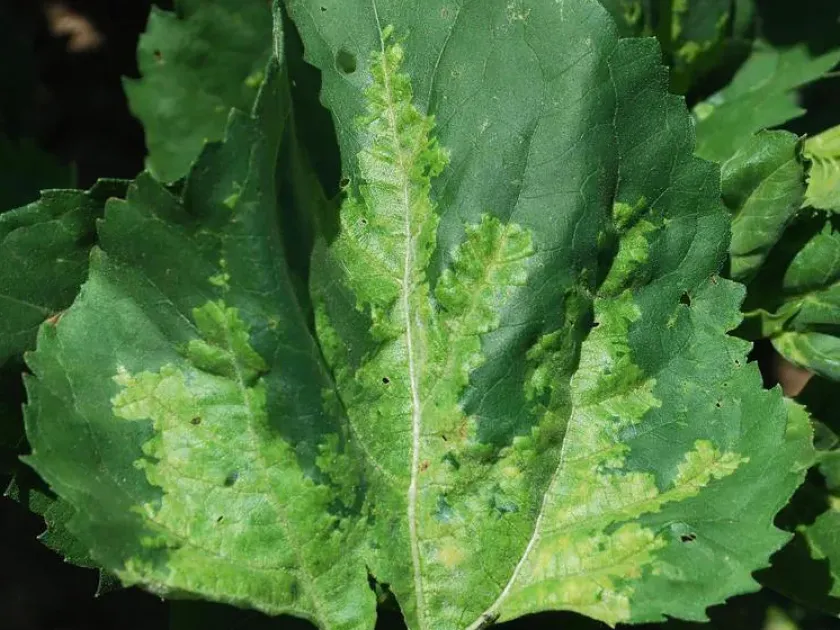
Chlorotic lesions often appear on the leaves, typically starting at the base and following the leaf veins. These patches later become necrotic as the pathogen progresses through the plant tissues.
Under conditions of high humidity, a dense, white, downy fungal-like growth appears on the lower leaf surface. This represents the sporulation of the oomycete, which is a diagnostic feature of the disease.
During the reproductive phase, the flower head remains in a vertical position instead of drooping. This is because the infection destroys the tissues responsible for the natural bending of the head as seeds develop.
- Severe stunting and dwarfing of plants.
- Yellow mosaic-like chlorosis along the leaf veins.
- White, downy sporulation on the underside of leaves.
- Upright, sterile, or underdeveloped flower heads.
- Failure of seeds to develop in the center of the head.
Control measures
The most effective strategy for managing downy mildew is the use of resistant hybrids. Breeders incorporate specific resistance genes to mitigate the risk posed by prevalent local races of the pathogen.
Chemical seed treatment is a mandatory practice in commercial sunflower production. Systemic fungicides containing phenylamides (such as metalaxyl or mefenoxam) provide essential protection during the early stages of plant growth.
Crop rotation is critical to lower the concentration of oospores in the soil. A rotation interval of at least 6–8 years without sunflower cultivation helps to starve the pathogen and reduce soil inoculum levels.
Sanitation and weed control are essential components of an integrated pest management program. Removing volunteer sunflowers and wild hosts prevents the pathogen from persisting in the field environment.
Proper water management and avoiding excessive seedbed moisture during the planting phase can limit early-season infection risks. Ensuring adequate field drainage is key to minimizing the conditions favored by the pathogen.
Discussion
No discussions yet — be the first.