
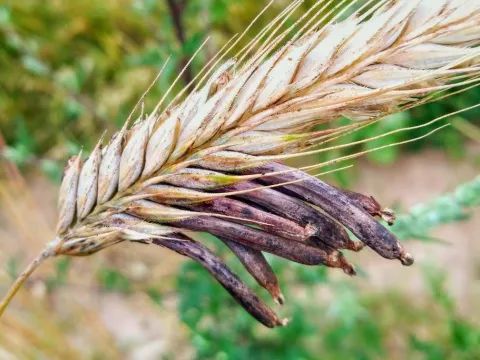
Rye ergot
Sphacelia segetum
Rye ergot (Sphacelia segetum) is the conidial (asexual) life stage of the fungus Claviceps purpurea. It belongs to the Ascomycota division and is widely recognized as the causative agent of the disease known as ergot, which affects various cereal grasses.
What the section contains
Rye ergot
The first external sign of infection is the appearance of "honeydew" — a sticky, sugary exudate leaking from the florets. This fluid is rich in microscopic, one-celled conidia, which serve as the primary inoculum for secondary spread during the flowering period of the host plant.
After the initial infection phase, the fungal mycelium replaces the ovary of the cereal plant. It develops into a compact, white mass of hyphae, which eventually hardens and darkens into a deep purple or black body called a sclerotium, or "ergot kernel."
The life cycle is highly synchronized with the host's flowering time. When environmental conditions are humid and cool, the fungal spores germinate or travel via insects to open florets, successfully hijacking the plant's reproductive system.
Identification is easiest when the honeydew is visible or when the mature black sclerotia are observed emerging from the glumes instead of healthy grains. The absence of the teleomorphic (sexual) stage during the growing season is characteristic of the Sphacelia phase.
The pathogen primarily affects rye, wheat, barley, oats, and various wild meadow grasses. Rye is particularly susceptible due to its cross-pollinating nature, which leaves the florets open for longer periods, providing an entry point for fungal spores.
The main impact is the significant reduction in grain yield, as the fungal sclerotia replace the grain itself. Furthermore, the grain that is harvested becomes toxic due to the presence of alkaloids like ergotamine, which are highly dangerous to both humans and livestock.
Consumption of contaminated grain leads to ergotism, a severe condition characterized by neurological symptoms, restricted blood circulation, and necrosis of tissues. Because of these health risks, strict regulations exist regarding the percentage of ergot allowed in commercial grain shipments.
Economic losses are compounded by the costs of cleaning and processing grain to remove the sclerotia. In severe cases of infestation, the entire harvest may be deemed unfit for human consumption or animal feed, resulting in substantial financial loss for producers.
In addition to direct losses, fields contaminated with sclerotia become persistent sources of inoculum. The sclerotia can remain viable in the soil for several years, acting as a recurring threat to subsequent crops planted in the same area.
Effective management begins with the use of clean, certified seed lots. Modern seed cleaning machinery, including gravity separators and salt-bath flotation methods, can effectively remove sclerotia from grain, ensuring the safety and quality of the sowing material.
Cultural practices, such as deep plowing, are highly effective in breaking the disease cycle. By burying sclerotia at a depth of 10-15 cm or more, the fungus is unable to produce the fruiting bodies (stromata) necessary for the next stage of infection in the spring.
Weed management plays a critical role in controlling ergot. Removing wild grasses along field borders and ditches is essential, as these wild hosts serve as natural reservoirs that harbor the pathogen and facilitate its spread into commercial fields.
Crop rotation is a fundamental tool for preventing the accumulation of the fungus in the soil. By avoiding the cultivation of susceptible cereal crops on the same field for at least 2–3 years, farmers can significantly reduce the pressure of the pathogen.
- Selecting resistant cereal varieties.
- Monitoring weather during flowering stages.
- Ensuring uniform crop development through proper fertilization.
- Rigorous weed control in non-cropped areas.