
Saccharomycopsis vini
Saccharomycopsis vini
Saccharomycopsis vini is a yeast-like fungus belonging to the Ascomycota division. Historically classified under various names, it is recognized as a filamentous yeast that commonly inhabits environments with high sugar concentrations, such as grape must and ripening fruits.
What the section contains
Saccharomycopsis vini
Biologically, it is often considered an opportunistic pathogen. While it may not initiate an infection on healthy tissue, it thrives in the micro-environment created by other primary pathogens or mechanical injuries, playing a significant role in the spoilage of fruit surfaces.
The primary host for this organism is the grapevine (Vitis vinifera). The fungus targets berries that have been compromised by insects, hail, or fungal pathogens like Botrytis cinerea, utilizing the released sugars to proliferate.
While it does not usually kill the plant, it causes significant economic losses by spoiling the harvest quality. It affects the must composition, introducing off-flavors that are detrimental to winemaking processes.
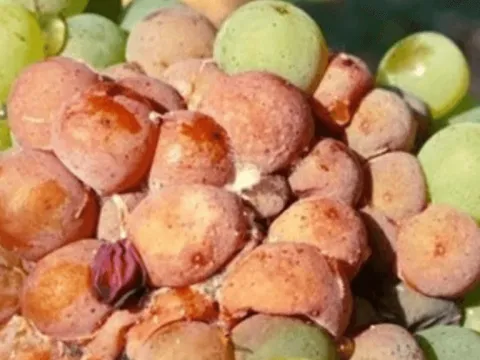
Signs of infection include a noticeable alcoholic or fermentative odor coming from the clusters. Infected berries lose their turgor, become soft, and often exhibit a dull, grayish film on the surface as the yeast population grows.
Unlike some aggressive pathogens, Saccharomycopsis vini acts more like a degradative agent. The rapid spread of this yeast in warm conditions can lead to the fermentation of juice inside the berries while still on the vine, complicating harvest operations.
Control strategies should focus on integrated pest management to prevent physical damage to the berry skin. Protecting the crop from insect pests like the European grapevine moth is crucial for keeping the fruit intact.
Cultural practices such as leaf pulling and proper canopy management improve air circulation, reducing the humidity levels that favor yeast growth. Immediate processing of harvested grapes is the most effective way to prevent the development of spoilage organisms.