
Late blight
South
Description
How to identify
Late blight is caused by Phytophthora infestans, an oomycete pathogen. Although it resembles a fungus, it is genetically closer to brown algae and diatoms.
The pathogen reproduces via motile zoospores that require water to swim and infect the host tissues, making it highly dependent on humid weather conditions.
Phytophthora infestans is the same organism responsible for the infamous potato famine, highlighting its historical and agricultural significance.
It primarily attacks solanaceous crops, including potatoes and tomatoes, using specialized structures called haustoria to extract nutrients from plant cells.
This pathogen survives between growing seasons in infected tubers, cull piles, or as oospores in the soil, which can remain viable for many years.
What it damages
Late blight is arguably the most destructive disease of potatoes and tomatoes worldwide, capable of destroying an entire crop in less than two weeks.
Foliar infection leads to rapid necrosis of leaves and stems, completely arresting tuber or fruit development and causing total yield loss.
Tubers infected with late blight are prone to rot, which significantly reduces the quality of the harvested crop and limits its shelf life in storage facilities.
In tomato production, the pathogen causes lesions on fruits that render them unmarketable, leading to substantial financial losses for commercial growers.
The secondary infection in storage can spread from a few diseased tubers to an entire batch, causing immense economic impact through product degradation.
When it appears
The pathogen thrives during cool to moderate temperatures ranging from 15 to 22 degrees Celsius accompanied by high moisture levels.
Periods of frequent rainfall, high humidity, and overcast skies are critical for the rapid spread of spores throughout the crop canopy.
In many regions, late blight pressure increases significantly during mid-summer and late autumn when dew formation is persistent and heavy.
Greenhouse environments are particularly susceptible if ventilation is poor, as stagnant air and condensation create a microclimate ideal for spore germination.
Seasonal outbreaks often start from localized foci and expand rapidly as wind-borne sporangia are distributed over large geographic areas.
Signs of infestation
Symptoms initially appear as small, water-soaked spots on the leaves, which rapidly expand into dark, necrotic lesions with light green halos.
On the undersides of infected leaves, a characteristic whitish, fuzzy fungal-like growth appears, representing the sporulation of the oomycete.
Stems become brittle and develop dark brown or black lesions, often causing the entire plant to collapse or wilt suddenly during active growth.
Infected potato tubers show localized, slightly sunken, dark reddish-brown surface lesions, while the internal flesh turns into a dry, granular rot.
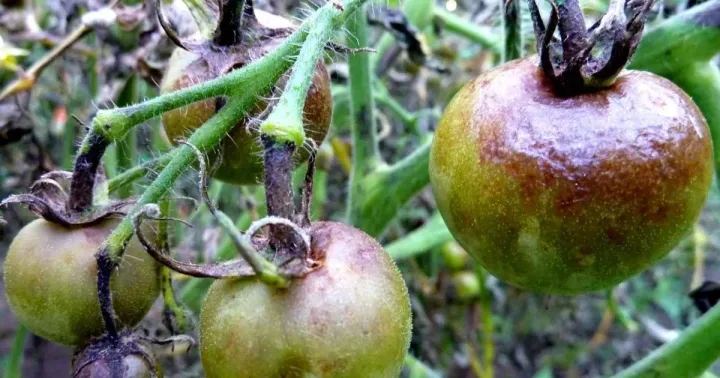
Tomato fruits develop large, firm, dark, irregular patches that spread throughout the skin, eventually softening the fruit and causing it to decay.
Control measures
Integrated Pest Management (IPM) is essential for controlling late blight, combining cultural practices with the judicious use of fungicides.
Effective crop management includes the use of certified disease-free seeds and planting resistant cultivars to reduce the baseline infection risk.
Good sanitation, such as removing cull potatoes and debris from the field, prevents the carry-over of the pathogen to the following growing season.
- Scouting fields regularly to detect early signs of infection.
- Applying protective copper-based or systemic fungicides.
- Maintaining optimal spacing to improve airflow between plants.
- Killing vines before harvest to minimize tuber-to-spore contact.
Careful monitoring of weather forecasts helps growers time their fungicide applications to coincide with predicted periods of high disease pressure.
Causes diseases · 1
Discussion
No discussions yet — be the first.