
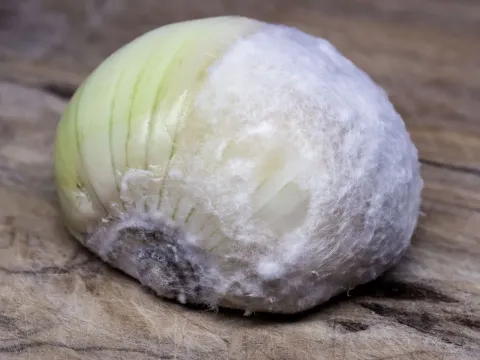
White rot of onions
Sclerotium cepivorum
The causative agent of white rot is Sclerotium cepivorum, a specialized fungal pathogen belonging to the phylum Ascomycota. It is a highly destructive soil-borne fungus that strictly infects Allium species.
What the section contains
White rot of onions
The fungus survives in the soil as small, black structures called sclerotia. These are resilient bodies that can remain dormant in the soil for over a decade, making this pathogen difficult to eradicate.
Germination of sclerotia is exclusively triggered by chemical compounds (root exudates) released by growing Allium crops. This ensures the fungus only activates when a host is present.
Upon germination, the fungus produces a white, fluffy mycelium that colonizes the roots and basal plate of the onion or garlic plant, leading to rapid tissue degradation.
As the infection progresses, the mycelium forms new sclerotia, which look like small black poppy seeds scattered within the white fungal growth.
White rot affects all major onion types, garlic, leeks, and shallots. It causes severe root rot and basal decay, resulting in the sudden wilting and death of the plant.
In the field, infected plants show yellowing leaves that die back from the tips. The bulbs become soft, watery, and eventually rot completely, leading to significant yield loss.
The disease causes major economic losses not only in the field but also during storage, as infected bulbs can transmit the fungus to healthy neighbors in a pile.
Because sclerotia persist in the soil for so long, fields heavily infested with Sclerotium cepivorum may be rendered unsuitable for Allium production for many years.
Even moderate infestations can destroy a large portion of the harvest, making it one of the most feared diseases by commercial onion producers.
The fungus thrives in cool to moderate soil temperatures, typically between 10°C and 20°C (50°F–68°F). High temperatures during mid-summer often suppress the infection.
The most critical periods for infection are early spring after planting and autumn during the maturation phase, when temperatures drop into the optimal range.
Prolonged soil moisture levels promote the movement of mycelium and the infection process, allowing the fungus to spread from one bulb to another.
While the pathogen prefers cooler weather, the sclerotia themselves are extremely heat-tolerant and can survive harsh environmental conditions throughout the year.
Understanding the link between soil temperature and fungal activity is vital for timing fungicide applications and irrigation management to minimize disease pressure.
The earliest symptom is the yellowing and wilting of the leaves, starting from the leaf tips and moving downward until the entire plant collapses.
When an infected plant is pulled from the ground, the roots are often missing or completely rotted, and the basal plate is covered in a white, cottony mycelial mat.
Distinctive black sclerotia are usually visible on the basal plate or the sides of the bulb, often embedded in the white mycelium.
Bulbs exhibit a characteristic softness and decay, eventually becoming a watery, mushy mass that gives off an unpleasant, rotting smell.
In the field, the infection typically starts in isolated patches, which expand over time as the fungus spreads through the soil to neighboring plants.
Long-term crop rotation is the primary management strategy. However, because sclerotia persist for so many years, rotation intervals of 6–10 years are often required.
Strict sanitation is essential: ensure all planting materials, such as sets or cloves, are pathogen-free and treat them with appropriate fungicides before planting.
When an outbreak occurs, affected plants and the surrounding soil should be carefully removed and destroyed to prevent the further buildup of sclerotia in the soil.
Improve field drainage and manage irrigation carefully to avoid prolonged periods of soil saturation, which favor the development of the fungal mycelium.
- Use approved fungicides as a soil drench or seed treatment in areas with a history of the disease.
- Clean all farm equipment thoroughly to prevent the movement of contaminated soil between fields.
- Research resistant or tolerant cultivars, though options for complete immunity are currently very limited.