
Salt toxicity
Salt toxicity
Salt toxicity in plants is a physiological disorder caused by the excessive accumulation of water-soluble salts in the root zone. It is an abiotic stress factor, not a biotic disease, meaning no pathogen is responsible for the condition.
What the section contains
Salt toxicity
The primary mechanism behind this condition is osmotic stress. High salt concentrations in the soil solution lower the water potential, making it physically difficult for roots to extract water, even when the soil appears moist.
Beyond water uptake issues, ionic toxicity occurs when excessive sodium and chloride ions infiltrate the plant tissue. This disrupts the plant's ability to maintain a balance of essential nutrients, particularly potassium and calcium, leading to metabolic failure.
Salt toxicity is a major limiting factor in agriculture worldwide, especially in arid and semi-arid regions where irrigation practices or poor drainage lead to high soil salt accumulation.
Diagnosis requires measuring the electrical conductivity (EC) of the soil saturation extract. High EC levels are a definitive indicator of salt stress, often accompanied by visual symptoms in leaves and roots.
The damage caused by salt toxicity is extensive, affecting germination, vegetative growth, and reproductive output. Most horticultural crops, including fruits and vegetables, are highly sensitive to these conditions.
Roots show stunted growth, discoloration, and increased brittleness. The suppression of root elongation limits the plant's ability to forage for water and nutrients, causing a general decline in plant vigor.
Reproductive growth is severely hampered. Plants may exhibit delayed flowering, poor fruit set, and reduced fruit size. In extreme cases, salt stress causes flower or fruit abortion, resulting in near-total harvest failure.
Soil structure is also degraded under high salinity. This leads to crusting and compaction, which hinders soil aeration, further stressing the root environment and encouraging the development of anaerobic conditions.
Long-term exposure to toxic salt levels causes permanent damage to the soil microbial population, reducing the natural fertility and biological activity of the agricultural land.
Salt toxicity is most prevalent during periods of high evaporative demand, typically in mid-summer. As the sun evaporates water from the soil surface, salts are drawn up from deeper layers, concentrating them around the root zone.
In greenhouse operations, salt toxicity can occur throughout the year. The lack of natural leaching from rainfall means that salts from fertilizers and irrigation water accumulate rapidly in the container or soil bed.
Irrigation scheduling is critical. Irrigating with saline water during dry spells exacerbates the condition, as the concentration of salts in the soil solution increases as the plant consumes the available water.
After periods of heavy rainfall, the effects of salt toxicity may be temporarily masked due to leaching. However, without proper drainage, the salt levels quickly bounce back as soon as the soil begins to dry out.
Early season symptoms often appear during germination. Salt-affected seeds exhibit low or uneven germination rates, leading to poor plant stand density that impacts the entire production cycle.
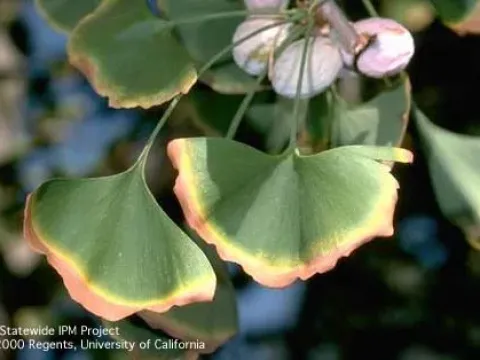
The most recognizable sign is marginal leaf burn, where the edges of leaves turn yellow and then brown. This necrosis moves inward from the leaf margins, distinguishing it from systemic fungal infections.
Leaf chlorosis, particularly between the veins, is common due to ion antagonism. Plants appear stunted and small, with significantly reduced leaf size and shortened internodes, giving them a compact appearance.
Premature leaf drop is a hallmark of salt stress. The plant attempts to shed its damaged, salt-loaded leaves to conserve energy and reduce further transpiration, often resulting in sparse foliage.
Roots appear darker and may show signs of decay or localized necrosis at the root tips. The root system may be smaller than expected for the size of the plant, lacking healthy white tips.
White, crusty salt deposits are frequently visible on the soil surface in potted plants or beds. This visible salt accumulation is a warning sign that the soil solution has exceeded safety thresholds.
Leaching is the primary method of controlling salt toxicity. This involves applying high-quality water in excess of the plant's requirement to push the accumulated salts below the root zone.
Improving soil drainage is essential for successful leaching. Without adequate drainage, salt-rich water remains in the root zone, making any attempt to flush the soil ineffective.
The use of soil amendments such as gypsum can help displace sodium ions from soil particles, making them easier to leach out during irrigation. This is a standard practice in managing saline-sodic soils.
Selecting salt-tolerant crop varieties and rootstocks can significantly mitigate the impact of salinity. Many breeders have developed lines specifically adapted to thrive in soils with higher mineral content.
- Utilizing organic mulch to reduce evaporation rates and surface salt accumulation.
- Applying balanced fertilizers while avoiding chlorine-containing sources.
- Installing automated soil moisture and EC sensors to monitor salt buildup in real-time.