
Puccinia dioicae
Puccinia dioicae
Description
How to identify
Puccinia dioicae is an obligate fungal pathogen belonging to the phylum Basidiomycota and the class Pucciniomycetes. It is recognized as a complex rust fungus that necessitates alternating hosts to complete its entire biological life cycle.
The fungus exhibits high host specificity, primarily affecting members of the Cyperaceae family (sedges) as primary hosts, while using various Asteraceae species as secondary hosts to spread its infection.
Microscopically, the pathogen is identified by the formation of aecia, uredinia, and teliospores at different stages of its life cycle. These spores are highly adapted for long-distance wind dispersal, enabling the fungus to spread rapidly across agricultural landscapes.
This pathogen thrives in temperate climates, particularly in moist environments. Its classification is strictly defined by the morphology of its teliospores and the specific range of plants it infects during its cycle.
Field diagnosis can be challenging due to the visual similarity of symptoms to other rust diseases, necessitating laboratory analysis for accurate identification and confirmation of the fungal species.
What it damages
Primary hosts for Puccinia dioicae include various species of sedge (Carex), where the initial stages of spore development occur. Secondary hosts include both cultivated and wild plants in the Asteraceae family, which sustain the pathogen during the growing season.
Infection significantly disrupts plant physiology, particularly photosynthesis, leading to reduced overall yield. The fungus drains essential nutrients from the host, compromising its ability to develop and mature properly.
Severe infestations cause premature leaf senescence and necrosis, drastically reducing the assimilation surface area. This results in significant losses in seed weight and overall crop quality.
Plants weakened by the pathogen are more susceptible to secondary infections and abiotic stresses, such as drought or frost. The damaged tissue often becomes a gateway for secondary bacterial infections, further degrading the crop.
Economic impact is most pronounced in seasons with high humidity, where conditions are favorable for widespread development of the pathogen near areas of dense sedge populations.
When it appears
The life cycle of Puccinia dioicae begins in the spring when aeciospores are released and transmitted to susceptible hosts. Infection is facilitated by the presence of free moisture and moderate temperatures, ideally between 15 and 20 degrees Celsius.
During the summer months, the uredinial stage develops, facilitating rapid secondary spread and multiple infection cycles. This phase is crucial for the development of epiphytotics in field settings.
By autumn, the fungus transitions to the teliospore stage, which is specialized for overwintering on plant debris. These spores ensure the persistence of the fungus in the field until the next growing season.
The incubation period for the fungus typically lasts between one to two weeks, depending on the prevailing temperature and moisture conditions of the environment.
Spread is heavily dependent on weather patterns, including rainfall, fog, and prolonged dew, which provide the essential moisture levels required for spores to germinate and penetrate host leaves.
Signs of infestation
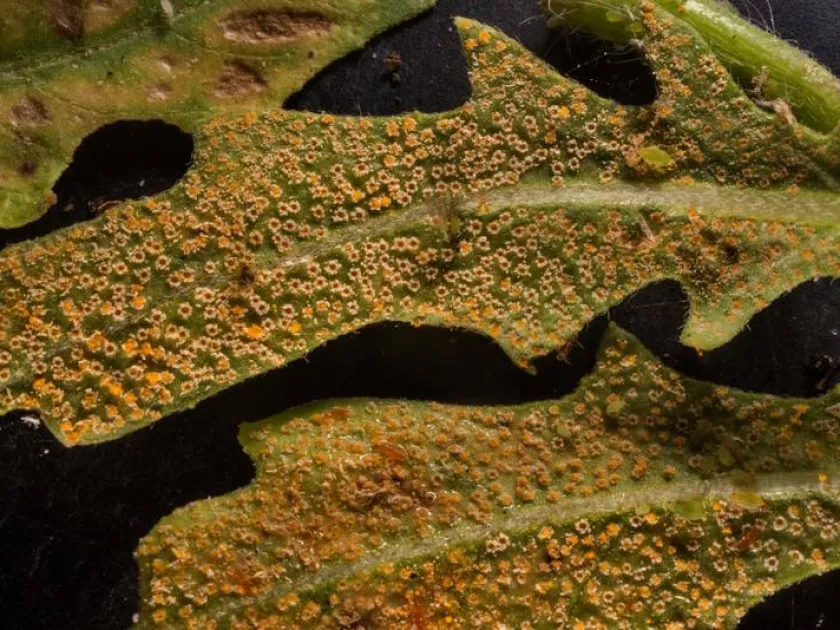
The initial signs of infection include chlorotic spots on leaves, which subsequently give rise to bright orange or yellow pustules (aecia) on the leaf surface.
In later stages, dark brown or black pustules develop, containing teliospores. These structures often rupture the host epidermis, releasing masses of spores into the environment.
Severely infected plants appear stunted, with leaves turning yellow, curling, and eventually drying out prematurely. This leads to early defoliation and a drastic reduction in plant vigor.
The presence of a powdery spore mass that easily rubs off onto surfaces is a diagnostic characteristic of this rust disease. The foliage often takes on a sickly, chlorotic appearance.
- Development of yellow or orange spots on leaves
- Formation of dark pustules on the plant surface
- Premature yellowing and drying of foliage
- Stunted growth and deformation of plant organs
Control measures
The primary control strategy involves the removal of alternative hosts, particularly wild sedges, from the vicinity of fields to eliminate the pathogen's reservoir.
Implementing effective crop rotation is essential to prevent the accumulation of fungal spores in the soil and on crop residues. Deep plowing helps manage the pathogen by burying infected plant debris.
Systemic fungicides, particularly those belonging to the triazole or strobilurin classes, are effective in managing the disease during the growing season when environmental conditions favor infection.
Regular field scouting is critical for early detection, allowing for targeted fungicide application before the infection reaches epidemic proportions across the entire crop.
Breeding for resistant cultivars remains the most sustainable long-term solution for managing Puccinia dioicae, though the high genetic variability of the pathogen makes this an ongoing challenge.
Causes diseases · 1
Discussion
No discussions yet — be the first.