
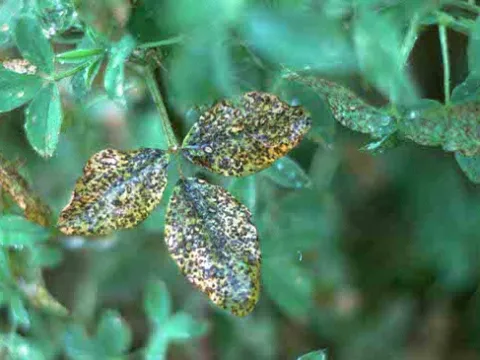
Alfalfa leaf spot
Pseudopeziza medicaginis
Pseudopeziza medicaginis is a fungal pathogen belonging to the phylum Ascomycota. It is the causative agent of common leaf spot in alfalfa, one of the most widespread diseases of this forage crop.
What the section contains
Alfalfa leaf spot
The fungus develops within the host tissues, forming small, cup-shaped fruiting bodies known as apothecia. These structures appear as tiny, shiny, elevated discs on the leaf surface.
The mycelium grows through the leaf tissue, disrupting physiological functions and eventually causing chlorosis and necrosis in the infected areas.
The pathogen's life cycle involves survival on crop debris throughout the winter. When conditions are favorable in the spring, it releases spores that initiate the infection of new shoots.
Dissemination is primarily driven by rain splash and wind, which transport the spores from overwintering debris to healthy foliage.
The primary impact of the disease is the premature defoliation of the alfalfa plant, which significantly reduces both the yield and the nutritional quality of the forage.
Infected leaves lose proteins and vitamins, making the hay less valuable as livestock feed. Severe infections can lead to a drastic reduction in biomass production.
The disease weakens the plants, making them more susceptible to environmental stressors such as drought, extreme temperatures, and winter kill.
In cases of heavy infestation, the longevity of the alfalfa stand is reduced, necessitating earlier field replanting than would otherwise be required.
Economic losses can be substantial, as the disease suppresses the growth of regrowth cycles following every harvest throughout the season.
The disease typically appears during the late spring and summer months, coinciding with periods of warm weather and frequent moisture.
High humidity and moderate temperatures ranging from 18°C to 25°C are ideal for the rapid development and spread of Pseudopeziza medicaginis.
The pathogen can undergo multiple cycles of infection within a single growing season, constantly increasing the disease pressure on the field.
Rainy weather promotes the release of spores from the apothecia, often leading to rapid colonization of the lower leaf canopy.
As the season progresses, disease development remains dependent on moisture levels, with outbreaks often worsening after periods of overcast, humid days.
The most characteristic sign of the infection is the development of small, dark brown or black circular spots, measuring approximately 1 to 3 mm in diameter.
- Dark, well-defined spots on leaves.
- Shiny, raised apothecia visible in the center of the lesions.
- Yellowing of the tissue surrounding the fungal spots.
- Significant leaf drop (defoliation) in the lower plant canopy.
- Reduced vigor and stunted overall growth of the plants.
The most effective management strategy is early harvesting of the crop before significant leaf drop occurs, which helps remove the pathogen's source.
Selecting resistant or tolerant alfalfa cultivars is a fundamental approach to reducing the impact of common leaf spot in agricultural systems.
Good field sanitation, such as deep plowing or burying harvest debris, helps minimize the amount of inoculum available for the next season.
Chemical control with fungicides is possible but is often restricted by the need to maintain safe intervals for grazing or harvesting for feed.
Maintaining proper field density and optimizing the soil fertility balance helps plants withstand infection and supports faster recovery after cutting.