
Alfalfa anthracnose
Colletotrichum trifolii
Description
How to identify
Alfalfa anthracnose is a fungal disease caused by the pathogen Colletotrichum trifolii. It is a highly specialized parasite that primarily targets alfalfa, causing significant yield losses in susceptible varieties.
The fungus survives the winter as mycelium and sclerotia on crop residues or infected crowns of alfalfa. In the spring, it produces conidia in structures known as acervuli, which spread through rain splashes and wind currents.
The infection process involves the development of appressoria, specialized structures that allow the fungus to penetrate the plant cuticle. Once inside, the pathogen colonizes the stem tissues and disrupts the plant's vascular system.
The pathogen is known for its high adaptability and can remain viable in the soil for up to two years. Its specialized nature makes it a persistent threat in regions where alfalfa is grown intensively.
Molecular research confirms that C. trifolii can exist in several distinct races, which complicates breeding for total resistance, as new strains may overcome existing crop defenses.
What it damages
The pathogen attacks stems, leaf petioles, and the crown of the plant. Stem infections are the most common and damaging, often leading to the death of individual stems or entire plants if the crown is compromised.
Young stands are particularly vulnerable. Heavy infection can cause severe thinning of the alfalfa population, leading to reduced forage yield and lower nutritional value of the harvested hay.
Damage to the crown is especially critical because it affects the plant's ability to store energy for winter. This weakens the plant, making it prone to winterkill and reducing the vigor of early spring growth.
The reduction in stem integrity makes the crop prone to lodging, which further complicates harvesting and leads to additional yield losses during mechanical mowing.
In addition to yield reduction, the presence of the fungus can affect the overall quality of the forage, rendering it less palatable and potentially reducing weight gain in livestock fed with infected hay.
When it appears
Anthracnose development is most active during warm and humid conditions, typically during the summer months. The optimal temperature range for the pathogen is between +22 and +28 degrees Celsius.
Rainy weather and frequent dews provide the necessary moisture for the rapid germination of conidia. These environmental conditions are crucial for the disease to spread from primary infection sites to the rest of the field.
The disease cycle can be repeated several times during a single growing season. Each mowing event can trigger new infections, as the wounds on the stems provide entry points for the fungal spores.
Dense canopies create a microclimate with high humidity, which significantly accelerates the spread of Colletotrichum trifolii. This is why canopy management is essential for disease control.
As autumn approaches and temperatures drop, the fungus begins to prepare for its overwintering phase, reducing its vegetative activity while hardening its structures to survive the winter cold.
Signs of infestation
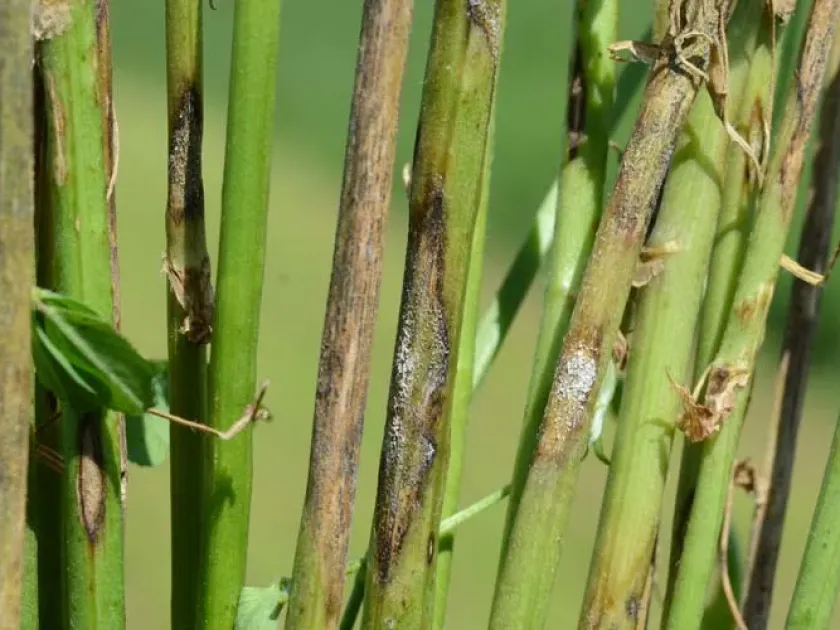
Early symptoms appear as small, light-gray or tan spots on the stems. Over time, these lesions expand and develop a distinct dark or reddish-brown border, which is a key diagnostic feature.
In the center of these lesions, small black specks appear; these are the acervuli, where the fungus produces mass amounts of spores. Stems often bend at the lesion point, resembling a shepherd's crook.
- Tan to gray lesions on the stems with dark borders.
- Curling or wilting of the top of the plant.
- Small black reproductive structures within the lesions.
- Crown rot leading to total plant collapse.
- Stunting of new growth after harvesting.
If the crown of an infected plant is cut, the tissue shows a characteristic bluish-black or dark brown discoloration, indicating severe rot caused by the fungus.
In the field, infected areas often appear as patches of stunted or dead plants. These areas expand outward as the season progresses and conditions remain favorable for the pathogen.
Control measures
The most effective strategy for managing alfalfa anthracnose is the use of resistant varieties. Plant breeders continue to develop cultivars with stronger genetic defenses against C. trifolii.
A well-planned crop rotation is vital. Producers should avoid planting alfalfa on the same ground for at least 3-4 years, which allows the soil population of the fungus to decline significantly.
Sanitation practices, such as deep plowing to bury infected crop residues, help to accelerate the decomposition of the plant matter and reduce the initial inoculum level for the next season.
Managing the cutting schedule can also help. Harvesting before the disease becomes widespread can prevent severe losses, and ensuring that mowers are cleaned can prevent moving spores between fields.
While chemical fungicides are available, they are rarely cost-effective or practical for large-scale forage production. Therefore, integrated management focusing on genetics and field hygiene remains the standard.
Causes diseases · 1
Discussion
No discussions yet — be the first.