
Late blight
Possible interaction
Description
How to identify
Late blight is caused by the oomycete Phytophthora infestans. Although often mistaken for a fungus, it belongs to the kingdom Stramenopila, exhibiting a unique biological structure.
The pathogen reproduces asexually through sporangia, which can be wind-dispersed or carried by water, allowing for rapid movement between host plants.
Sexual reproduction results in the formation of oospores, which are highly resilient and can persist in the soil for several years, serving as a primary infection source.
The pathogen infects plant tissues by producing enzymes that break down cell walls, causing rapid tissue necrosis and systemic collapse.
Development is heavily dependent on moisture; the pathogen requires free water on the leaf surface and temperatures between 15°C and 22°C to thrive.
What it damages
The primary hosts of this pathogen are members of the Solanaceae family, with potatoes and tomatoes suffering the most severe economic losses globally.
Infection leads to the destruction of foliage, which halts photosynthesis and eventually kills the plant, resulting in significant yield reduction.
Potato tubers become infected when spores are washed into the soil by rain, leading to firm, dark rot that makes the harvest unmarketable.
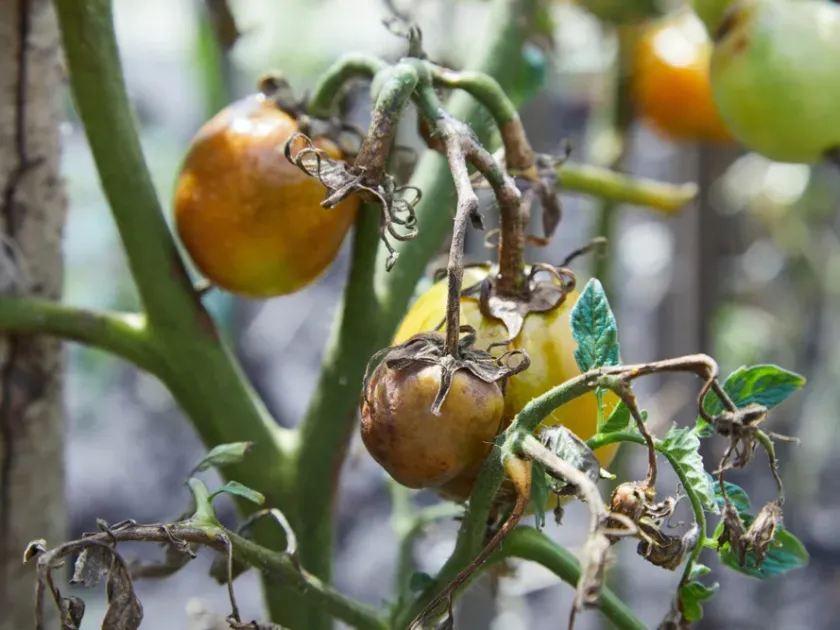
In tomatoes, the disease affects stems, leaves, and fruits, causing entire harvests to rot on the vine during wet summer seasons.
The pathogen's ability to mutate and develop resistance to certain fungicides poses a continuous challenge for agricultural producers worldwide.
When it appears
Late blight outbreaks typically occur during the mid-to-late summer months when frequent rain events, high humidity, and moderate temperatures prevail.
Dew formation on leaves during the night provides the necessary water film for the zoosporangia to germinate and initiate the infection cycle.
In greenhouse environments, the disease can manifest at any time if ventilation is inadequate, leading to stagnant, humid conditions.
Cooler, overcast days combined with periodic moisture are the most dangerous conditions for the rapid spread of the disease across a field.
Predictive models based on local weather stations are often used by farmers to determine the optimal timing for fungicide applications.
Signs of infestation
Early symptoms include small, dark, water-soaked spots on the lower leaves that expand rapidly and turn into necrotic brown lesions.
During periods of high humidity, a white, fuzzy growth—consisting of sporangia—can be observed on the underside of the infected leaves.
- Rapid wilting and death of stems.
- Large, firm, dark brown patches on tomato fruits.
- Dark, sunken lesions on potato tuber surfaces.
- A distinct, foul odor characteristic of decomposing plant tissue.
The disease progresses rapidly from leaves to stems, eventually cutting off the transport of water and nutrients, leading to plant death.
Without intervention, the entire crop can be lost within a few weeks under favorable weather conditions for the pathogen.
Control measures
Cultural control measures, such as long-term crop rotation and the use of certified disease-free seed, are fundamental to disease management.
Removing cull piles and volunteers from the previous season significantly reduces the initial inoculum pressure in the environment.
Chemical control involving prophylactic and systemic fungicides is essential in regions where weather conditions consistently favor the pathogen.
Maintaining proper plant spacing and managing soil moisture through irrigation techniques helps to lower the humidity levels around the foliage.
Resistant cultivars, where available, provide the most sustainable method of control and should be prioritized in integrated pest management programs.
Causes diseases · 1
Discussion
No discussions yet — be the first.