
Asian grapevine rust
Phakopsora euvitis
Description
How to identify
Asian grapevine rust is caused by the obligate fungal parasite Phakopsora euvitis, a member of the Basidiomycota division. This pathogen is highly specific to the Vitaceae family, causing significant physiological stress to the vines.
The pathogen possesses a complex life cycle, though in many cultivation regions, the uredinial stage is predominant, allowing for rapid secondary infections throughout the growing season.
Under a microscope, the fungus is identified by its characteristic orange-brown uredinia, which develop primarily on the abaxial side of leaves, containing mass amounts of urediniospores.
Systematically, this species was frequently misidentified in the past, but molecular analysis confirmed its status as a distinct and aggressive pathogen originating from East Asia.
Field diagnosis relies on observing the ruptured epidermis where the pustules emerge; professional agronomists utilize magnifying lenses to confirm the presence of these distinctive fungal structures.
What it damages
The primary host is the common grape (Vitis vinifera), although various wild Vitis species such as Vitis amurensis and Vitis labrusca are also susceptible to infection.
The disease attacks vegetative organs, primarily foliage, where the fungus interferes with carbon fixation, leading to poor physiological performance of the entire grapevine.
In cases of severe infestation, the pathogen may colonize leaf petioles and young green shoots, which severely undermines the plant's health before it enters winter dormancy.
While the berries themselves are rarely infected directly, the indirect damage caused by premature leaf drop leads to poor sugar accumulation and uneven ripening of the grapes.
Affected vines show decreased cold tolerance, which increases the risk of mortality or significant wood damage during harsh winter conditions in temperate climate zones.
When it appears
Initial symptoms typically appear in mid-summer when temperatures range between 20–25 degrees Celsius combined with high relative humidity levels.
The dispersal of the pathogen occurs via wind-borne urediniospores, which can travel across long distances, facilitating the rapid spread of the disease across entire viticultural regions.
The primary requirement for mass development is the presence of free moisture (dew or rain) on the leaves, which is essential for spore germination and successful infection.
As the season progresses toward autumn, the fungus may produce teliospores for overwintering, although in tropical regions, the mycelium can persist throughout the year.
The high rate of disease multiplication allows for exponential population growth, necessitating early detection and preventive measures to avoid large-scale epiphytotics.
Signs of infestation
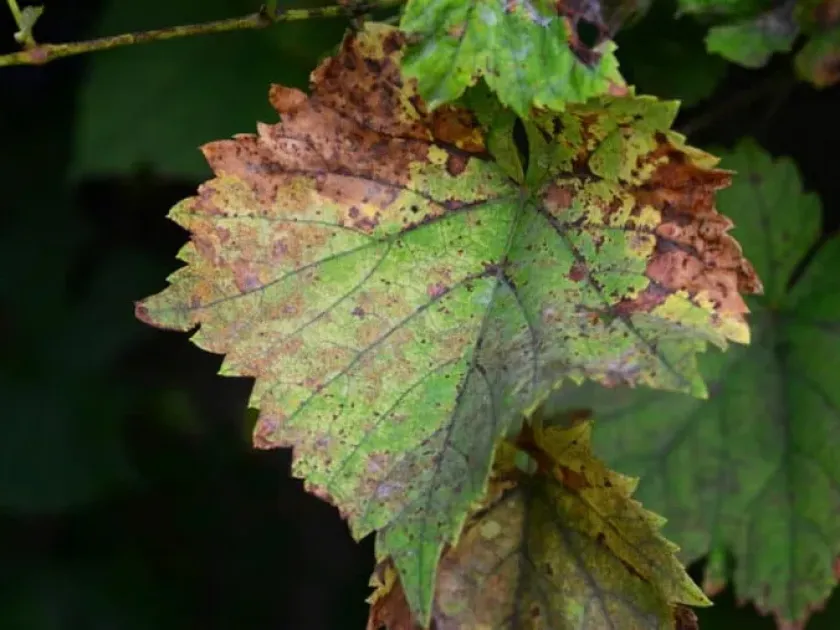
Early symptoms appear as small chlorotic spots on the upper leaf surface, which gradually expand and change color to a pale yellow or whitish hue.
On the lower leaf surface, these spots correspond to dense clusters of orange or rust-colored pustules that erupt through the leaf epidermis, releasing powdery spores.
As the infection progresses, the leaves develop necrosis in the affected areas, leading to browning, curling, and eventually premature leaf abscission starting from the base.
- Yellowing of leaf tissue at the site of fungal growth.
- Presence of powdery orange spores on the leaf underside.
- Tissue necrosis and eventual deformation of leaves.
- Premature defoliation, particularly in the lower vine canopy.
The visual impact of severe infection is often compared to a chemical burn, which frequently leads to misdiagnosis by growers who might attribute the symptoms to nutrient deficiencies.
Control measures
Effective control strategies revolve around consistent vineyard monitoring and the application of fungicides, specifically triazoles and strobilurins, which are highly effective against rust fungi.
Cultural practices are essential; pruning, canopy thinning, and proper training help increase airflow and reduce humidity levels within the vine canopy, discouraging fungal development.
Sanitation is a critical step; all fallen leaves must be removed from the vineyard and either buried or destroyed to eliminate the primary inoculum source for the next season.
Breeding for resistance remains a high-priority goal, as currently, most commercial Vitis vinifera cultivars remain highly susceptible to the Asian grapevine rust pathogen.
Quarantine and strict phytosanitary regulations are the most reliable methods for preventing the accidental introduction of P. euvitis into new production areas.
Causes diseases · 1
Discussion
No discussions yet — be the first.