
Late blight
Metabolite of
Description
How to identify
Late blight is caused by the oomycete pathogen Phytophthora infestans. Often mistaken for a fungus, it is a water mold that thrives in moist, cool conditions and can destroy entire crops in a matter of days.
The pathogen reproduces via sporangia, which are dispersed by wind and splashing rain. Upon landing on a susceptible host, they can germinate directly or release motile zoospores.
Survival occurs through mycelium in infected tubers or via dormant oospores in the soil, which serve as a persistent source of inoculum for subsequent seasons.
The pathogen is highly aggressive, with an incubation period that can be as short as three days under optimal environmental conditions, allowing for rapid outbreaks.
Genomic plasticity allows the pathogen to evolve quickly, constantly challenging breeding efforts and chemical control strategies globally.
What it damages
Late blight is historically the most devastating disease of potatoes and tomatoes, responsible for severe crop losses and food security crises throughout history.
Infection leads to rapid necrosis of foliage, stems, and fruits, effectively stopping the plant from photosynthesizing and causing premature death.
Tubers in the soil become infected through rain-washed spores, leading to secondary infections and rapid rot in storage, significantly reducing marketability.
Beyond potatoes and tomatoes, the pathogen can impact other members of the Solanaceae family, including peppers, eggplants, and various wild species.
The financial impact includes the cost of frequent fungicide applications, labor for monitoring, and the total loss of marketable yield in severe cases.
When it appears
Disease development is highly dependent on climate, typically peaking during cool, wet, and humid conditions such as rainy mid-summer periods or autumn.
The pathogen thrives at temperatures between 15°C and 22°C, provided there is free moisture on plant surfaces to facilitate spore germination and mobility.
Foggy weather, heavy dew, and frequent rainfall are the primary drivers of epidemic spread, creating a continuous thin film of water on foliage.
As the season progresses toward harvest, the risk increases as cooler nights promote condensation, providing the ideal microenvironment for the pathogen.
In controlled environments like greenhouses, late blight can occur whenever humidity exceeds 80 percent, regardless of the outdoor season.
Signs of infestation
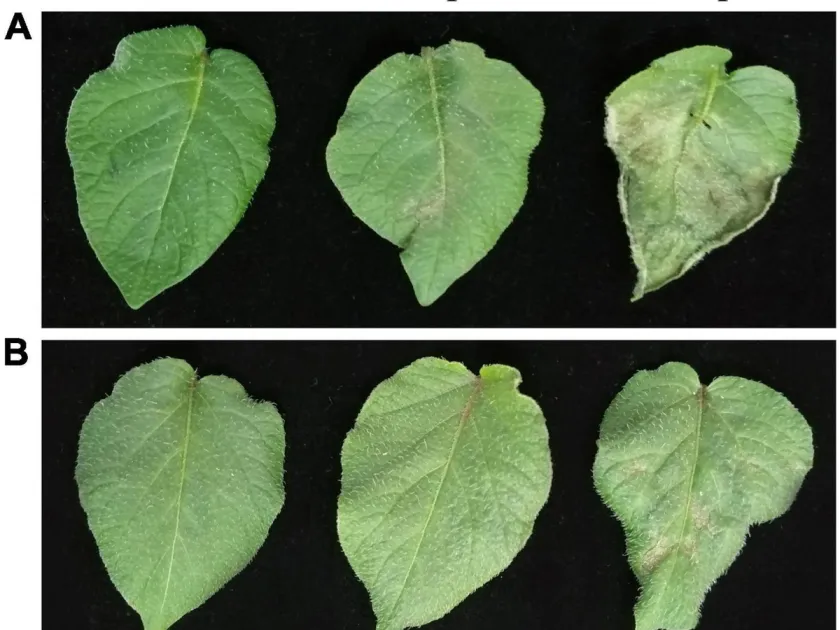
Initial symptoms appear as irregular, water-soaked, pale green to brown spots on leaves, which rapidly expand and become dark brown or black.
A white, velvety fungal-like growth appears on the underside of infected leaves, particularly during periods of high humidity and overcast weather.
Stems often develop dark, sunken lesions that can cause the entire branch to collapse and die, leading to a blighted appearance of the whole plant.
Tubers exhibit firm, dark, slightly sunken surface lesions, while the flesh inside turns into a characteristic reddish-brown, granular dry rot.
Infected tomato fruits show large, oily, firm, brown-grey patches that often cover the entire surface, leading to rapid decay and a distinct odor.
Control measures
Integrated Pest Management (IPM) is essential, starting with the use of certified, disease-free seed potatoes and resistant cultivar varieties.
Sanitation practices, such as removing cull piles and destroying infected plant debris, are critical to reducing the local inoculum pressure.
Fungicide application programs should be based on weather forecasting models to time treatments before favorable conditions for infection arise.
Good air circulation through proper plant spacing and pruning helps lower canopy humidity and limits the duration of leaf wetness.
- Avoid overhead irrigation to keep foliage dry.
- Hilling up potato plants to create a soil barrier for tubers.
- Implementing strict crop rotation schedules.
- Using drip irrigation to deliver water directly to the roots.
Causes diseases · 1
Discussion
No discussions yet — be the first.