
Bean macrophoma blight
Macrophoma phaseoli
Description
How to identify
The causal agent of bean macrophoma blight is the fungus Macrophoma phaseoli, which belongs to the class Coelomycetes. This pathogen is characterized by the formation of pycnidia, which are asexual fruiting bodies that contain numerous conidia.
The fungus is a soil-borne and seed-borne pathogen capable of overwintering in infected plant debris or within the seed coat, serving as a primary inoculum source for subsequent seasons.
Taxonomically, the fungus is associated with the order Sphaeropsidales, indicating its ability to thrive in a wide range of temperate conditions, particularly where moisture is abundant.
Macrophoma phaseoli relies on high humidity for the release of its spores, which are then dispersed by rain splashes or wind to healthy foliage and pods of neighboring bean plants.
The pathogen prefers moderate to warm temperatures and can thrive in diverse agro-climatic conditions, often exploiting the plant's weakened state or stress from environmental factors.
What it damages
Macrophoma phaseoli primarily affects common bean (Phaseolus vulgaris), but it has the potential to infect other legume species, posing a threat to biodiversity in multi-cropping systems.
The disease causes significant damage during the seedling stage, leading to damping-off and reduction in stand density, which often necessitates costly replanting of fields.
In mature plants, the infection disrupts the physiological processes, reducing the leaf area and photosynthetic capacity, which directly results in diminished vegetative growth.
Pod infection is particularly detrimental, as it not only ruins the marketability of the produce but also ensures the pathogen is transmitted to the next generation via seeds.
Total yield losses can be substantial, depending on the severity of the outbreak and environmental conditions, potentially reaching significant percentages in susceptible cultivars.
Signs of infestation
The initial symptoms include dark, sunken spots on the cotyledons and hypocotyls of young seedlings, which can eventually girdle the stem and cause the plant to collapse.
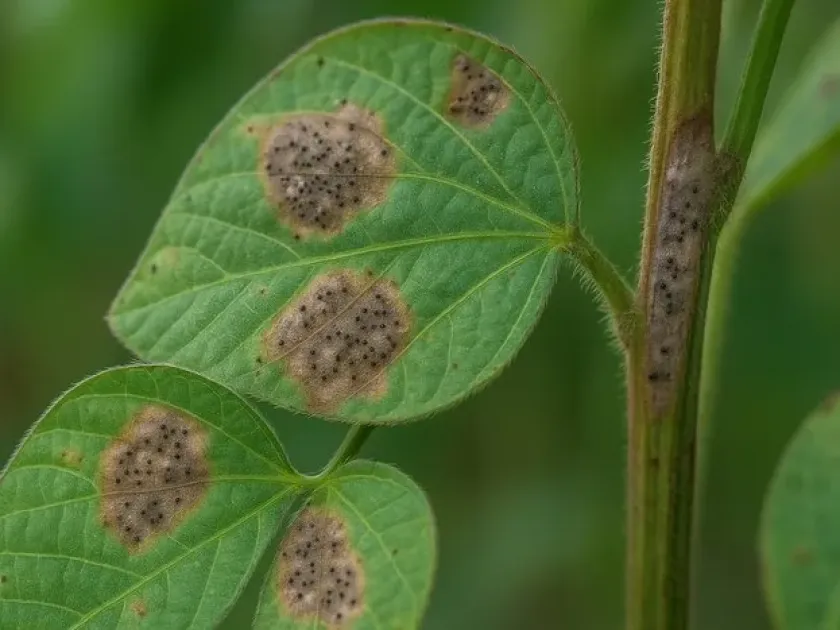
On leaves, the disease manifests as irregular brown or greyish-brown spots, which are often surrounded by a darker margin that helps differentiate it from other foliar pathogens.
A distinctive diagnostic feature of this blight is the appearance of small, black, pin-head-sized pycnidia embedded in the center of necrotic tissue spots on leaves and stems.
As the disease progresses, stems may develop elongated lesions that interfere with water and nutrient transport, leading to yellowing, wilting, and premature death of the plant parts.
In humid conditions, the surface of the infected areas may show a greyish fungal growth, confirming the presence of active sporulation and rapid expansion of the pathogen.
Control measures
Integrated disease management for bean macrophoma blight focuses on limiting the pathogen's spread through sanitation and the use of healthy, disease-free seed stock.
Crop rotation remains the most effective long-term strategy, as it creates an inhospitable environment for the fungus, allowing the primary inoculum in the soil to decline naturally.
Good agricultural practices, such as removing infected crop residues and ensuring optimal plant spacing, help minimize the micro-climate humidity that favors spore germination.
- Treating seeds with appropriate fungicides to eliminate seed-borne inoculum.
- Deep plowing to bury infected crop debris and accelerate its decomposition.
- Monitoring fields regularly and applying foliar fungicides during peak infection periods.
Effective control also relies on the strategic application of protective and systemic fungicides, especially during flowering and pod-filling stages, to safeguard the yield quality.
Causes diseases · 1
Discussion
No discussions yet — be the first.