
Sugarcane leaf spot
Leptosphaeria sacchari
Description
How to identify
Leptosphaeria sacchari is an ascomycete fungus that acts as the causal agent of ring spot disease in sugarcane. This pathogen is globally distributed in tropical and subtropical regions where sugarcane is cultivated.
The life cycle of this fungus involves the production of both asexual conidia and sexual ascospores within perithecia. These spores act as the primary inocula for the infection cycle, spreading through wind and moisture.
The pathogen primarily infects the leaves of the host plant. It survives between seasons in crop residues, making sanitation a critical part of its management. It thrives in environments with high humidity and moderate temperatures.
Molecular identification has confirmed the genetic diversity within the species, which explains why some sugarcane varieties show varying levels of resistance to local strains of the fungus.
The fungus penetrates the plant tissues primarily through stomata or small wounds on the leaf surface. Once inside, it secretes enzymes that break down plant cells, leading to characteristic lesion formation.
What it damages
The primary host of Leptosphaeria sacchari is sugarcane (Saccharum officinarum). While it is generally considered a minor disease in many regions, it can cause significant damage in susceptible cultivars during wet seasons.
The disease reduces the photosynthetic capacity of the plant by killing leaf tissue. This results in stunted growth and a significant reduction in sucrose accumulation, directly impacting sugar yield.
Severe infections can lead to premature leaf senescence and death. This reduces the total green foliage of the crop, forcing the plant to use stored energy reserves, which weakens the root system and stool development.
In addition to direct yield loss, heavy leaf damage makes the plant more susceptible to opportunistic secondary pathogens, which can exacerbate the decline in plant health.
Although it does not usually kill the entire plant, the cumulative effect of constant leaf spot pressure leads to long-term reduction in the quality and quantity of the harvestable cane biomass.
Signs of infestation
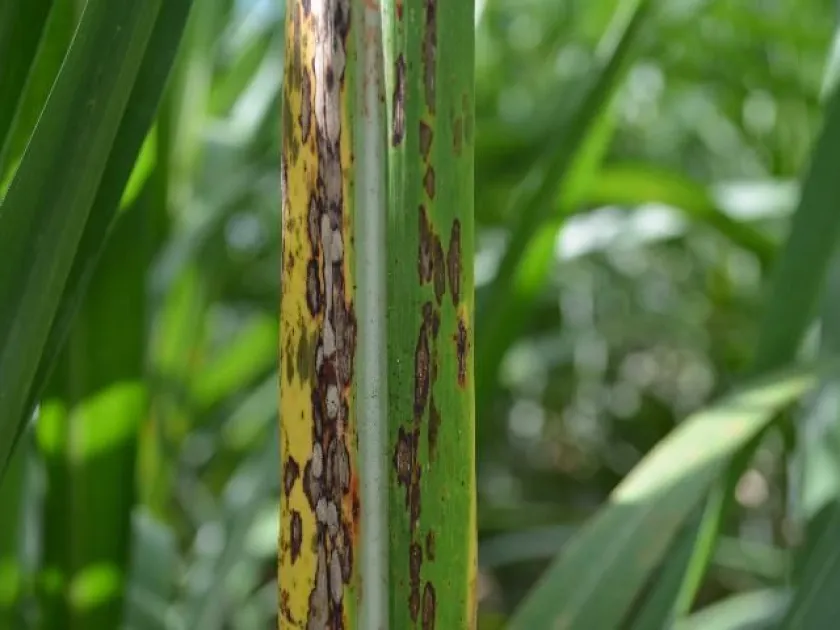
The disease is characterized by the appearance of small, chlorotic spots that enlarge and become oblong. These lesions eventually develop a dark brown or reddish-brown border.
The center of the spot typically turns straw-colored or greyish as the tissue dies. The distinct banding appearance of these lesions gives the disease its common name, ring spot.
In humid conditions, the centers of the spots may develop small black dots, which are the fruiting bodies (perithecia) of the fungus. These are visible signs of active spore production.
As the disease progresses, these lesions merge, causing larger necrotic patches across the leaf blade. Eventually, the affected leaves turn yellow and die from the tips downwards.
- Chlorotic spots that develop into brown lesions.
- Distinctive straw-colored centers in the necrotic spots.
- Banded (ring-like) appearance of the lesions.
- Small black fruiting bodies visible on dead tissue.
- Premature yellowing and drying of the foliage.
Control measures
The most effective strategy for managing sugarcane leaf spot is the use of resistant or tolerant cultivars. Breeding programs continuously select for lines that can withstand infection pressure.
Sanitation practices are vital. Removing or burning crop residues after harvest significantly reduces the amount of primary inoculum available to infect the subsequent crop cycle.
Proper field management, including the maintenance of optimal planting density, ensures adequate airflow. Improved ventilation helps dry the canopy quickly, reducing the time that leaf surfaces remain wet.
Balanced fertilization is essential. Over-application of nitrogen can lead to lush, soft foliage that is more vulnerable to pathogen penetration and colonization by Leptosphaeria sacchari.
While chemical control is generally not cost-effective for large-scale sugarcane production, targeted fungicide applications may be used in nurseries or high-value seed cane multiplication plots.
Causes diseases · 1
Discussion
No discussions yet — be the first.