
Alternaria
Interaction of
Description
How to identify
Alternaria is a genus of ascomycete fungi that are well-known plant pathogens causing various types of blight and leaf spots. These fungi belong to the family Pleosporaceae and are characterized by their distinct club-shaped, multicellular conidia.
The fungus is a facultative parasite, meaning it can survive both on living host plants and on decaying organic matter. It produces dense, dark-pigmented mycelium that is easily recognizable under a microscope.
Dissemination is primarily carried out by airborne conidia, but the pathogen can also be spread by water splashes, tools, and human activity within agricultural plots.
Growth is heavily influenced by environmental conditions, with high humidity and alternating wet and dry periods being the most favorable for infection cycles.
Its ability to remain dormant in soil or plant debris makes it a persistent challenge for farmers worldwide, requiring long-term management strategies.
What it damages
The host range of Alternaria is extremely broad, affecting economically significant crops such as tomatoes, potatoes, citrus, sunflowers, and many cruciferous vegetables.
Direct damage occurs through the destruction of photosynthetic tissue, leading to defoliation and a significant reduction in the plant's ability to produce sugars and biomass.
In addition to foliar damage, the pathogen causes fruit rot, which renders produce unmarketable and reduces the shelf life of harvested vegetables.
The economic impact can be severe, with yield losses often exceeding 40% in favorable conditions for the fungus, especially in susceptible cultivars.
In seedlings, the pathogen causes 'damping-off', which destroys the crop at the very beginning of the season, often requiring complete replanting.
When it appears
Infection cycles typically begin in late spring when temperatures rise and rainfall becomes more frequent, providing the necessary moisture for conidial germination.
The disease reaches its peak during the mid-to-late summer months, as plant stress from high yields and humidity fluctuations makes them increasingly vulnerable.
Even as the season draws to a close, the fungus remains active on maturing crops, producing spores that will persist throughout the winter.
In controlled environment agriculture, such as greenhouses, Alternaria can proliferate year-round if proper ventilation and humidity control are not maintained.
Environmental warming trends have also been observed to shift the activity periods of these fungi, often resulting in earlier and more severe disease outbreaks.
Signs of infestation
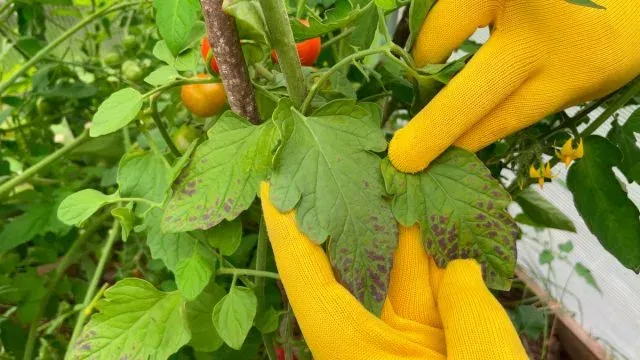
The primary symptom is the formation of necrotic spots on leaves, which often display a diagnostic "bullseye" appearance due to concentric rings of fungal growth.
As these lesions expand and merge, they cause large areas of the leaf to yellow and wither, eventually leading to premature drop and plant decline.
Fruit symptoms typically involve dark, sunken lesions that may be covered in a characteristic dark olive-brown to black fuzzy layer of fungal growth.
Stem lesions, or cankers, can girdle the plant's vascular system, leading to wilting, stunted growth, or sudden collapse of the affected branches.
The presence of this dark, velvet-like sporulation is a key indicator for field diagnosis, helping to distinguish it from bacterial or viral leaf spots.
Control measures
Integrated Pest Management (IPM) is essential for controlling Alternaria, starting with the selection of resistant cultivars and high-quality, certified seeds.
Sanitation practices such as deep tilling, removing infected crop debris, and practicing a diverse crop rotation are fundamental to reducing initial inoculum levels.
Fungicide application should be timed based on weather forecasts and scouting data, focusing on preventive treatments before the onset of symptoms.
Optimal plant health, achieved through balanced fertilization and appropriate irrigation management, helps plants withstand initial infections.
- Use of protective fungicides like chlorothalonil or copper-based compounds.
- Maintaining adequate spacing between plants to improve airflow.
- Monitoring for humidity levels in greenhouses to prevent spore germination.
Causes diseases · 1
Discussion
No discussions yet — be the first.