
Aspergillus flavus
Indian peanut
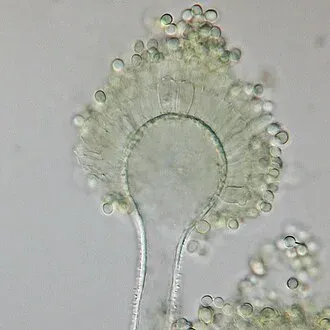
Description
How to identify
Aspergillus flavus is a filamentous fungus belonging to the kingdom Fungi and the genus Aspergillus. It is widely recognized as a soil-borne saprophyte that can also act as an aggressive opportunistic plant pathogen.
The fungus produces rapidly growing colonies that are typically yellowish-green or olive-green. The mycelium forms abundant conidiophores with characteristic heads, which appear as a dusty coating on the surface of the substrate.
It is distributed globally, thriving particularly in warm and humid environments. It is highly adaptable, capable of colonizing a vast array of organic substrates, including cereals, legumes, and oilseeds.
A critical characteristic of this species is its ability to produce aflatoxins, which are highly carcinogenic and toxic secondary metabolites. These pose significant risks to food safety, livestock health, and trade quality.
In a laboratory setting, the fungus is identified through its morphology on culture media like Czapek-Dox agar, where it forms distinctive yellow-green colonies and specific microscopic head structures.
What it damages
Aspergillus flavus infects various economically important crops, including maize, peanuts, cottonseeds, and tree nuts. The damage can occur both in the field during the growing season and in storage facilities.
The fungus consumes the starch, proteins, and fats within the seeds, leading to a significant loss of nutritional quality. Severely infected seeds lose their viability, making them unsuitable for sowing.
Beyond physical destruction, the primary economic damage stems from the presence of aflatoxins. Contaminated lots are often rejected by processing facilities, leading to major financial losses for farmers and industries.
The fungal enzymes can further break down the structural integrity of seeds, making them susceptible to secondary invasion by bacteria and other fungi, accelerating the spoilage of the entire stored batch.
- Significant reduction in yield and nutritional quality of grains.
- Loss of market value due to aflatoxin contamination.
- Health risks for livestock consuming contaminated feed mixtures.
When it appears
Field infections are most prevalent under conditions of high temperature and drought stress. Plants under physiological stress show reduced resistance, allowing the fungus to colonize the reproductive organs more effectively.
Insect activity is a major driver of seasonal spread. Pests create mechanical wounds on husks and seed coats, providing entry points for the fungal spores to colonize internal tissues during the grain-filling stage.
In storage, the pathogen is active whenever environmental conditions are favorable. The optimal temperature for its growth ranges from 25 to 35 degrees Celsius, combined with relative humidity levels exceeding 70-75%.
The fungus overwinters in soil or on crop residues as mycelia or sclerotia, allowing it to persist between growing seasons and initiate infection in the following year if conditions remain warm.
Post-harvest periods are particularly dangerous. High-moisture grain brought into storage without rapid drying is at high risk of a rapid fungal outbreak within a very short timeframe.
Signs of infestation
The most visible sign of infection is the emergence of a powdery, yellow-green to olive-green mycelial mat on the surfaces of seeds, kernels, or husks. This dust can easily be dislodged during handling.
On maize ears, colonization often begins at the tip or in areas where insect or mechanical damage has occurred. Infected tissues may become soft, discolored, and exhibit a distinct, unpleasant musty odor.
Microscopic examination of the affected material reveals dense conidiophores and vesicles. Internally, the seed embryo is often the first part to be destroyed, which is confirmed by the failure of the grain to germinate in laboratory tests.
In silos, a sign of infestation is localized heating within the grain mass. This self-heating process is triggered by the respiration of the fungi, which can lead to increased humidity and further spread of the pathogen.
Since aflatoxins are odorless and colorless, the absence of visual mold does not guarantee the safety of the grain; therefore, chemical testing is the only way to confirm contamination levels.
Control measures
Effective control requires an integrated approach starting with good agricultural practices, such as maintaining optimal soil fertility and managing water supply to minimize plant stress during growth.
Integrated pest management (IPM) is essential to reduce the population of insects that cause physical damage to seeds, thereby reducing the entry points for the fungal infection.
Post-harvest management is the most critical factor. Drying grain to a moisture content below 12-14% within 24-48 hours of harvest is the standard procedure to stop fungal proliferation.
Regular maintenance, cleaning, and disinfection of storage facilities are required. Proper ventilation systems must be utilized to maintain a dry environment and prevent the formation of damp spots or condensation.
Seed treatment with authorized fungicides can protect crops during the initial germination phase, helping to establish healthy plants that are better equipped to resist infection later in the season.
Causes diseases · 1
Discussion
No discussions yet — be the first.