
Citrus tristeza virus
Indian citrus
Description
How to identify
Citrus tristeza virus (CTV) is a highly destructive plant virus of the genus Closterovirus and family Closteroviridae, affecting citrus trees worldwide.
The virus consists of flexuous, thread-like particles containing single-stranded RNA. It is characterized by significant genetic diversity, with various strains causing widely different disease severities.
Transmission occurs primarily through the use of infected budwood during grafting, which is the most common way the virus spreads across different geographic regions.
In field conditions, the virus is transmitted by several species of aphids, most notably the brown citrus aphid, Toxoptera citricidus, in a semi-persistent manner.
Early diagnosis is challenging because trees can remain asymptomatic for long periods, acting as reservoirs for further spread by insect vectors.
What it damages
CTV causes severe damage to most citrus varieties, including oranges, grapefruits, and limes, often leading to total orchard decline.
The most devastating form of the disease occurs in trees grafted on sour orange rootstocks, where the virus induces a rapid decline syndrome due to phloem blockage.
The pathogen interferes with the tree's ability to transport carbohydrates from leaves to roots, leading to root starvation and eventual collapse of the entire tree.
In addition to tree mortality, the virus causes stem pitting in various cultivars, resulting in stunted growth and a significant reduction in fruit yield and quality.
The economic impact is profound, involving the loss of millions of trees and the necessity of implementing strict, costly phytosanitary measures.
Signs of infestation
One primary indicator is rapid decline, where a tree shows yellowing, leaf drop, and total wilting within weeks, particularly when a susceptible rootstock is used.
Trees often exhibit heavy out-of-season flowering, an erratic stress response triggered by the severe physiological impairment of the vascular tissues.
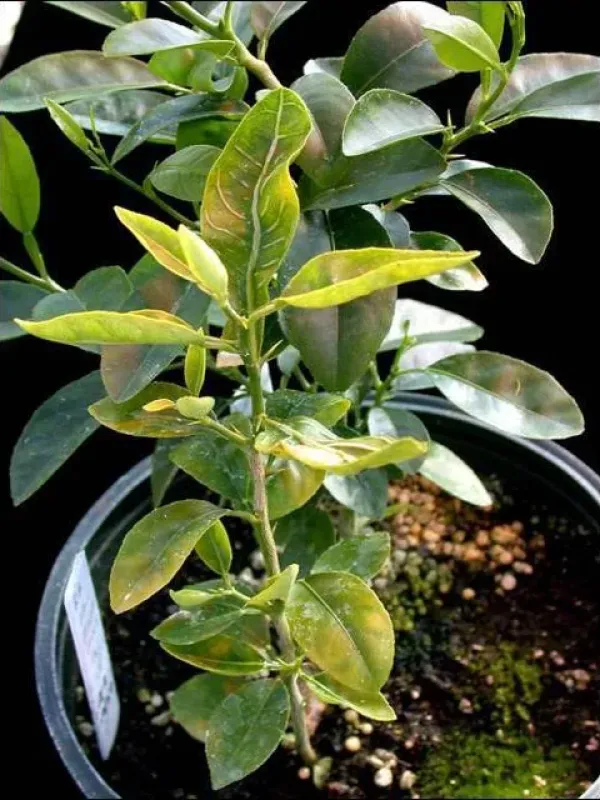
Foliar symptoms may include vein clearing, leaf cupping, and general chlorosis, which can often be mistaken for nutrient deficiencies or other stressors.
Stem pitting is a common symptom in many varieties, characterized by deep grooves and depressions in the wood that become visible once the bark is removed.
A honeycombing pattern in the inner bark at the graft union is a diagnostic feature indicating the phloem necrosis caused by the virus.
Control measures
The most effective strategy is the use of certified, virus-free nursery stock produced under strict quarantine and clean-plant programs.
Growers should avoid susceptible rootstocks like sour orange and instead utilize resistant or tolerant rootstock varieties such as trifoliate orange hybrids.
Integrated Pest Management (IPM) is essential for controlling aphid populations, which helps minimize the spread of the virus within and between orchards.
Immediate removal and destruction of infected trees are necessary to prevent the pathogen from becoming a source for local aphid vectors.
- Implementing regular diagnostic testing, such as ELISA or PCR, to detect asymptomatic infections.
- Strict enforcement of quarantine regulations for movement of citrus propagative material.
- Sanitizing pruning tools to prevent mechanical transmission during orchard maintenance.
Discussion
No discussions yet — be the first.