
Annosus root rot
Heterobasidion annosum
Annosus root rot (Heterobasidion annosum) is a destructive fungal pathogen belonging to the Basidiomycota phylum. It is one of the most significant causes of root and butt rot in coniferous forests globally.
What the section contains
Annosus root rot
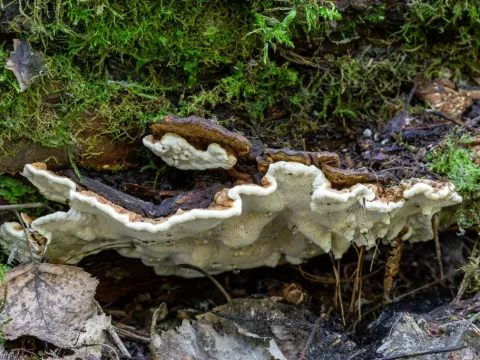
The fungus produces perennial fruiting bodies (conks) that typically appear at the base of infected trees or on the surface of stumps. These fruiting bodies are highly variable in shape, ranging from bracket-like to resupinate.
The mycelium colonizes the woody tissues, producing enzymes that degrade cellulose and lignin, leading to the destruction of the tree's structural integrity.
It exists as a complex of species, with different host preferences, but generally spreads through airborne spores and vegetative root-to-root contact.
Understanding its systematic position is crucial for foresters, as the pathogen remains viable in the soil for decades within infected root fragments.
The primary hosts include various coniferous species such as pine, spruce, and fir. While less common, some broadleaf species can also be affected by specific strains of the pathogen.
The fungus causes severe root decay, which prevents the uptake of water and nutrients, leading to the gradual decline of the tree's health.
Significant economic losses occur due to the degradation of high-value timber in the butt log, making the wood unsuitable for construction purposes.
Infected stands often experience increased windthrow, as the compromised root systems cannot support the weight of the trees during storms.
The disease spreads in expanding circles from a central infection point, creating gaps in the forest canopy that can grow over many years.
Spore dispersal occurs predominantly during the growing season when environmental conditions, such as temperature and humidity, favor sporulation.
Stump surfaces are most vulnerable to infection immediately after logging, especially during warm and humid periods when spore concentrations are high.
Winter conditions generally limit the spread of new airborne spores, providing a strategic window for forest management operations like thinning.
Root-to-root transmission is independent of the season and continues as long as the host material remains alive or has not yet fully decomposed.
Periodic monitoring for new fruiting body formation is effective throughout the year, as they can persist on old stumps for multiple seasons.
Initial signs include crown thinning, needle discoloration (yellowing or browning), and a general reduction in annual growth increments.
Profuse resin flow at the base of the stem is a classic diagnostic symptom, indicating the tree's defensive response to fungal colonization.
The presence of perennial fruiting bodies at the base of the tree or on old stumps is a definitive indicator of the pathogen's presence.
- Reddish-brown or white stringy rot within the roots and butt section.
- Small white mycelial mats found beneath the bark of infected roots.
- Windthrown trees with decayed root systems.
- Group mortality or "gaps" in forest stands.
Black zone lines are often visible in the decaying wood, marking the boundaries of fungal activity within the tissue.
Biological control using Phlebiopsis gigantea (a wood-decaying fungus) is a standard practice, where spore suspensions are applied to freshly cut stumps.
Operational strategies include avoiding damage to remaining trees during harvest, as bark wounds can facilitate the entry of the fungus.
In high-risk areas, stump removal (stump pulling) is employed to physically eliminate the reservoir of the infection from the soil.
Planting mixed-species forests helps minimize the spread, as non-host species act as biological barriers to root-to-root transmission.
Regular forest pathology surveys are essential to detect early symptoms, allowing for prompt sanitation measures and the limitation of infection centers.