
Anthracnose of cucurbits
Colletotrichum lagenaria
Anthracnose is caused by the fungus Colletotrichum lagenaria (syn. Colletotrichum orbiculare), an ascomycete pathogen that specifically targets the Cucurbitaceae family, including cucumbers, melons, and squash.
What the section contains
Anthracnose of cucurbits
The fungus survives as mycelium in infected plant debris left in the soil or on contaminated seeds. It is a highly persistent pathogen capable of surviving adverse conditions until suitable hosts become available.
Spore production (conidia) is triggered by free moisture. Under wet conditions, the fungus produces spores in gelatinous masses, which are easily dispersed by rain splashes, wind, and irrigation water onto healthy foliage.
Infection occurs when spores germinate and penetrate the plant epidermis. The pathogen colonizes the plant tissue, secreting enzymes that break down cell walls and lead to the characteristic necrotic lesions seen in infected plants.
Development is optimal in warm and humid climates. Temperatures between 20°C and 28°C combined with high humidity create the perfect environment for the fungus to complete its life cycle rapidly.
The disease causes significant damage to leaves, stems, and fruits. Initially, the plant may show only minor spotting, but the infection can quickly become systemic under favorable weather conditions.
Leaves develop yellowish, irregular lesions that eventually turn dark brown or black. As the infection progresses, these lesions merge, leading to the collapse and death of the entire leaf surface.
Stem infections cause deep, longitudinal lesions or ulcers. These weaken the plant structure, often leading to stem snapping or complete wilting of vines because the vascular system is compromised.
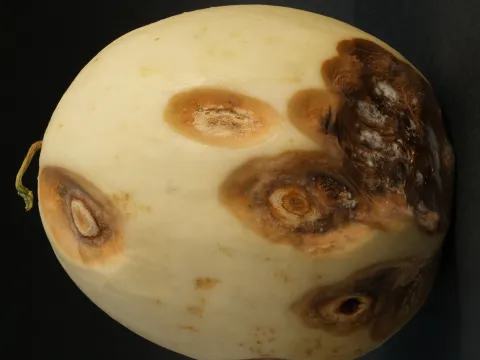
Fruit damage is the most economically devastating aspect. Infected fruits exhibit sunken, circular spots that may leak a salmon-colored ooze of spores. This decay renders the fruit unmarketable.
In cases of severe infestation, photosynthesis is drastically reduced, leading to stunted growth, poor fruit set, and significant losses in yield for commercial vegetable growers.
Early symptoms appear as small, water-soaked, yellowish spots on the leaves. These quickly enlarge and become tan or brown with a distinct yellow halo surrounding them.
A key diagnostic sign is the appearance of salmon-colored, slimy masses (acervuli) within the lesions during periods of high humidity or early morning dew.
On stems and petioles, the lesions are elongated and sunken. In severe cases, these can girdle the stem, causing the upper part of the plant to wilt suddenly.
Fruits show circular, sunken necrotic spots. If the humidity is high, the center of these spots may develop a pink or orange fungal growth, making the infection easily identifiable.
Seedlings may suffer from "damping-off" if infected early, where the base of the stem becomes brown, thin, and eventually collapses, leading to the total death of the young plant.
Crop rotation is the first line of defense; avoiding cucurbits in the same field for at least 3 years helps significantly reduce the pathogen load in the soil.
Always use certified, disease-free seeds. If there is a risk of contamination, treat seeds with appropriate fungicides to eliminate potential carry-over of the Colletotrichum spores.
Maintain good field sanitation by promptly removing and burning or deep-burying all crop residues at the end of the season to prevent the fungus from over-wintering.
Apply preventive fungicide sprays, particularly those containing copper or systemic active ingredients, before symptoms appear if weather forecasts predict extended periods of rainfall.
Improve air circulation and modify irrigation practices. Use drip irrigation instead of overhead sprinklers to keep the foliage dry, which prevents the spores from germinating.