
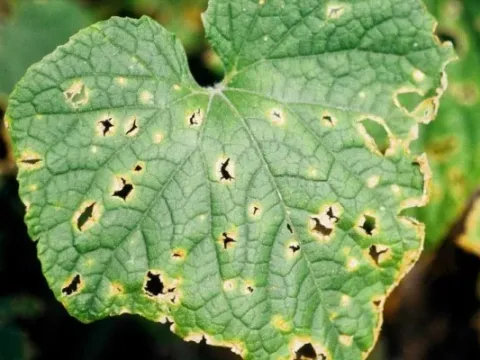
Anthracnose of cucurbits
Colletotrichum orbiculare
Anthracnose is caused by the fungus Colletotrichum orbiculare (formerly C. lagenarium), a member of the Ascomycota phylum. It is a highly destructive pathogen known for its rapid spread under moist conditions.
What the section contains
Anthracnose of cucurbits
The fungus produces mycelium that colonizes host tissues. It develops acervuli, which are small cushion-like structures that break through the epidermis to release large quantities of spores (conidia).
The pathogen overwinters as mycelium or sclerotia in infected plant debris left in the field. It can also persist as dormant structures on the seed coat, making seed transmission a critical pathway for the spread of the disease.
Conidia are dispersed primarily by water splashes, such as heavy rain or overhead irrigation, as well as by insects, field equipment, and workers moving through the crops when foliage is wet.
The infection process is rapid. Under ideal conditions, the fungus completes its life cycle within a few days, allowing for multiple infection cycles within a single growing season and potential epidemic development.
Anthracnose affects all cucurbit crops, including cucumbers, melons, watermelons, squash, and pumpkins. It causes lesions on leaves, stems, petioles, and fruits, significantly impacting crop yield and quality.
Fruit infection is the most devastating. Sunken, water-soaked lesions develop, eventually turning brown or black. These lesions often become covered with a pinkish, slimy mass of spores, leading to fruit rot and total market loss.
Stem infections manifest as elongated brown lesions that can girdle the stems. If these lesions occur near the base or on main vines, the entire plant may wilt and die due to the disruption of water and nutrient transport.
Extensive leaf infection leads to leaf death, which reduces the plant's photosynthetic capacity. As a result, the fruits do not develop properly, and the overall plant vigor is drastically diminished.
Seedlings can also be affected by damping-off if the seed was infected, leading to poor crop establishment and the need for replanting, which increases production costs and reduces yield potential.
The disease thrives in warm, humid weather. The optimal temperature for fungal growth and spore germination ranges from +22°C to +27°C, provided there is sufficient moisture from rain or dew.
Outbreaks are most common during the summer months when periods of high humidity and rainfall occur. The presence of free moisture on the leaf surface is a prerequisite for spore germination and infection.
In greenhouses, the disease can occur throughout the year if ventilation is inadequate, allowing condensation to form on the leaves, which provides the necessary film of water for the pathogen.
Drought conditions can halt the active progression of the fungus, but it remains viable in infected debris. As soon as wet conditions return, the pathogen can reactivate and cause a new wave of infection.
Improper spacing and lack of airflow within the crop canopy create a favorable microclimate for the pathogen, accelerating the development of the disease and increasing the severity of damage.
Initial symptoms on leaves appear as small, circular, yellowish to brown spots. These spots may grow and merge, eventually causing the tissue to become brittle and tear, resulting in a shot-hole effect.
Stem and petiole symptoms appear as brown, sunken streaks or elongated lesions. When humidity is high, these lesions are often coated with a characteristic pink or orange mass of fungal spores.
Fruits show sunken, circular, dark lesions. These lesions often deepen over time, reaching into the pulp, and can be covered with pinkish spore masses or tiny black specks, which are the fungal fruiting bodies.
In drier conditions, the pink spore masses may not be visible, but the small black dots (acervuli) on the surface of the lesions serve as diagnostic signs of the presence of Colletotrichum orbiculare.
Advanced stages of the disease leave the plant appearing scorched, with withered foliage and necrotic, distorted fruits that are soft to the touch and entirely unmarketable.
The primary control strategy involves crop rotation, ensuring cucurbits are not planted in the same field more than once every three years. Using certified, disease-free seed is essential to minimize initial inoculum.
Sanitation is critical; all infected plant debris must be removed and destroyed or buried deeply after harvest to prevent the fungus from surviving the winter in the soil.
In protected cultivation, controlling humidity through proper ventilation and the use of drip irrigation instead of overhead watering is highly effective in preventing leaf surface wetting.
Chemical control includes the application of protectant and systemic fungicides. Products containing copper, strobilurins, or triazoles are effective, especially when applied preventively or at the very first signs of disease.
- Plant resistant or tolerant cucurbit varieties.
- Treat seeds with fungicides before planting.
- Increase plant spacing to improve air circulation.
- Disinfect tools and equipment between working in different fields.