
Sugarcane helminthosporiosis
Helminthosporium sacchari
Description
How to identify
The causative agent of the disease is the imperfect fungus Helminthosporium sacchari (synonym Bipolaris sacchari), belonging to the kingdom Fungi, phylum Ascomycota. This pathogen is a highly specialized parasite that affects primarily tropical crops.
The fungus produces conidiophores with conidia, which are dispersed by wind or rain splashes over long distances. In field conditions, diagnosis is complicated by the similarity of symptoms to other types of leaf spots, often requiring microscopic analysis.
Biologically, the fungus is capable of producing a specific toxin called helminthosporioside, which plays a crucial role in the development of leaf tissue necrosis. This toxin blocks physiological processes in plant cells, causing rapid cell death.
The life cycle of the pathogen is closely tied to the presence of moisture, which is necessary for spore germination. The fungus survives on crop residues, in the soil, and on wild grasses throughout the off-season.
Optimal conditions for pathogen development include high air humidity (above 85%) and temperatures in the range of 25–30 degrees Celsius. Under these conditions, the infection spreads rapidly, covering entire plantations.
What it damages
The primary host for this pathogen is sugarcane (Saccharum officinarum). The disease causes significant losses to plantations by reducing the total vegetative biomass of the crop and inhibiting sugar accumulation in the stalks.
Leaf damage leads to a sharp decrease in the plant's photosynthetic activity. As a result of the pathological process, the transport of assimilates is disrupted, leading to the degradation of the root system and general weakening of the plant.
During intense outbreaks, premature drying of the foliage occurs. This is critical during the active stalk growth period when the plant requires maximum energy for biomass formation.
The economic impact is manifested not only in reduced green mass yields but also in poor juice quality. Affected stalks are difficult to process, and the pure sugar content drops significantly due to metabolic disorders.
Severe infestations can lead to the death of young shoots and sparse stands. This forces agronomists to perform early culling or expensive chemical treatments, which lowers the overall profitability of production.
Signs of infestation
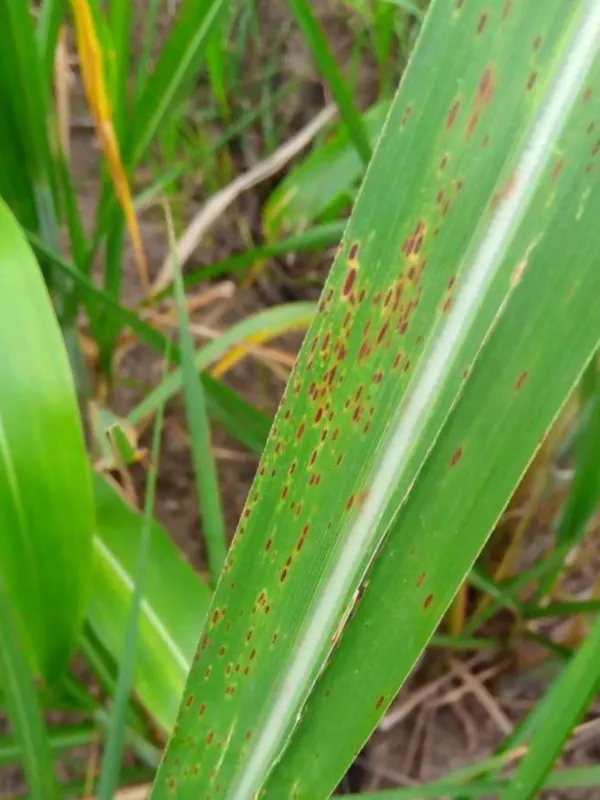
The first signs of infection are small yellowish spots on young leaves. Over time, these acquire a reddish-brown hue with a characteristic yellow halo surrounding the affected area.
As the pathogen progresses, the spots elongate, taking on an elliptical shape. Merging of these spots often occurs, causing large sections of the leaf blade to die and turn grayish-brown.
In high humidity, an olive-black velvety coating can be observed on the surface of the affected tissues. This is a collection of conidia and conidiophores of the fungus, which are easily dispersed by air currents.
Systemic infection leads to curling and subsequent necrosis of leaf margins. The plant takes on a "scorched" appearance, often referred to in agronomy as "eyespot disease" due to the specific shape of the necrotic lesions.
- Yellowing of leaf margins
- Reddish-brown spots with a yellow halo
- Fungal growth in humid conditions
- Drying of shoot tips
- Reduction in stalk height and diameter
Control measures
The primary defense measure is the use of sugarcane varieties resistant to Helminthosporium sacchari. Breeding for immunity remains the most effective and environmentally friendly control method.
Agronomic practices include thorough clearing of fields from crop residues after harvest. Destroying the primary inoculum significantly reduces the risk of infection outbreaks in the following season.
It is important to maintain optimal planting density to ensure good ventilation within the crop canopy. Excessive density creates a microclimate with high humidity, which favors the rapid reproduction of fungal spores.
When an epiphytotic threat exists, fungicide treatment is applied. It is recommended to use copper-based products or modern systemic triazole-class fungicides, which effectively suppress mycelial development.
Monitoring plantations during critical growth stages allows for early detection of infection spots. Timely isolation or localized removal of infected plants prevents large-scale contamination of the entire field.
Causes diseases · 1
Discussion
No discussions yet — be the first.