
Rock grape
Grapevine rupestris
Description
How to identify
The Rock grape (Vitis rupestris) is a perennial woody plant belonging to the Vitaceae family. It is important to clarify that this species is not a plant pathogen; instead, it is a key component in global viticulture due to its remarkable biological resistance.
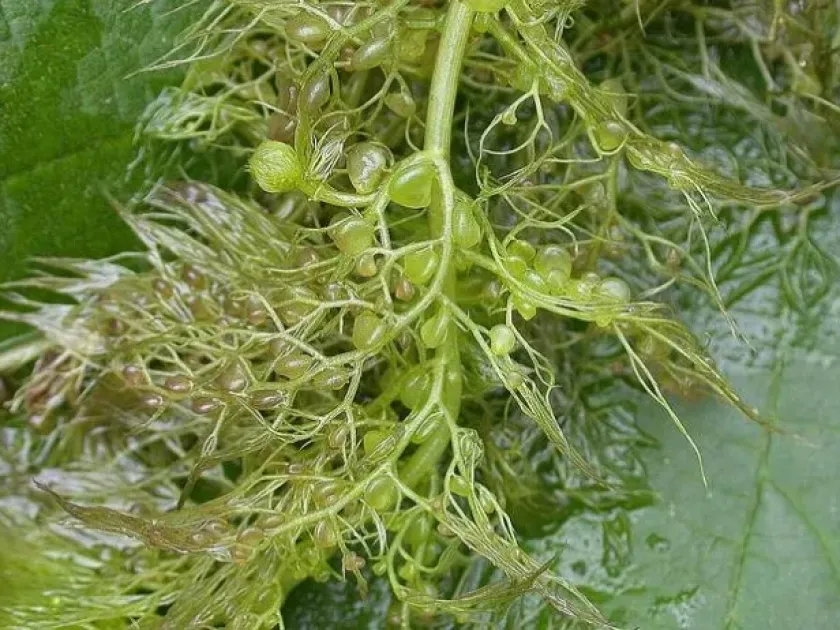
Taxonomically, it is a distinct species within the genus Vitis. It is morphologically characterized by its shrubby, upright growth habit and kidney-shaped leaves that are typically smooth and glabrous, allowing for easy identification in nursery settings.
Native to rocky and dry regions, the species has evolved a high degree of drought tolerance and the ability to thrive in challenging soil conditions. These traits are highly valued in modern rootstock breeding programs.
Its primary evolutionary adaptation is the high degree of lignification in its root system, which renders it practically immune to the root-feeding form of the grape phylloxera (Daktulosphaira vitifoliae).
In contemporary agronomy, Vitis rupestris serves as a foundational genetic source for developing resistant rootstocks that sustain the global production of Vitis vinifera varieties in infested soils.
What it damages
The Rock grape does not act as a pathogen or cause damage to other plants. Its role in the vineyard is strictly beneficial, providing a stable and resistant foundation for grafted grapevines.
However, misuse can occur if the species is planted in high-calcareous soils without proper management. In such environments, it may exhibit physiological chlorosis, where the plant struggles to uptake necessary minerals.
It does not carry or propagate infectious diseases. Therefore, its presence in a vineyard does not increase the risk of disease outbreaks but rather serves as a safeguard against major soil-borne insect threats.
Compatibility issues can sometimes arise during the grafting process if the scion variety does not align well with the Vitis rupestris rootstock, potentially leading to weakened growth or poor fruit set.
Consequently, the plant should be viewed as a technical tool for agricultural resilience rather than an agent of harm, provided that site selection and grafting practices are correctly implemented.
Signs of infestation
Effective use of this rootstock is indicated by the vigorous growth of the grafted variety, even in areas previously known for high phylloxera pressure. The vines appear robust and healthy.
Visual symptoms of site mismatch, particularly in chalky soils, include interveinal chlorosis. The leaf tissue turns yellow while the veins remain green, signaling a deficiency in iron availability.
A healthy root system of Vitis rupestris should be dense, well-lignified, and free from any galls or swellings. Any abnormalities on the roots are a clear sign of poor site conditions or stress.
At the graft union, the tissue should show a smooth and complete callus formation. A healthy connection ensures efficient nutrient transfer from the rootstock to the fruiting branches.
Monitoring the foliage throughout the growing season helps identify any nutrient deficiencies, which are the most common issue associated with the use of this specific rootstock variety in improper conditions.
Control measures
The primary control measure for successful viticulture using Vitis rupestris is conducting a detailed soil analysis before planting. Identifying active lime levels is crucial to prevent chlorosis.
When chlorosis symptoms appear, the application of iron chelates is the standard intervention. This helps supplement the vine's nutrient needs and restores normal photosynthetic activity.
Proper grafting techniques and stratification are essential to ensure the success of the union. Using professional nursery procedures prevents secondary bacterial infections and promotes rapid healing of the graft.
Management also includes appropriate pruning and canopy maintenance to balance the vigorous growth tendencies of Vitis rupestris-based rootstocks and optimize the harvest quality.
Standard vineyard health practices, such as routine fungicide applications for mildew management, must continue as the rootstock's resistance to phylloxera does not extend to aerial fungal pathogens.
Causes diseases · 1
Discussion
No discussions yet — be the first.