
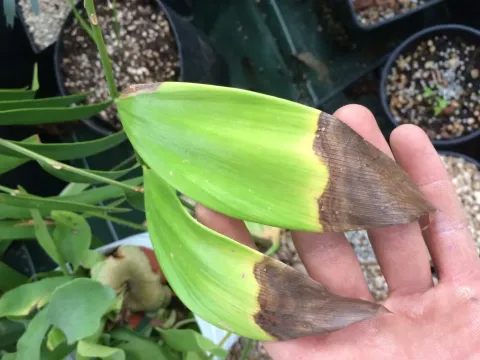
Cycas necrosis
Cycas necrotic
Cycas necrosis is a pathological condition primarily caused by fungal pathogens such as Phyllosticta or Colletotrichum species. These pathogens thrive in environments where leaf moisture persists for extended periods, providing ideal conditions for spore germination.
What the section contains
Cycas necrosis
The pathogen functions as a necrotrophic parasite, invading the host tissues and triggering premature senescence and cell death. The fungus enters the plant through natural openings or tissue lesions, gradually expanding its necrotic reach across the leaves.
Identification is based on the morphological characteristics of the lesions, which typically appear as necrotic patches on the leaflets. As the infection progresses, these areas become desiccated and may develop fungal fruiting bodies under high humidity.
Since cycads are slow-growing plants, the loss of photosynthetic area due to necrosis significantly stunts the growth of the plant. A weakened plant becomes susceptible to secondary infections and pest infestations, complicating the recovery process.
Correct diagnosis is essential, as the symptoms can sometimes be confused with physiological disorders related to nutrient imbalance or poor soil aeration. A professional assessment often requires looking for specific spore structures found on the lesions.
The primary hosts are species within the genus Cycas, especially those grown in containerized environments. The pathogen destroys leaf tissue, causing browning, loss of vigor, and eventual shedding of the foliage.
The disease is most prevalent during periods of high humidity and poor ventilation. In indoor settings, these conditions can occur at any time, especially during winter months when air circulation is naturally restricted.
Initial symptoms include small, irregular spots on the leaf surface, which eventually coalesce. The tissue within these spots turns dry and necrotic, often surrounded by a chlorotic halo indicating ongoing stress.
Sanitation is critical; all infected leaves must be pruned and destroyed immediately to reduce the inoculum. Applying systemic copper-based or triazole-based fungicides helps protect remaining healthy foliage and stops further development.