
Cylindrocarpon liriodendri
Cylindrocarpon liriodendri
Cylindrocarpon liriodendri is a soil-borne pathogenic fungus, currently classified in its teleomorph stage as Ilyonectria liriodendri. It is a major causal agent of serious diseases in woody plants, particularly vines.
What the section contains
Cylindrocarpon liriodendri
The fungus produces cylindrical conidia which are the primary units of dispersal in moist soil. It also forms chlamydospores, thick-walled resting spores that allow the pathogen to survive for years in the soil even in the absence of a host.
Taxonomically, it is a member of the order Hypocreales. It is known for its ability to colonize vascular tissues, effectively obstructing the xylem and phloem, which leads to systemic physiological dysfunction in the plant.
The fungus thrives in organic matter, where it survives as a saprophyte. This characteristic makes it extremely difficult to eliminate from the field using standard cultivation methods alone.
Microscopic analysis of cultures on artificial media typically reveals colonies with white or brownish mycelium and the characteristic presence of septate conidia, which serve as a diagnostic feature.
The pathogen is primarily known for causing "black foot disease" in grapevines, particularly affecting young nursery stocks. It causes the roots to decay and turns the vascular tissues into necrotic black zones.
Beyond viticulture, it affects various fruit trees and woody ornamental plants. It leads to significant economic loss in nursery environments where entire batches of young plants can be lost.
The disease mechanism involves the destruction of the root system and the rootstock. As the necrotic process reaches the crown, the plant loses its ability to absorb water and nutrients from the soil.
Infected plants exhibit reduced vigor, stunted growth, and premature senescence. The destruction of the vascular system makes the plants highly susceptible to drought stress and frost damage.
Long-term infestation leads to the total decline of the host. In vineyards, the presence of this fungus is often associated with the decline of older plants and the failure of new replanted vines.
Infection is most common during the early spring when soil moisture levels are high. Mild temperatures combined with wet conditions facilitate the germination of conidia and their entry into roots.
During the summer months, the pathogen's growth might slow down in hotter, drier soils; however, the internal colonization continues, and the fungus remains embedded within the deeper tissues of the host.
In autumn, as soil temperatures drop and moisture increases, the fungus experiences a renewed period of activity, extending its mycelial reach to new parts of the root system.
Dissemination often occurs through human activity. Infested soil, contaminated tools, and infected water supplies serve as the primary vehicles for spreading the fungus across fields.
The lifecycle of C. liriodendri is tightly linked to host plant health. Any stress factor, such as waterlogging or physical injury, significantly enhances the probability of successful infection.
Early symptoms include leaf chlorosis and general plant weakness. The leaves may turn yellow and drop prematurely, signaling that the plant's water and nutrient uptake is severely impaired.
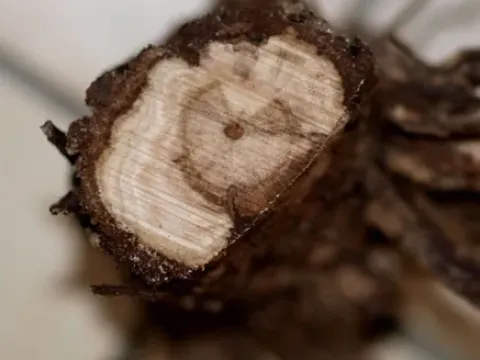
A cross-section of the lower stem or root reveals dark, necrotic staining. The wood becomes discolored, often turning black, and in advanced stages, the internal tissue may become soft or spongy.
Plants display shortened internodes and diminished leaf size. This characteristic stunting makes infected vines or trees stand out among their healthy neighbors in the plantation.
In some cases, the necrosis extends upwards from the roots to the trunk, creating long, dark streaks under the bark. This is indicative of the systemic spread of the pathogen through the vascular bundles.
Diagnostic field inspections often require the excavation of roots, as symptoms below the soil line are usually much more severe than those visible on the foliage.
The most critical control strategy is to ensure the use of high-quality, pathogen-free nursery stock. Pre-planting hot water treatment or fungicide dipping can significantly reduce early infections.
Effective water management is vital. Improving soil drainage prevents water stagnation, which is the single most important environmental trigger for C. liriodendri development.
Sanitation practices are essential for preventing the spread. Tools used for pruning or cultivation must be disinfected frequently to avoid cross-contamination between plots.
- Apply biological control agents like Trichoderma species to populate the soil and compete with the pathogen.
- Use synthetic fungicides during the propagation phase to protect sensitive root tissues.
- Remove and incinerate infected plants to reduce the inoculum level in the soil.
Implementing an integrated management system that combines soil amendments, cultural hygiene, and targeted chemical treatments is the only way to manage this persistent soil-borne threat.