
Bean anthracnose
Colletotrichum lindemuthianum
Description
How to identify
Bean anthracnose is a destructive fungal disease caused by the pathogen Colletotrichum lindemuthianum. It is classified within the kingdom Fungi, specifically as a hemibiotrophic pathogen that targets various legume species.
The fungus propagates by forming acervuli, which are specialized structures that erupt through the plant's epidermis to release masses of spores. These spores are typically held together by a gelatinous matrix.
Genetic diversity in C. lindemuthianum is significant, leading to the development of numerous physiological races. This variability is a major challenge for plant breeders attempting to develop resistant bean varieties.
The pathogen primarily overwinters in infested crop residues and infected seeds. Under conducive environmental conditions, it can survive for several years in the soil or on debris.
Its primary mode of infection involves the penetration of plant tissue via natural openings like stomata or through direct mechanical damage to the plant's outer layer.
What it damages
The disease affects all aerial parts of the plant, including cotyledons, leaves, stems, and pods. Infected seedlings may show lesions as soon as they emerge, often resulting in seedling blight.
Stem infections are particularly dangerous as they can cause the plant to lodge or break. The destruction of stems disrupts the vascular transport of nutrients, weakening the entire plant.
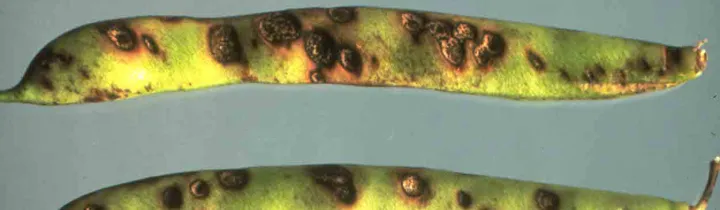
Pod damage is the most economically significant symptom. The fungus penetrates the pod wall and infects the seeds within, causing dark, sunken lesions that lower seed quality and germination rates.
Leaf infection reduces the functional photosynthetic area, which leads to stunted growth and poor filling of the beans. This directly results in substantial yield reductions.
In cases of severe infestation, especially during cool and rainy seasons, the pathogen can cause complete crop failure, making it a critical threat to legume production worldwide.
When it appears
Anthracnose development is heavily dependent on moisture. The pathogen thrives in cool to moderate temperatures ranging from 15°C to 25°C, coupled with high relative humidity.
Rain splash is the primary mechanism for the short-distance spread of spores within a field. Frequent rainfall significantly accelerates the progression of the disease through a bean crop.
Primary inoculum often comes from infected seeds sown in the spring. Once the initial lesions appear, secondary cycles of spore production begin, spreading the fungus rapidly.
The disease is most prevalent during the flowering and pod-filling stages, as the plant becomes highly susceptible to infection during these critical reproductive phases.
Periods of prolonged dew or misty conditions create a favorable microenvironment for spore germination and colonization, even in the absence of heavy rainfall.
Signs of infestation
The most distinctive symptom is the presence of dark-brown or black lesions on stems and leaf veins. On leaves, these spots are often angular and may cause leaf distortion.
Pods exhibit characteristic deep, circular, sunken lesions with a prominent dark-colored border. Under humid conditions, these lesions reveal a mass of pink or flesh-colored spores.
Seeds harvested from infected pods often show brown or black spots, indicating that the pathogen has successfully colonized the seed coat and potentially the embryo.
- Angular dark-brown lesions on leaves and stems.
- Sunken necrotic lesions on bean pods.
- Pink or reddish spore masses within lesion centers.
- Premature yellowing and death of the foliage.
- Reduced vigor and germination of infected seeds.
Seedling blight, characterized by dark lesions on the hypocotyl, is a common sign when infected seeds are planted in moist, cool soil conditions.
Control measures
The use of certified, disease-free seed is the primary defense against bean anthracnose. Treating seeds with appropriate fungicides can also help reduce initial inoculum levels.
Implementing a rigorous crop rotation cycle, with at least a 3-year break between susceptible legume crops, is essential to allow pathogen levels in the soil to decline naturally.
Sanitation practices such as removing or deep-plowing crop residues immediately after harvest can effectively eliminate the primary overwintering sources of the fungus.
Fungicide applications are necessary in fields where the disease is established, particularly when weather forecasts predict extended periods of cool, wet conditions during the pod-filling phase.
Genetic resistance is the most sustainable management tool. Growers should select bean varieties that have demonstrated tolerance or resistance to the specific strains of anthracnose prevalent in their region.
Causes diseases · 1
Discussion
No discussions yet — be the first.